

 United States
 Macau, China
 France
 Philippines
 Singapore
 Netherlands
 United Kingdom
 Canada
 Argentina
 Germany
 Estonia
 Peru
Peru Russia
 Australia
 South Africa
 Nigeria
 Malaysia
 Singapore
 India
India Finland
 China
China Ukraine
 Hong Kong
 Cyprus
 Turkey
 Greece
 Sweden
 South Korea
 Mexico
 Poland
 Ireland lottery results
 New Zealand lottery results
 Puerto Rico lottery results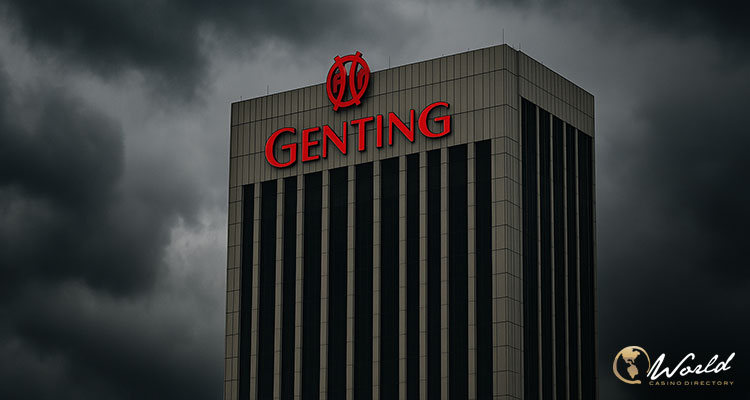
Moody’s Ratings has issued a series of downgrades across Genting Berhad and two major subsidiaries after months of review, pointing to heavier debt loads and a slower rebound in earnings. The rating agency’s latest assessment affects Genting Berhad, Genting Singapore, and Genting Overseas Holdings, with each now carrying a “stable” outlook following the revision.
Moody’s lowered Genting Berhad’s rating to Baa3 from Baa2 and applied the same downgrade to Genting Overseas Holdings. Genting Singapore, which manages Resorts World Sentosa, moved from A3 to Baa1. Moody’s had placed the group under review in October because of what it described as Genting Berhad’s “weaker credit quality,” according to GGRAsia.
Explaining the decision, Moody’s stated: “The ratings downgrade reflects Genting’s [Bhd’s] already weak position due to prolonged deleveraging amid slower than expected earnings recovery, further strained by increased debt to fund its takeover offer for Genting Malaysia and expected spending following the potential award of a downstate New York City commercial casino licence.”
Moody’s Ratings analyst Anthony Prayugo echoed this reasoning, noting in a separate report that the company’s financial position continues to face pressure from both the takeover financing for Genting Malaysia and the future spending tied to the New York license. He added that the outlook remains stable because earnings at Genting’s Singapore and Las Vegas properties are expected to improve and because the New York project “will be earnings accretive by the second half of 2026.”
Financial Commitments Expand Across Markets
Genting Berhad recently increased its stake in Genting Malaysia after completing a takeover offer on December 1, raising its ownership to just under 73.80 percent through market purchases. The company plans to finance most of this acquisition through medium-term notes. Moody’s noted that the takeover resulted in Genting Berhad acquiring roughly 24 percent of Genting Malaysia’s outstanding shares and that the parent intends to raise MYR3 billion in notes to support the effort.
The group also faces a sizable funding commitment tied to Genting New York LLC, which has been recommended for one of three available downstate New York commercial casino licenses. The planned expansion of the current Queens property carries a price tag of US$5.5 billion. That figure includes an upfront license fee—identified in one source as US$600 million and in another as at least US$500 million—along with phased investments through 2030. The company has secured US$925 million in committed debt financing should the license receive final approval.
Moody’s expects Genting Berhad’s adjusted debt-to-EBITDA ratio to reach 4.9x in 2025 and 4.8x in 2026 before easing to about 4.3x in 2027. The agency also flagged a debt “maturity wall” arriving in 2027, when US$1.5 billion in notes under GOHL Capital Limited come due, followed by additional borrowings scheduled for repayment in March and June of that year. “We expect Genting will need to refinance at least a portion of that debt maturity over the next six to 12 months,” Moody’s said.
Implications for Subsidiaries
Moody’s downgraded Genting Overseas Holdings because its performance and financial profile remain closely tied to the parent. The entity holds a 53 percent stake in Genting Singapore and relies on dividends from that business to manage its interest payments. Analysts noted that creditors at Genting Overseas Holdings remain structurally subordinated to Genting Singapore’s liabilities.
The rating for Genting Singapore was also cut due to risks linked to its parent company. Moody’s cautioned that the gap in ratings between the two corporations may narrow if Genting Singapore’s independence diminishes, particularly if more cash transfers to the parent occur.
Despite the downgrades, Moody’s affirmed that Genting Berhad’s liquidity remains “excellent,” supported by dividends and fees paid by its operating units. The group also continues to issue notes, including MYR1.35 billion in one-year paper under its MYR10 billion program.