

 United States
 Macau, China
 France
 Philippines
 Singapore
 Netherlands
 United Kingdom
 Canada
 Argentina
 Germany
 Estonia
 Peru
Peru Russia
 Australia
 South Africa
 Nigeria
 Malaysia
 Singapore
 India
India Finland
 China
China Ukraine
 Hong Kong
 Cyprus
 Turkey
 Greece
 Sweden
 South Korea
 Mexico
 Poland
 Ireland lottery results
 New Zealand lottery results
 Puerto Rico lottery results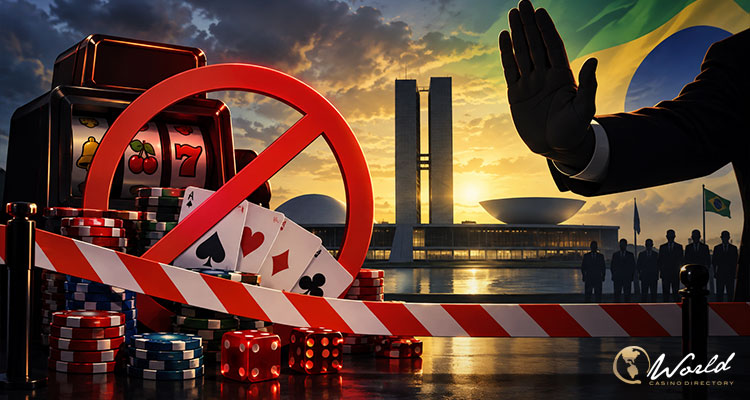
Brazil’s online gambling sector could soon face its biggest regulatory challenge since the market was legalized, as President Luiz Inácio Lula da Silva’s administration considers introducing new restrictions through a provisional measure that would take effect immediately upon publication.
Reports from sources close to the presidential administration indicate that the government is preparing a proposal designed to tighten oversight of licensed betting operators. Discussions have advanced to the point where restrictions on entire gambling segments, including online casinos and some betting products, remain under consideration.
The move would represent a significant shift for a market that only became fully regulated at the beginning of 2025 under the Bets framework, which legalized and established rules for online sports betting and casino gaming in Brazil.
Recent developments suggest the government is seeking a faster route to reform than traditional legislation. By using a provisional measure, the administration would be able to implement changes immediately while Congress debates whether the new rules should remain in force.
Government officials are reportedly aiming to send the proposal to lawmakers in the coming days, according to SBC Noticias Brasil.
Administration Debates Scope of New Restrictions
The discussions within Brasília have expanded beyond efforts to combat illegal gambling operators. Officials are now evaluating whether certain forms of gambling should continue to be available in the regulated market at all.
Among the possibilities being examined is a ban on online casino products, including slot-style games that have gained widespread popularity in Brazil. Authorities are also assessing whether specific sports betting features should face additional restrictions.
The proposal is being coordinated by the Chief of Staff’s Office and reflects growing concern inside the presidential administration about the social and economic effects of gambling.
Last week, President Lula hosted a meeting at the Planalto Palace with representatives from public health groups, consumer protection organizations, religious institutions, business entities, specialists and members of civil society. Gambling industry representatives were absent from the discussions, including the National Association of Games and Lotteries (ANJL), the Brazilian Institute for Responsible Gaming (IBJR), and the Ministry of Finance’s Secretariat of Prizes and Betting.
According to reports, the president indicated during the meeting that stronger action may be necessary.
Lula stated: “Personally, I would put an end to sports betting. I think it’s a scourge on society. Now, as President of the Republic, I know I must share decisions to ensure things are done in the most correct way possible, without compromising the country’s political, economic, and social stability.”
The president further suggested that the government is approaching a final decision, saying: “Two-thirds of the decision has already been made; this meeting was the final step needed for us to sign off and make the decision.”
Internal Divisions Emerge Over Betting Policy
Although the administration is moving quickly, there is no consensus across government departments regarding how far the restrictions should go.
The Ministry of Finance, which played a central role in creating Brazil’s current betting regulations, is reportedly pushing for a more moderate approach. Some officials favor concentrating enforcement efforts on unlicensed operators while preserving the regulated market that has been established over recent years.
Others within the administration support stronger measures, arguing that gambling is contributing to rising household debt and increasing cases of gambling addiction.
Government officials have also linked the issue to broader economic policy. Concerns have emerged that initiatives designed to increase disposable income among Brazilian households could lose effectiveness if consumers direct additional spending power toward gambling activity.
Programs cited in internal discussions include income tax exemptions, energy tariff discounts and other measures intended to improve household finances.
At the same time, claims that gambling has become a major driver of personal debt have faced scrutiny. Brazil’s Central Bank has challenged recent assertions, arguing that increased indebtedness is more closely connected to credit card usage than betting activity.
Election-Year Politics Add Momentum
Political considerations appear to be playing an important role in the government’s timetable.
According to internal Workers’ Party research, roughly three out of every four Brazilians oppose betting platforms. Reports indicate that resistance is particularly strong among women and younger voters, two demographic groups viewed as important to Lula’s electoral prospects.
The administration is also seeking to avoid lengthy congressional debates. Government allies expect the legislative agenda in the coming weeks to be dominated by discussions surrounding the proposed end of Brazil’s 6×1 work schedule, creating uncertainty about when a conventional betting reform bill could advance.
A provisional measure would allow the government to act before the October 2026 presidential election while bypassing much of the slower legislative process.
The political backdrop has become increasingly competitive. Recent polling cited by Brazilian media shows Lula leading first-round voting intentions with 36%, while Flávio Bolsonaro follows with 29%. In a projected runoff scenario, both candidates were reported to be tied at 41%.
Additional polling data showed Lula with a 44% voting potential and 53% rejection rate, while Bolsonaro registered 40% voting potential and 55% rejection. The differences were reported to be within the margin of error.
With the provisional measure still being finalized, uncertainty remains over the exact shape of any new restrictions. What is clear, however, is that Brazil’s government is considering options that range from stronger enforcement against illegal operators to a substantial reduction of products currently permitted under the country’s young regulated gambling framework.
