

 United States
 Macau, China
 France
 Philippines
 Singapore
 Netherlands
 United Kingdom
 Canada
 Argentina
 Germany
 Estonia
 Peru
Peru Russia
 Australia
 South Africa
 Nigeria
 Malaysia
 Singapore
 India
India Finland
 China
China Ukraine
 Hong Kong
 Cyprus
 Turkey
 Greece
 Sweden
 South Korea
 Mexico
 Poland
 Ireland lottery results
 New Zealand lottery results
 Puerto Rico lottery results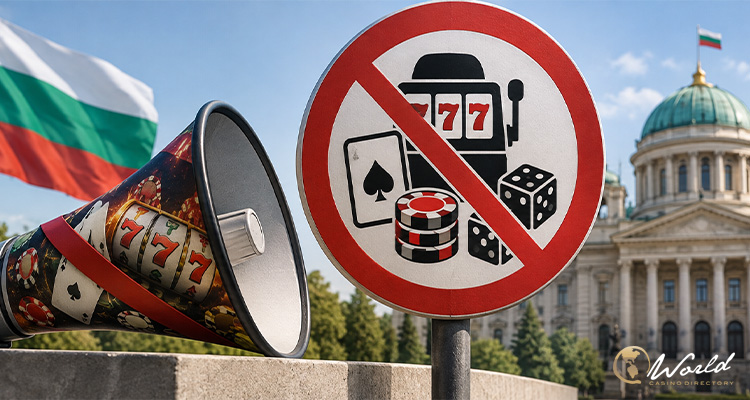
Bulgaria’s We Continue the Change party has submitted legislation seeking to impose a comprehensive ban on gambling advertising across the country’s media and public spaces. The proposal would extend the restrictions introduced in 2024 and address forms of gambling-related promotion that lawmakers believe can continue through sponsorships, branding and product placement.
Under the draft, gambling advertising would be prohibited on television, radio, print publications, websites and social media. The restrictions would also apply to billboards, public transport stops, building facades, electronic displays and branded vehicles.
According to BNR News (Radio Bulgaria), the legislation would leave only narrowly defined exceptions. Bulgarian Sports Totalizator draws could continue to appear in broadcasts, while gambling operators could display limited advertising on the facades of their own establishments. Adult sports teams would also be allowed to carry gambling logos measuring up to 10 by 10 centimetres.
The proposed rules would apply to permitted advertising as well as its presentation. Any remaining gambling-related marketing would have to include the warning text “GAMMING CARRIES A RISK OF DEVELOPING ADDICTION”. The warning would need to cover at least 10% of the advertisement and appear in black lettering on a white background using a clearly readable font.
Bill Targets Branding and Product Placement
The proposed changes come after Bulgaria introduced significant gambling advertising restrictions in 2024. That reform prohibited bonuses and player incentives in marketing material and removed gambling advertising from television, radio, print and social media. Outdoor advertising also became subject to restrictions, including requirements concerning its distance from educational facilities.
We Continue the Change now wants to close what it considers remaining gaps in those rules. The bill would prohibit product placement and sponsorship of media content connected with gambling operators, alongside campaign messages promoting bonuses and other incentives.
Party chairman Assen Vassilev said: “We need to seal off the legislative loopholes, such as product placement not being treated as advertising. This is an obvious loophole that is being utilised.
“This also goes for the branding of gambling operators not being treated as advertising when you add ‘League’ at the end of it.
“When it comes to online advertising, we have a very good example. Currently, the European Union forbids any type of political advertising across all social media, which has led to companies like Facebook and Google to self-regulate in order to remain compliant.
“Let’s start working in that direction. We’ve spoken to our European MPs about implementing such an EU-wide measure for gambling as well, so that neither Facebook nor Google can allow online marketing when the user is located in a Member State.”
The debate has intensified around gambling branding during major sporting broadcasts. Recent World Cup coverage on Bulgarian National Television included frequent promotion from operators such as inbet, Efbet and 8888 for franchising arrangements and opportunities to open bookmaker shops as partners.
Although these messages did not directly market betting products to consumers, the operators received significant brand exposure during national television coverage. Gambling companies also sponsor prominent domestic sporting competitions, including the Efbet League, MrBit Second League and Sesame Cup.
Betano, which served as an official betting partner of the World Cup, was among the gambling brands that received exposure around the tournament. Such arrangements have prompted further discussion about whether existing advertising rules adequately cover sponsorship and brand visibility.
Proposed Rules Would Restrict Sports Sponsorships
The draft would also place a strict limit on gambling logos appearing on adult sports uniforms. The maximum permitted size would be 10 by 10 centimetres.
Outdoor advertising would face a broader prohibition, covering billboards, transport stops and buildings while retaining a limited allowance for advertising directly on gambling venues.
The legislation also addresses gambling harm warnings. Although warning messages are already required, lawmakers have raised concerns over attempts to reduce their visibility. The proposal would prescribe black lettering on a white background and require the message to occupy at least 10% of the relevant advertising space.
The proposed approach would affect the way gambling companies use sports associations and competitions to maintain public visibility. It would also prevent product placement from operating outside the advertising framework.
Former Manchester United striker Dimitar Berbatov has separately reflected on his previous involvement in gambling advertising. He has worked with LiveScoreBet, JBO and Betfair and recently discussed the wider responsibility associated with such promotions.
He said: “There were billboards with my likeness everywhere. At the time, I had slightly fallen asleep in my own bubble and didn’t realise that what I had done was actually a mistake.
“I had to wake up because I underestimated my social responsibility, especially towards young people.”
Party Renews Pressure for Regulatory Changes
The latest bill follows several attempts by We Continue the Change to secure additional gambling advertising restrictions. In July, the party called on Prime Minister Roumen Radev’s cabinet to introduce further measures ahead of Bulgaria’s 2026/27 Budget.
Deputy Finance Minister Lyudmila Petkova rejected that request at the time, citing the government’s plans for a wider review of the Gambling Act. The regulatory framework had already undergone a major revision in 2024, while Bulgaria subsequently introduced a licensing regime for gambling affiliates in August.
The latest proposal would therefore broaden the scope of restrictions beyond traditional advertising formats. It would cover digital promotion, outdoor displays, sponsorship-related exposure and product placement.
The party argues that these areas can allow gambling brands to remain highly visible even when conventional advertising is prohibited. Its proposed legislation would seek to bring those activities under a more comprehensive advertising ban.
The draft now goes before Parliament, where its proposed restrictions will form part of the continuing debate over gambling regulation and marketing in Bulgaria.
