

 United States
 Macau, China
 France
 Philippines
 Singapore
 Netherlands
 United Kingdom
 Canada
 Argentina
 Germany
 Estonia
 Peru
Peru Russia
 Australia
 South Africa
 Nigeria
 Malaysia
 Singapore
 India
India Finland
 China
China Ukraine
 Hong Kong
 Cyprus
 Turkey
 Greece
 Sweden
 South Korea
 Mexico
 Poland
 Ireland lottery results
 New Zealand lottery results
 Puerto Rico lottery results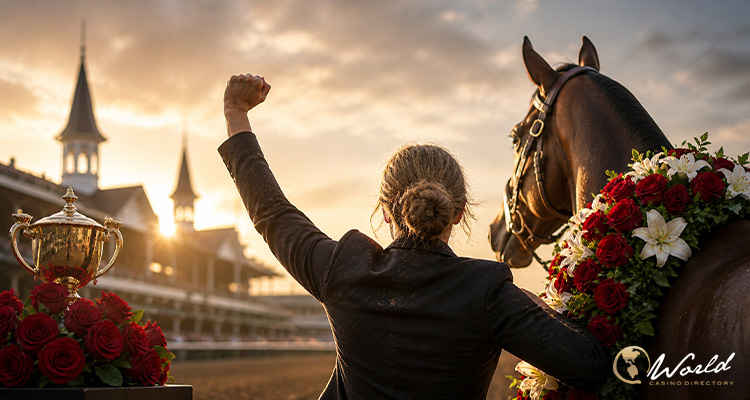
Golden Tempo delivered a dramatic finish at the 2026 Kentucky Derby, storming from the back of the field to secure victory and mark a historic milestone for trainer Cherie DeVaux. The 23-1 long shot overtook favorite Renegade in the final strides, sealing a narrow win by a neck in front of more than 100,000 spectators at Churchill Downs.
The result made DeVaux the first woman to train a Kentucky Derby winner in the race’s 152-year history. Overcome by the moment after days of questions about the possibility, she responded candidly: “I’m just glad I don’t have to answer that question anymore,” drawing applause from the crowd.
Late Charge Secures Dramatic Derby Victory
Golden Tempo’s path to victory followed a familiar pattern. The colt trailed the field early, sitting in last place for much of the race before jockey Jose Ortiz began advancing around the far turn. With a quarter-mile remaining, Golden Tempo still had significant ground to cover.
Ortiz guided the horse through traffic and then opted for an outside lane entering the stretch. One by one, Golden Tempo passed rivals, setting his sights on Renegade, ridden by Ortiz’s brother, Irad. In the final moments, the long shot surged ahead to stop the clock at 2:02.27 for the 1¼-mile race.
“I felt like I had horse,” Jose Ortiz said. “I felt like we were moving along very nice. I felt like going outside on him wasn’t going to hurt me. I think he was the horse to beat.”
DeVaux remained calm even as her horse trailed early. “That’s how he runs,” she said, noting that the strategy mirrored previous performances. As the finish approached, her confidence grew. “About the three-sixteenth pole, I thought we’re probably going to win this,” she said according to ESPN. “And then I really kind of blacked out after that.”
The payout reflected the upset nature of the result, with Golden Tempo returning $48.24 to win. Renegade finished second, while Ocelli, a late entrant at long odds, claimed third place.
A Milestone Moment for Cherie DeVaux
DeVaux’s achievement places her alongside Jena Antonucci as the only women to train winners of Triple Crown races. Reflecting on the broader impact, she said the significance became clear earlier in the week.
“It really is an honor to be able to be that person for other women or other little girls to look up to,” DeVaux said. “You can dream big, and you can pivot. You can come from one place and make yourself a part of history.”
Her journey to this point spans more than two decades in racing, beginning as an exercise rider. After launching her own stable eight years ago, she reached the sport’s highest stage. “I didn’t believe,” she said. “I started my career here 22 years ago as a bright-eyed, bushy-tailed exercise rider. And I would not believe that I would be sitting up here today. Never in my life did I think I would.”
Ortiz, who secured his first Derby victory after multiple attempts, described the achievement as deeply personal. “I get to ride it almost every year, but to get to win it, it’s just special,” he said. “I just wish my grandpa was here, but I know he’s looking from heaven. Just very happy that I get my goal, my life dream goal achieved.”
Focus Turns to Preakness Decision
Attention quickly shifted to whether Golden Tempo will compete in the Preakness Stakes, the second leg of the Triple Crown scheduled for May 16. DeVaux emphasized that the horse’s condition will guide the decision.
“We’re going to let him decide that,” she said. “We’re going to have to allow him to tell us because the horse is first. We’re not here for ourselves. We’re not here for our egos. We’re here for the horse.”
She reiterated a similar approach the following day: “We’ll assess how he’s doing,” DeVaux said. “As long as he’s in tip-top shape, we’ll talk about (the Preakness), and it is on the table. But it’s really up to (the horse). … He’s a horse that has a lot of constitution to him, so he can handle something like that. But if one day he just doesn’t look like he’s in tip-top shape, we’ll pivot and come up with another plan.”
Recent years have seen some Derby winners skip the Preakness, reflecting concerns about the short turnaround. DeVaux acknowledged the challenge while recognizing the tradition. “The Triple Crown is hard to win for a reason,” she said. “I appreciate the history of it. Horses are definitely different. They’re not built the same. They’re not trained the same as back then. But current times have shown that it can be done with the right horse.”
As celebrations continued, DeVaux balanced her new recognition with a desire for routine. After receiving hundreds of congratulatory messages, she said, “I can’t wait to go home and get back to my normal routine.”
