

 United States
 Macau, China
 France
 Philippines
 Singapore
 Netherlands
 United Kingdom
 Canada
 Argentina
 Germany
 Estonia
 Peru
Peru Russia
 Australia
 South Africa
 Nigeria
 Malaysia
 Singapore
 India
India Finland
 China
China Ukraine
 Hong Kong
 Cyprus
 Turkey
 Greece
 Sweden
 South Korea
 Mexico
 Poland
 Ireland lottery results
 New Zealand lottery results
 Puerto Rico lottery results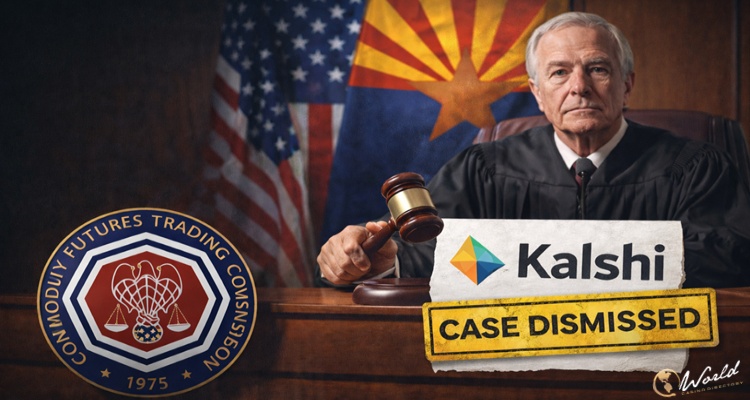
A federal judge has temporarily stopped Arizona from pursuing criminal charges against prediction market operator Kalshi, following intervention by the Commodity Futures Trading Commission (CFTC). The ruling marks a significant development in an ongoing dispute over whether states can regulate platforms offering event-based financial contracts.
The decision came after a hearing before U.S. District Judge Michael Liburdi, who granted a temporary restraining order requested by the CFTC. The order prevents Arizona authorities from continuing their case against Kalshi while broader legal questions about jurisdiction are resolved.
Federal Authority Versus State Enforcement
The CFTC argued that prediction markets fall under its exclusive oversight as part of federally regulated swaps markets. According to the agency, attempts by states to apply gambling or criminal statutes to these platforms conflict with federal law.
CFTC Chairman Michael Selig, cited by Reuters, emphasized this position in a statement following the ruling: “Arizona’s decision to weaponize state criminal law against companies that comply with federal law sets a dangerous precedent, and the court’s order today sends a clear message that intimidation is not an acceptable tactic to circumvent federal law.”
The agency maintains that event contracts offered by firms such as Kalshi qualify as swaps under the Commodity Exchange Act, placing them firmly within federal jurisdiction. This interpretation has driven a broader legal strategy aimed at preventing state-level enforcement actions against prediction market operators.
The case in Arizona is part of that wider effort. Earlier this month, the administration of President Donald Trump filed lawsuits against Arizona, Connecticut, and Illinois, seeking to block what it described as unlawful attempts to regulate prediction markets under state gambling laws.
Arizona Pushes Back on Federal Claims
Arizona officials have challenged the federal government’s stance, arguing that their authority over gambling activities remains intact. In court filings, the state said federal law does not eliminate its “traditional power over sports betting.”
The dispute centers on how prediction markets should be classified. Arizona Attorney General Kris Mayes filed criminal charges against Kalshi on March 17, accusing the company of operating an illegal gambling business and allowing wagers on election outcomes. State authorities brought 20 misdemeanor counts tied to what they consider unlawful betting activity.
Kalshi has rejected those claims, maintaining that its platform operates differently from sportsbooks and casinos. The company has argued that its contracts are financial instruments rather than gambling products.
The conflict highlights a broader tension as financial and gaming regulations increasingly overlap. State officials view certain event contracts as resembling betting, while federal regulators treat them as derivatives governed by national rules.
Court Decision Hinges on Federal Intervention
The legal path to the ruling included an earlier setback for Kalshi. Judge Liburdi had initially denied the company’s request for emergency relief, citing the Anti-Injunction Act, which limits federal courts’ ability to halt ongoing state proceedings unless the request comes from the federal government.
“The exception to the AIA applies only ‘to injunctions issued at the request of the United States,’” Liburdi noted in his earlier decision.
That changed when the CFTC filed its own motion seeking to block Arizona’s actions. Because the request came from a federal agency, it met the criteria for an exception under the law. Liburdi then granted the temporary restraining order, concluding that the CFTC had shown a reasonable likelihood of success in arguing that federal law preempts Arizona’s case.
The ruling effectively pauses the prosecution and cancels near-term proceedings, including a scheduled arraignment. However, it does not resolve the underlying dispute, which will continue to be litigated.
Expanding Legal Battle Over Prediction Markets
Arizona has emerged as a focal point in a broader legal fight involving prediction markets. The state’s case against Kalshi represents the first criminal prosecution of its kind, but it is only one part of a complex web of litigation.
Kalshi had already filed its own federal lawsuit against Arizona officials, claiming that state actions created “a substantial risk” of enforcement. Meanwhile, the CFTC’s involvement has added another layer, as the agency actively seeks court rulings that affirm its regulatory authority.
The evolving situation reflects a shift in how federal regulators approach the sector. While the CFTC had previously indicated it would defer to courts on questions surrounding event contracts, it is now taking a more direct role in defending the companies it oversees.
Arizona officials have signaled they may continue to challenge the decision. A spokesperson for the attorney general’s office said: “The attorney general’s office disagrees with the court’s ruling and we will evaluate our next steps.”
As the case proceeds, the outcome could shape how prediction markets operate across the United States, determining whether oversight remains centralized at the federal level or shared with state authorities.
