

 United States
 Macau, China
 France
 Philippines
 Singapore
 Netherlands
 United Kingdom
 Canada
 Argentina
 Germany
 Estonia
 Peru
Peru Russia
 Australia
 South Africa
 Nigeria
 Malaysia
 Singapore
 India
India Finland
 China
China Ukraine
 Hong Kong
 Cyprus
 Turkey
 Greece
 Sweden
 South Korea
 Mexico
 Poland
 Ireland lottery results
 New Zealand lottery results
 Puerto Rico lottery results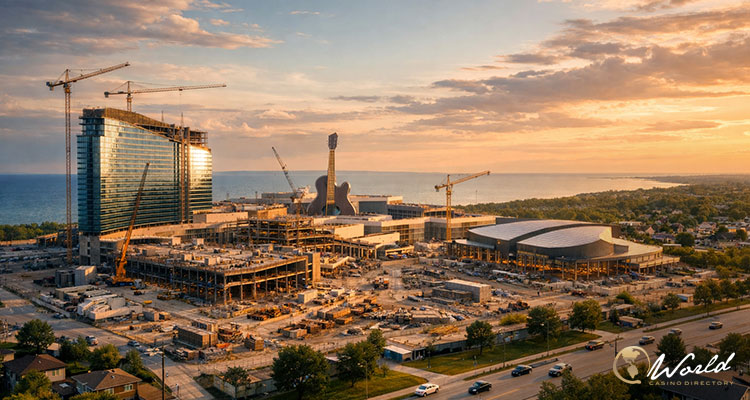
The proposed Hard Rock casino and hotel development in Kenosha has reached a new stage after federal officials released a draft environmental review examining the project’s potential effects. The document, issued by the Bureau of Indian Affairs (BIA), evaluates a plan by the Menominee Indian Tribe of Wisconsin to place land into federal trust and build a large-scale gaming and entertainment complex.
The Draft Environmental Assessment concludes that the project would have minimal environmental consequences. According to the findings, construction and operations would lead to “insignificant” impacts on air quality and would comply with both federal and state regulations. The review also determined that the development would avoid harm to wetlands and protected aquatic areas, with no need to alter such resources.
The assessment represents a key step in a process that has stretched across decades, bringing the project closer to potential federal approval.
Environmental Review Signals Progress
Federal officials spent more than a year analyzing how the proposed development could affect the surrounding area. Their conclusions extend beyond air quality, covering water resources, traffic, public services, and biological systems. Across these categories, the BIA found no major environmental concerns tied to the project.
The casino complex is planned for roughly 60 acres near Interstate 94 in Kenosha County, a location that places it between Milwaukee and Chicago. The Menominee Tribe has partnered with Hard Rock International, which is owned by the Seminole Tribe of Florida, to develop the $360 million project.
Plans for the resort include a casino floor with 1,500 slot machines, more than 50 table games, and a sportsbook. The development would also feature a 150-room hotel, multiple restaurants, bars, and a Hard Rock Live entertainment venue capable of hosting large events.
A public comment period on the environmental review will remain open until April 12, 2026, allowing residents and stakeholders to provide input before federal officials finalize their decision.
Economic Impact and Local Support
In addition to environmental considerations, the federal review assessed the economic effects of the project. The analysis indicates that construction activity would generate jobs in the short term, while the completed resort could employ more than 1,000 people on a permanent basis.
Menominee Tribal Chairman Joey Awonohopay emphasized the importance of the milestone, stating, “This is a long-awaited opportunity, and we are excited to have arrived at the next phase in this process,” and added, “The EA release marks an important step forward for our tribal members, the people of Kenosha County, and all of Wisconsin. This project will deliver significant, local economic impact, create more than 1,000 permanent jobs in the final phase of the project, and support families and businesses across the region.”
Local leaders have also expressed support for the development. Kenosha County Executive Samantha Kerkman said, “The Kenosha casino approval process has moved tot he next phase with the Bueau of Indian Affairs officially publishing the Environmental Assessment for public comment, offering an opportunity for input and transparency,” and noted, “This approval process is decades in the making, and the people of Kenosha have consistently supported the project. I’ve followed and supported the project for years. I encourage citizens to continue to make their voices heard throughout the comment period.”
Kenosha Mayor David Bogdala, cited by WTMJ-TV, echoed that sentiment, stating, “This project has been a long time coming for Kenosha, and it’s exciting to see it move closer to reality,” and continued, “The Hard Rock development brings new growth to Kenosha, creating jobs, attracting investment, and strengthening our community. This is a project that’s good for Kenosha, good for the region, and good for the State of Wisconsin.”
Under agreements with the city, the project would also provide direct financial contributions, including escalating annual payments and a share of gaming revenue.
Long Path Toward Approval
The Menominee Tribe has pursued a casino in Kenosha since the 1990s. Earlier proposals faced setbacks, including a 2015 decision by then-Governor Scott Walker to reject a similar plan due to concerns about financial risks tied to existing tribal gaming agreements.
Changes to those agreements in later years reduced potential liabilities for the state, reviving the project’s prospects. By 2022, the Menominee Tribe and Hard Rock International introduced a revised, smaller-scale proposal at a new site.
Local approvals followed in 2024, when both the Kenosha City Council and the Kenosha County Board backed agreements tied to the development. A formal federal application has since progressed through review stages, leading to the current environmental assessment.
Despite the progress, several steps remain before construction can begin. After the public comment period closes, the BIA will review feedback and determine whether to issue a final decision. If approved, the project must still receive concurrence from Wisconsin Governor Tony Evers because the site is located off tribal reservation land. The state and the tribe would then need to negotiate a gaming compact to permit full casino operations.
Evers has indicated general support for tribal gaming rights but has not committed to a final decision on this project, noting that his role comes at the end of the approval process. If all approvals are secured, the Menominee Tribe plans to build the entire complex in a single phase lasting between 12 and 18 months. Based on current timelines, analysts expect a potential opening later in the decade.
