

 United States
 Macau, China
 France
 Philippines
 Singapore
 Netherlands
 United Kingdom
 Canada
 Argentina
 Germany
 Estonia
 Peru
Peru Russia
 Australia
 South Africa
 Nigeria
 Malaysia
 Singapore
 India
India Finland
 China
China Ukraine
 Hong Kong
 Cyprus
 Turkey
 Greece
 Sweden
 South Korea
 Mexico
 Poland
 Ireland lottery results
 New Zealand lottery results
 Puerto Rico lottery results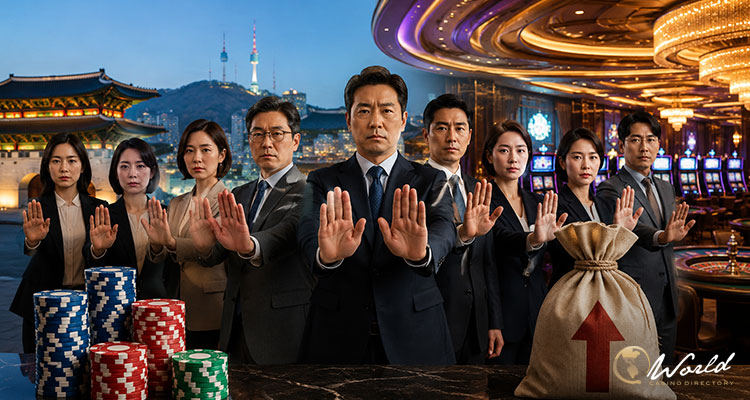
Twelve tourism organizations in South Korea have jointly called on the government to reconsider planned casino industry reforms, warning that higher financial contributions and a new licence renewal system could weaken the competitiveness of the country’s integrated resort sector.
The organizations, including the Korea Casino Association, Korea Tourism Association, Korea Hotel Association and Korea Association of Travel Agents, issued a joint statement urging the Ministry of Culture, Sports and Tourism to withdraw the reform measures currently under review.
The government is considering increasing the maximum contribution rate paid by foreigner-only casinos to the Tourism Promotion and Development Fund from 10% of sales revenue to 15%. The proposal also includes introducing a five-year licence renewal system and requiring prior approval for transfers or acquisitions involving casino businesses.
Industry representatives argue that the proposed changes could place additional pressure on operators that continue recovering from the impact of the COVID-19 pandemic.
Industry Raises Concerns Over Higher Tourism Fund Payments
Tourism groups have highlighted that casino operators contribute to the fund based on revenue rather than profit, meaning payments are required even during periods of financial losses.
The Korea Casino Association said the current system creates a unique burden because casino companies pay into the fund according to sales figures while also managing other tax obligations. The association stated, “Unlike general levies that are imposed based on profit generation or income and corporate taxes, the casino industry is the only sector that pays to the fund based on ‘revenue’ even when operating at a loss. In fact, over the past decade, about half (8 to 15) of the 17 to 18 domestic casino operators have suffered from annual operating deficits.”
The group warned that increasing the maximum contribution rate from 10% to 15% could worsen financial conditions for operators that already face individual consumption tax, corporate tax and local tax obligations.
It also argued that the proposed increase could accelerate financial difficulties for smaller companies. Industry estimates suggest the change could reduce casino operating profits significantly, with some analysts forecasting a possible impact of up to 37% in 2026.
The Korea Casino Association has also pointed to the sector’s existing contribution history. According to the group, casino operators have provided a cumulative KRW5.23 trillion to the Tourism Promotion and Development Fund since 1994. Contributions reached KRW219.5 billion in 2025, representing a 61.7% increase compared with KRW135.7 billion in 2019.
Seo Won-seok, president of the Korean Tourism Association, said the fund increase requires careful consideration.
“The tourism fund has a ‘quasi-tax’ character that has nothing to do with a company’s profitability,” Chairman Seo said. “A higher level of policy justification and objective grounds than general taxes are required.”
Licence Renewal Proposal Creates Investment Concerns
According to Seoul Economics Daily, the tourism organizations also objected to plans requiring casino operators to renew licences every five years.
South Korean casino licences have operated without fixed expiration dates since amendments to the Tourism Promotion Act in 1994, provided companies comply with regulatory requirements. Industry groups argue that replacing this framework with regular renewal reviews could create uncertainty for long-term investment decisions.
They noted that integrated resorts require major initial investment, often reaching hundreds of billions or trillions of won, and take extended periods to recover costs. According to the industry, regular reassessment of licences could make it harder to attract foreign capital and encourage new developments.
The organizations compared South Korea’s approach with regional markets such as Macau, Singapore, the Philippines and Japan, where casino and integrated resort industries continue expanding.
The industry highlighted the upcoming MGM Osaka integrated resort in Japan as an example of increased regional competition. The project is scheduled to open in 2030 and represents a major investment in Japan’s casino market.
The tourism groups warned that stricter domestic rules could affect South Korea’s ability to compete for international visitors and investment.
“If excessive fund increases and short-term renewal regulations hold back the domestic industry, Korea’s tourism industry will not escape a vicious cycle of losing global market leadership and national wealth outflow,” the tourism industry said.
Government Reviews Casino System Changes
The Ministry of Culture, Sports and Tourism has argued that the casino regulatory framework requires updates after decades of industry growth. The ministry has stated that the proposed 15% contribution rate would apply through a new revenue bracket for higher-sales operators rather than across all casino income.
The government is continuing discussions with casino operators, academics and industry experts before determining the final structure of the contribution system.
Industry representatives acknowledge the need for regulatory improvements in areas such as licence management and transfer approval procedures. However, they argue that financial changes should consider the market environment and international competition.
Seo Won-seok said, “Excessive regulation could rather weaken the competitiveness of the K casino industry. We need a careful approach to raising the Tourism Promotion and Development Fund.”
