

 United States
 Macau, China
 France
 Philippines
 Singapore
 Netherlands
 United Kingdom
 Canada
 Argentina
 Germany
 Estonia
 Peru
Peru Russia
 Australia
 South Africa
 Nigeria
 Malaysia
 Singapore
 India
India Finland
 China
China Ukraine
 Hong Kong
 Cyprus
 Turkey
 Greece
 Sweden
 South Korea
 Mexico
 Poland
 Ireland lottery results
 New Zealand lottery results
 Puerto Rico lottery results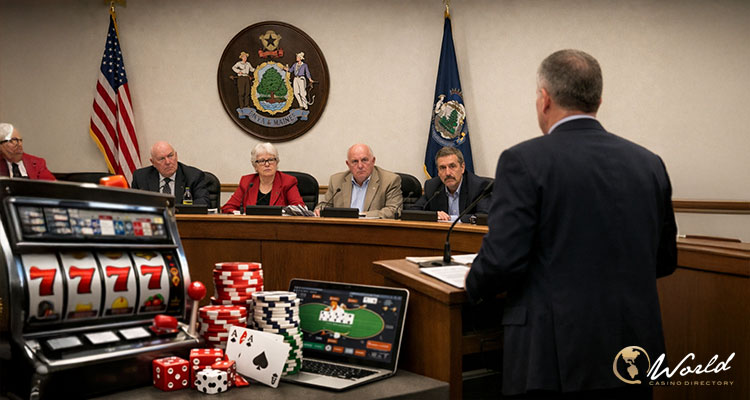
Maine lawmakers return to Augusta in early January facing two closely timed debates that could reshape the state’s approach to online gambling. At the center sits LD 1164, a bill approved by the Legislature that would legalize internet casino gaming, alongside a separate proposal aimed at banning online sweepstakes casinos. With the iGaming measure awaiting action from Governor Janet Mills, state gambling regulators have publicly urged her to reject it, citing economic and consumer risks.
On December 17, 2025, the Maine Gambling Control Board formally asked Governor Mills to veto LD 1164. The bill would allow the four tribes of the Wabanaki Nations to offer online casino games through third-party operators, following a framework similar to the state’s sports betting law. Under that structure, tribal nations already partner with Caesars Sportsbook and DraftKings.
Steven J. Silver, chair of the Gambling Control Board, wrote to the governor on behalf of the full board to outline its objections. While acknowledging differing personal views among members on online gaming, the board stated unified opposition to the bill’s licensing limits. Silver wrote, “Although the Board has varying personal opinions about the general merits of legalizing Internet Gaming (“iGaming”), we are unified in our belief that any qualified operator should have the ability to obtain an iGaming license including the Wabanaki Nations. Cutting out Oxford and Hollywood Casinos entirely from offering iGaming is ill-advised and creates a monopoly that is harmful to consumers and the Maine workers employed by Oxford and Hollywood Casinos.”
The concern centers on the exclusion of Oxford Casino and Hollywood Casino, Maine’s two commercial casinos, from participating in the online market. Regulators argue that the bill would consolidate iGaming under tribal partnerships with DraftKings and Caesars Sportsbook, leaving land-based operators without access to a growing segment of gambling revenue.
Job Loss and Problem Gambling Concerns
The board also pointed to potential job losses tied to the proposed system. Oxford and Hollywood Casinos together employ nearly 1,000 people across the state. Silver warned that blocking these casinos from iGaming revenue could force layoffs, citing testimony presented to the board. “However, Oxford and Hollywood Casinos employ nearly 1,000 Mainers. Legalizing iGaming without permitting Oxford and Hollywood to participate will lead to job cuts. During the Board’s October meeting, representatives from Oxford Casino explained that approximately 120 Mainers will lose their jobs due to LD 1164’s impact on that property alone. Hollywood Casino anticipates significant job losses as well. We cannot afford to put 100-200 Mainers out of work,” Silver wrote, according to Sports Betting Dime.
In addition to employment impacts, the board raised concerns about gambling addiction trends. According to state data, 133 residents had self-excluded from casino gambling in 2022, before online sports betting launched. That figure has since risen to 498, representing a 275% increase in three years. Regulators cautioned that expanding online casino access could further increase problem gambling rates.
The letter concluded with a direct appeal to the governor’s decision-making responsibility. “We understand that you have a difficult decision to make in January. However, after hearing from our current gaming licensees, we know that LD 1164 would cause significant harm to Mainers. Therefore, we the Maine Gambling Control Board, unanimously urge you to veto LD 1164.”
Legislative Timing and Parallel Gambling Debate
Governor Mills declined to act on LD 1164 before the legislative session ended, triggering a narrow decision window when lawmakers reconvene. Beginning Wednesday, January 7, she will have three days to sign the bill, veto it, or allow it to become law without her signature. If enacted, Maine would become the eighth state to legalize iGaming.
The bill’s path through the Legislature proved unusual. Introduced early in 2025, it initially drew little attention before resurfacing during a special session focused on the state budget. The Senate tabled the bill in June, later revisited it, and ultimately approved it without a roll call following failed motions to reject and reconsider. Both chambers acted in line with recommendations from the Veterans and Legal Affairs Committee.
If the governor signs the bill, each Wabanaki Nation tribe could offer online casino games such as blackjack, poker, roulette, and baccarat through a single operator. The state would tax the activity at 16%, with revenue directed to problem gaming programs, substance use disorder services, veteran housing, and emergency housing relief. A fiscal note projects $3.6 million in new tax revenue by the 2026–2027 fiscal year.
At the same time, lawmakers will soon review LD 2007, a bill scheduled for a January 14 hearing that would ban dual-currency online sweepstakes casinos. The proposal would impose fines ranging from $10,000 to $100,000, directing collected penalties to the Maine Gambling Addiction Prevention and Treatment Fund. The Maine Gambling Control Unit has already advised residents to avoid such sites, describing them as illegal under current law.
As Maine debates expanding regulated online gambling while restricting unlicensed platforms, Governor Mills’ decision on LD 1164 will set the tone for the state’s gambling policy in 2026.
