

 United States
 Macau, China
 France
 Philippines
 Singapore
 Netherlands
 United Kingdom
 Canada
 Argentina
 Germany
 Estonia
 Peru
Peru Russia
 Australia
 South Africa
 Nigeria
 Malaysia
 Singapore
 India
India Finland
 China
China Ukraine
 Hong Kong
 Cyprus
 Turkey
 Greece
 Sweden
 South Korea
 Mexico
 Poland
 Ireland lottery results
 New Zealand lottery results
 Puerto Rico lottery results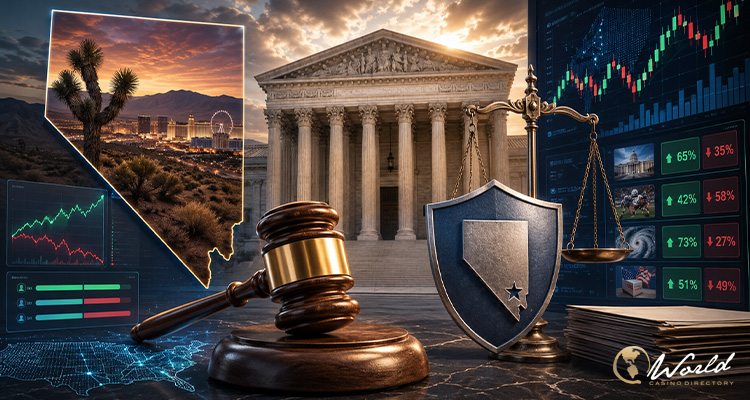
A federal appeals court has ruled that Nevada may continue enforcing its gaming laws against prediction market operator Kalshi, delivering a significant victory to state regulators and adding momentum to a growing national debate over who has authority to oversee event-based trading platforms.
In a unanimous decision, a three-judge panel of the Ninth U.S. Circuit Court of Appeals found that Kalshi was unlikely to succeed in its argument that federal commodities law prevents Nevada from requiring the company to comply with state gaming regulations. The ruling allows Nevada to continue restricting Kalshi’s sports-event contracts while broader litigation continues.
The decision marks one of the most important legal developments so far in the dispute between state gaming authorities and prediction market operators. It also creates a conflict between federal appellate courts after the Third U.S. Circuit Court of Appeals previously concluded that New Jersey could not regulate Kalshi’s platform, increasing the possibility that the U.S. Supreme Court may eventually address the issue.
The case has implications far beyond Nevada, as roughly 20 states are involved in disputes involving prediction market companies such as Kalshi, Polymarket and Robinhood.
Court Rejects Kalshi’s Federal Preemption Argument
Kalshi has maintained that its sports-event contracts fall under the jurisdiction of the Commodity Futures Trading Commission (CFTC) because they qualify as federally regulated financial products. The company has argued that, as a designated contract market, it should be regulated by the CFTC rather than state gaming agencies.
The Ninth Circuit disagreed. Judge Ryan Nelson wrote that Kalshi’s contracts closely resemble sports wagering, which has traditionally been regulated at the state level. The ruling noted that the company itself had previously promoted its platform as “the first app for legal sports betting” throughout the United States.
Nelson also questioned whether Congress intended federal financial reform legislation to override longstanding state authority over gambling regulation.
“It is difficult, then, to conclude that Congress intended to upend its decades of careful regulation of gambling based on broad definitions of the words used in a Wall Street Reform Bill,” Nelson wrote according to Reuters.
He further stated: “The CFTC is not a national gambling regulator. No one suggested it was until over a decade after the law was passed.”
The panel concluded that Nevada’s gaming laws likely apply to Kalshi’s sports-event contracts and upheld a lower-court ruling that dissolved an earlier injunction allowing the company to continue offering those products within the state.
The judges returned questions concerning Kalshi’s election contracts to the lower court for additional review.
Nevada Officials Welcome the Decision
Nevada regulators and elected officials quickly praised the ruling, describing it as confirmation of the state’s long-held position that sports-event contracts amount to sports betting and therefore require state oversight.
Nevada Gaming Control Board Chairman Mike Dreitzer said the outcome validated the board’s approach.
“We are pleased with the Ninth Circuit’s ruling today in favor of Nevada,” Dreitzer said. “This completely vindicates what we have been saying all along. This is sports betting and needs to be properly regulated by the state. The Nevada Gaming Control Board has been regulating gaming in the state of Nevada for more than 70 years in accordance with the highest standards and best practices. We will continue to vigorously enforce Nevada law to safeguard gaming in our state.”
Governor Joe Lombardo also supported the decision.
“Prediction markets offering sports-event contracts constitute gambling and must comply with Nevada’s gaming laws and regulatory framework,” Lombardo said. “I commend Chairman Dreitzer and the Nevada Gaming Control Board for their diligent work to uphold Nevada’s longstanding regulatory standards, safeguard the integrity of our gaming industry, and ensure the public can continue to have confidence in its oversight.”
Nevada Attorney General Aaron Ford described the ruling as a major legal victory.
“Kalshi sought to sidestep Nevada’s gaming laws by claiming its sports wagering products were federally regulated financial instruments beyond the reach of state regulators,” Ford said. “The Ninth Circuit rejected that argument and made clear what we have maintained from the beginning: sports betting does not become something else simply because a company calls it an ‘event contract.’ Nevada has built the gold standard for gaming regulation, and we will not allow companies to circumvent those protections or operate outside the law.”
Broader National Impact Emerges
The ruling arrives as prediction markets continue to expand in popularity. Platforms including Kalshi, Polymarket, Coinbase and others have attracted increased attention since the 2024 U.S. presidential election, when many users viewed prediction markets as more accurate than traditional polling in forecasting Donald Trump‘s victory over Kamala Harris.
Although sports-related contracts have generated much of the controversy, Kalshi also offers markets tied to elections, economic indicators, weather outcomes and entertainment events such as the Academy Awards.
Nevada became the first state to secure injunctions against multiple prediction market operators, including Kalshi, Polymarket and Coinbase. State officials said Kalshi later agreed to implement third-party geofencing measures designed to prevent users located in Nevada from accessing prohibited contracts after regulators raised concerns about compliance.
Several other states have also challenged Kalshi’s activities. According to court filings and regulatory actions, Nevada, Massachusetts, Michigan and Washington have obtained court orders limiting the company’s operations. Meanwhile, the CFTC has asserted that it holds exclusive authority over prediction markets and has challenged regulatory efforts in multiple states.
Kalshi said it intends to seek further review of the Ninth Circuit decision. For now, trading on sports, entertainment and election contracts remains blocked in Nevada while the legal battle continues.
The growing divide between federal courts and the increasing number of state-level disputes suggest that the question of who regulates prediction markets may ultimately require resolution from the nation’s highest court.
