

 United States
 Macau, China
 France
 Philippines
 Singapore
 Netherlands
 United Kingdom
 Canada
 Argentina
 Germany
 Estonia
 Peru
Peru Russia
 Australia
 South Africa
 Nigeria
 Malaysia
 Singapore
 India
India Finland
 China
China Ukraine
 Hong Kong
 Cyprus
 Turkey
 Greece
 Sweden
 South Korea
 Mexico
 Poland
 Ireland lottery results
 New Zealand lottery results
 Puerto Rico lottery results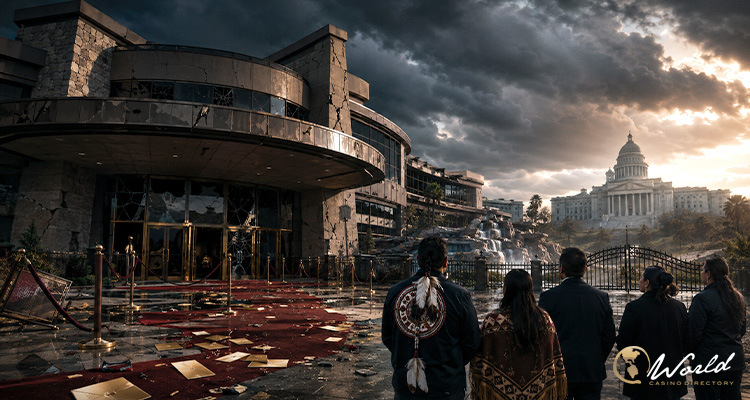
The Scotts Valley Band of Pomo Indians has launched a new legal challenge against the U.S. Department of the Interior, seeking to revive plans for a major casino development in Vallejo after federal officials determined the project site does not qualify for gaming under federal law.
The lawsuit, filed on Aug. 7 in the U.S. District Court for the District of Columbia, asks the court to overturn a July 30 Interior Department decision that found the Vallejo property ineligible for gaming under the Indian Gaming Regulatory Act (IGRA). The tribe is also seeking a preliminary injunction that would allow its temporary casino facility to reopen while the case moves through the courts.
The dispute centers on a broader $700 million development planned on approximately 160 acres near Interstate 80 and Columbus Parkway. The project includes proposals for an eight-story casino, restaurants, bars, a ballroom, a parking structure, tribal government offices, housing and a 45-acre biological preserve.
The legal battle intensified after the tribe’s preview casino operated for only seven days before closing.
The temporary gaming facility, housed in modular buildings near the development site, welcomed its first visitors on July 24. Operations ended on July 31 after the tribe received the adverse federal ruling. According to court filings, the Interior Department formally issued its decision on July 30.
Long-Running Dispute Returns to Court
The latest lawsuit represents another chapter in a dispute that stretches back nearly a decade.
The Scotts Valley Band first sought restored lands gaming eligibility in 2016, submitting more than 4,000 pages of historical, genealogical and anthropological material in support of its application. Federal officials denied the request in 2019.
In 2022, however, the U.S. District Court for the District of Columbia found that denial to be arbitrary and capricious and instructed the Interior Department to reassess the application using principles tied to the Indian canon of construction and the remedial purposes of IGRA.
Following that review, the department reversed its position and approved gaming eligibility for the Vallejo site in January 2025.
That approval did not last. The Trump administration rescinded the determination in March 2025. A federal court later ruled that the rescission violated the tribe’s due process rights and reinstated the gaming eligibility decision while allowing federal reconsideration to continue.
The Interior Department completed that reconsideration in July 2026 and again concluded that the property did not qualify for gaming.
Assistant Secretary for Indian Affairs William H. Kirkland III determined that the site failed to meet a federal exception that permits gaming on restored tribal lands. Federal officials concluded that the Scotts Valley Band had not demonstrated the significant historical connection to the Vallejo property required under the restored lands framework.
Tribe Argues Federal Review Ignored Court Guidance
The Scotts Valley Band contends that the July 30 decision repeats mistakes that courts previously identified.
According to the lawsuit, the Interior Department’s latest determination was “arbitrary, capricious, contrary to law, unsupported by the administrative record.” The tribe also argues that the ruling conflicts with IGRA and prior court decisions.
A central point of contention involves the analytical approach used by federal officials, according to New York Post. The complaint argues that the department relied on reasoning similar to the framework rejected by the court in 2022 rather than following the guidance established during the earlier litigation.
The filing highlights language within the July decision suggesting that if the tribe hoped to achieve a different outcome, it should not have been so extensively dispersed throughout history. The tribe argues that such reasoning improperly treats the consequences of missionization, disease, forced labor and dispossession as evidence against its claims rather than as historical circumstances that should be considered when evaluating the record.
The lawsuit also disputes the department’s treatment of the Royce Area 296 map, a 19th-century federal map depicting territory ceded under an 1851 treaty by the tribe’s ancestors. The Vallejo property falls within that mapped area.
According to the complaint, Interior officials previously relied on the same map when evaluating other Scotts Valley land applications, including a 2012 determination and the January 2025 approval. The tribe argues that federal officials cannot now dismiss the map’s significance after previously treating it as relevant evidence.
Casino Closure Impacts Tribe and Local Agreements
Court filings detail the financial and operational consequences of the federal reversal.
The tribe states that it invested more than $10 million in developing the preview casino. It also established a Tribal Gaming Commission, obtained approval of its gaming ordinance from the National Indian Gaming Commission, and hired nine employees, all of whom are tribal members. Employees also underwent training at a Nevada casino before the opening.
The tribe entered agreements with the City of Vallejo covering public safety services and utility connections in anticipation of gaming operations. According to the complaint, the closure has interrupted anticipated payments to the city, placed employees at risk of furlough and affected ongoing compact negotiations with the State of California.
The lawsuit names Interior Secretary Douglas Burgum, Assistant Secretary William Kirkland and the Department of the Interior as defendants.
The tribe is asking the court to invalidate the July 30 determination, restore the January 2025 gaming eligibility decision and permit the preview casino to reopen while litigation continues. At the same time, separate lawsuits filed by the Yocha Dehe Wintun Nation, United Auburn Indian Community, Lytton Rancheria and Kletsel Dehe Wintun Nation challenging the January 2025 approval remain pending and could resume now that the federal reconsideration process has concluded.
For now, the future of the Vallejo casino project remains uncertain as the courts once again examine whether federal officials properly applied the standards governing gaming on restored tribal lands.
