

 United States
 Macau, China
 France
 Philippines
 Singapore
 Netherlands
 United Kingdom
 Canada
 Argentina
 Germany
 Estonia
 Peru
Peru Russia
 Australia
 South Africa
 Nigeria
 Malaysia
 Singapore
 India
India Finland
 China
China Ukraine
 Hong Kong
 Cyprus
 Turkey
 Greece
 Sweden
 South Korea
 Mexico
 Poland
 Ireland lottery results
 New Zealand lottery results
 Puerto Rico lottery results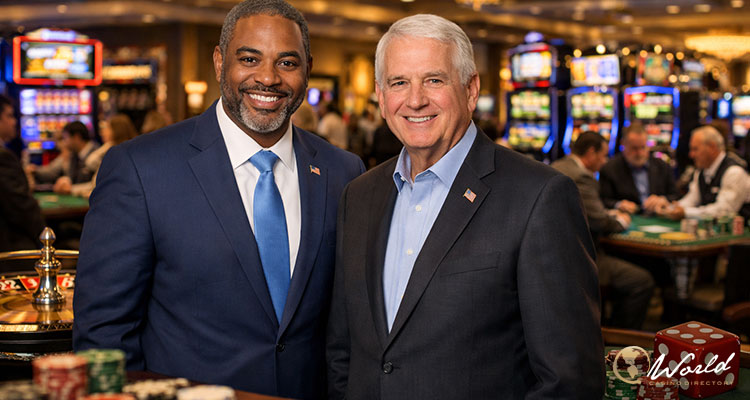
Lawmakers from both the Democratic and Republican parties have opened a new campaign to reverse a federal tax change that affects how gamblers report wins and losses. The renewed effort centers on H.R. 6985, introduced by Nevada Democrat Steven Horsford and Ohio Republican Max Miller, who jointly seek to restore the long-standing practice of allowing gambling losses to offset winnings on a dollar-for-dollar basis. Supporters in Nevada warn that the prior rule adjustment could raise tax liabilities for both casual and professional players, while also affecting tourism and participation in major gaming events tied to the state’s broader economy.
Bill Targets Gambling Loss Tax Changes
Two members of the House of Representatives — Steven Horsford of Nevada and Max Miller of Ohio — filed H.R. 6985, known as the Facilitating Useful Loss Limitations to Help Our Unique Service Economy Act. The legislation, often referred to by its acronym, seeks to allow full deductions on losses for tax purposes rather than limiting them to a portion of the total.
The tax change originated in a prior Republican fiscal bill that reshaped how federal tax authorities measure taxable income from wagering. That bill reduced the loss deduction threshold to 90 percent. Under that adjustment, a player who finished a year even on net results could still owe federal taxes because the deduction would not fully cover their reported winnings.
“Taxing people on money they never actually earned is fundamentally unfair and harmful to Nevada’s economy,” Horsford said in a press release published on his website. He added that “This policy would drive tourism across our state elsewhere. There is strong bipartisan agreement that this provision was a mistake, and Congress must act to correct it.”
Miller echoed those concerns and framed the update as a correction rather than a shift in philosophy. “The FULL HOUSE Act is about basic fairness in the tax code,” he said. “Americans should not be taxed on money they didn’t actually take home. By restoring the full deduction for gambling losses, this bill ensures the IRS treats taxpayers honestly and consistently. I’m proud to lead this bipartisan effort with Congressman Horsford, and I urge my colleagues to support this common-sense fix.”
Proposed Tax Fix Draws Support from Gaming Interests
Poker professionals, recreational gamblers, and Nevada’s tourism sector are among the groups watching the legislation. Nevada’s gaming economy relies heavily on discretionary travel and major events, and some lawmakers warned that the reduced deduction could discourage tournament play and large-series participation. Advocates have raised concerns that the rule change could affect events such as the World Series of Poker by altering the financial calculus for participants.
Earlier efforts to undo the change had struggled to gain momentum. Representative Dina Titus had introduced a similar measure called the FAIR Bet Act, though committee actions kept it from receiving a floor vote. Critics of that attempt argued it would lower projected federal revenue and questioned why the proposal had been attached to other legislative packages.
The new House proposal mirrors a Senate version already introduced, and both chambers now have legislation that attempts to restore the previous standard. The FULL HOUSE Act would apply to tax years beginning after the end of 2025.
The renewed tax debate arrived at a time of heightened economic scrutiny in Las Vegas. Visitor data showed declines at a moment when the city typically experiences high traffic. Passenger counts at Harry Reid International Airport also decreased, reflecting softer travel demand. Tourism analysts noted that multiple factors, including price increases and strained global conditions, reduced discretionary travel expenditures. The shift in tax treatment for gambling results has added one more point of concern for a sector already navigating those pressures.
Although the bill has been referred to committee, its supporters expressed confidence in bipartisan cooperation moving forward. The measure joins a range of proposals seeking to ensure that gambling-related federal tax policy aligns with real financial outcomes.
