

 United States
 Macau, China
 France
 Philippines
 Singapore
 Netherlands
 United Kingdom
 Canada
 Argentina
 Germany
 Estonia
 Peru
Peru Russia
 Australia
 South Africa
 Nigeria
 Malaysia
 Singapore
 India
India Finland
 China
China Ukraine
 Hong Kong
 Cyprus
 Turkey
 Greece
 Sweden
 South Korea
 Mexico
 Poland
 Ireland lottery results
 New Zealand lottery results
 Puerto Rico lottery results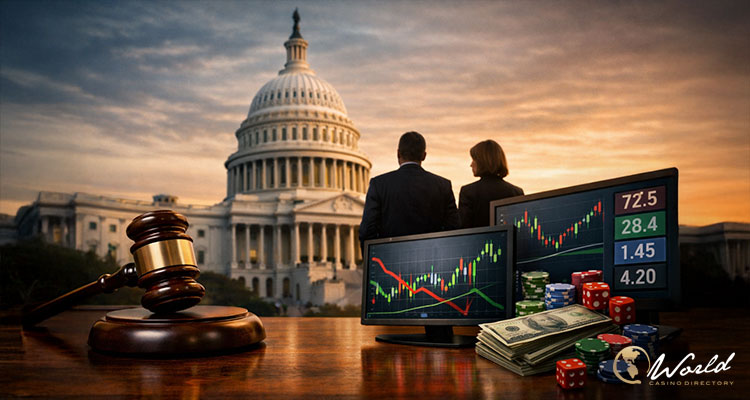
A group of U.S. senators has introduced legislation aimed at preventing federal officials from trading on prediction markets, citing concerns that government insiders could profit from confidential information tied to major political or geopolitical events.
The proposal, known as the End Prediction Market Corruption Act, was introduced by Senators Jeff Merkley of Oregon and Amy Klobuchar of Minnesota. The measure would block the president, vice president, and members of Congress from buying or selling event contracts on prediction platforms. It would also place limits on trading activity by senior executive branch officials whose work relates to specific government matters.
The legislation arrives as prediction markets gain popularity while facing growing scrutiny from lawmakers following several high-profile bets connected to international developments.
“When public officials use non-public information to win a bet, you have the perfect recipe to undermine the public’s belief that government officials are working for the public good, not for their own personal profits,” Merkley said in the press release. “Perfectly timed bets on prediction markets have the unmistakable stench of corruption. To protect the public interest, Congress must step up and pass my End Prediction Market Corruption Act to crack down on this bad bet for democracy.”
Proposed rules and penalties for officials
If the legislation becomes law, elected federal officials would face a complete prohibition on trading event contracts, which are financial instruments that allow users to wager on the outcome of real-world events.
The bill also addresses senior executive branch personnel, though its restrictions are narrower for them. These officials would be barred from participating in prediction market trades involving matters in which they play a direct and substantial role through their government duties.
Under the proposal, violations could result in a civil penalty starting at $10,000 per offense. The U.S. attorney general would be responsible for bringing enforcement actions in federal court.
The legislation outlines reporting requirements as well. Elected officials and senior executive branch staff would need to disclose in their annual financial filings whether they, their spouses, or dependent children bought, sold, or exchanged any event contracts during the reporting period. If such transactions occurred, the disclosure would need to include details about the contract and its value.
The bill defines senior executive branch officials as individuals who must already file financial disclosures due to their position. This group includes high-ranking civil servants, senior military officers such as brigadier generals and rear admirals, administrative law judges, top staff at agencies like the U.S. Postal Service and the Office of Government Ethics, and White House personnel appointed by the president.
Controversial wagers spark political concern
Lawmakers’ push for regulation follows several incidents involving large prediction market payouts tied to political or military events.
Earlier this year, a trader on the platform Polymarket reportedly earned more than $400,000 by predicting the removal of Venezuelan leader Nicolás Maduro shortly before his arrest by U.S. authorities. Another trader later generated more than $553,000 by placing bets on developments related to Iran and its leadership.
These cases intensified questions about whether participants may have acted on privileged information.
A New York Times analysis also found a sharp increase in wagers predicting an imminent attack on Iran shortly before U.S. and Israeli strikes occurred. Some lawmakers believe the pattern suggests possible access to sensitive government knowledge.
“Members receive all sorts of tips and advice,” Merkley said in an interview. “The actual demonstration of insider trading is too difficult to be sufficient to address the problem. The problem becomes both real corruption … and the appearance of corruption and conflict of interest.”
Sen. Chris Murphy also raised concerns about unusual betting activity prior to the Iran operation. “There was a suspicious amount of new activity, people making a very specific bet on Friday that we would go to war with Iran on Saturday,” he said in a video posted to social media.
Oversight efforts and related legislation
Merkley and Klobuchar’s proposal would strengthen the ability of the Commodity Futures Trading Commission (CFTC) to investigate potential insider trading involving prediction markets.
“At the same time that prediction markets have seen huge growth, we have seen increasing reports of misconduct,” Klobuchar said. “This legislation strengthens the Commodity Futures Trading Commission’s ability to go after bad actors and provides rules of the road to prevent those with confidential government or policy information from exploiting their access for financial gain.”
Several advocacy organizations have voiced support for the measure, including Citizens for Responsibility and Ethics in Washington, Public Citizen, and the Project on Government Oversight.
The Senate bill is part of a broader policy debate around the fast-growing industry. Prediction platforms such as Polymarket and Kalshi allow users to place wagers on outcomes ranging from sports results to election results or central bank decisions.
Other lawmakers have introduced similar proposals. In January, Representative Ritchie Torres of New York filed legislation in the House that would restrict prediction market trading when government officials possess or could reasonably obtain nonpublic information. His proposal focuses primarily on insider trading and does not include enforcement mechanisms.
Additional efforts have appeared at the state level. A bill in New York seeks to prohibit markets related to deaths, politics, or catastrophic events, while a measure in Tennessee proposes criminal penalties for individuals who attempt to influence events tied to prediction contracts.
Despite growing attention, Merkley’s Senate proposal faces uncertain prospects. Republicans currently control Congress, and the measure has no Republican co-sponsors. Even so, supporters say the legislation could shape future regulation as prediction markets continue to expand.
