

 United States
 Macau, China
 France
 Philippines
 Singapore
 Netherlands
 United Kingdom
 Canada
 Argentina
 Germany
 Estonia
 Peru
Peru Russia
 Australia
 South Africa
 Nigeria
 Malaysia
 Singapore
 India
India Finland
 China
China Ukraine
 Hong Kong
 Cyprus
 Turkey
 Greece
 Sweden
 South Korea
 Mexico
 Poland
 Ireland lottery results
 New Zealand lottery results
 Puerto Rico lottery results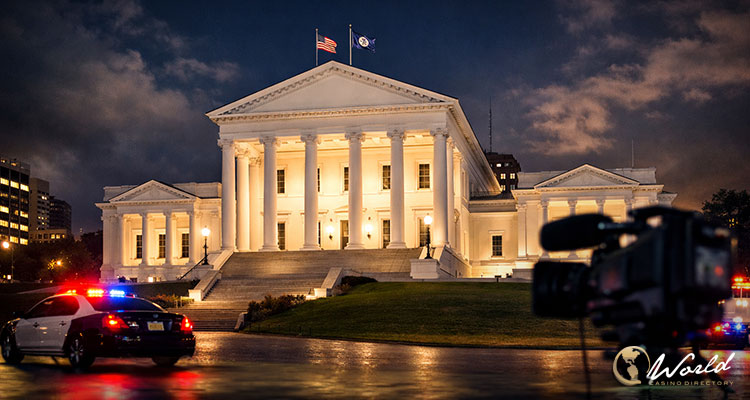
The Virginia House of Delegates approved legislation Wednesday that could open the door to a casino in Fairfax County, sending the measure to Governor Abigail Spanberger for consideration.
Lawmakers voted 64-32 to pass SB 756, a bill introduced by Senate Majority Leader Scott Surovell. The proposal now awaits action from Abigail Spanberger, who can sign it into law, amend it, or veto it.
If enacted, Fairfax County would join Norfolk, Petersburg, Bristol, Portsmouth and Danville as localities eligible to host a casino under state law. The General Assembly first authorized casino gaming in 2020 and initially included Richmond among the approved cities. After voters in the capital rejected two separate casino referendums, lawmakers removed Richmond from the list in 2024 and substituted Petersburg.
Bill Details and Local Referendum Process
Under the legislation, any casino in Fairfax County must operate within a mixed-use development totaling at least 1.5 million square feet. Earlier drafts would have confined potential sites to Tysons, but lawmakers eliminated that restriction as the bill advanced through the Senate.
The county government would select a preferred operator. The Virginia Lottery, which regulates gambling activities in the state, must grant preliminary approval before the process moves forward. If that occurs, the Fairfax County Board of Supervisors would be required to call a referendum, giving voters the final say on whether to permit casino gaming at the proposed location.
During House deliberations, Del. Paul Krizek sought to add conditions in response to concerns raised by the Board of Supervisors. His proposed changes addressed labor agreements for construction and hospitality workers, the distribution of gaming tax revenue, and an increase in the operator’s licensing fee to $150 million. He also proposed that approval require a majority vote within the magisterial district where the casino would be built, rather than relying solely on a countywide majority.
The House Appropriations Committee removed most of those additions last Friday, advancing a substitute bill that largely mirrored the Senate’s version. The revised measure preserved certain transparency requirements, mandating that agreements between the operator and local government be publicly available. It also requires the developer to provide construction, funding, or land for a nearby public safety facility. The bill sets a July 1, 2029 deadline for Fairfax County to secure voter approval through a referendum.
Del. Rodney Willett urged colleagues to reject Krizek’s alternative and support the committee’s substitute. The House adopted the amended version without further debate.
Because the House and Senate passed slightly different versions of SB 756, a conference committee must resolve the discrepancies before the bill reaches the governor’s desk.
“Good to see it pass along with a majority of Northern Virginia delegates,” Surovell told FFXnow when asked about the House’s vote. “I look forward to working out our differences on conference and help diversify Fairfax County revenues and recapture hundreds of millions of dollars back from Maryland.”
Revenue Projections and Legislative Background
Estimates of the casino’s financial impact vary. A 2019 study commissioned by the General Assembly concluded that a Northern Virginia casino could produce $155 million in additional statewide gaming tax revenue, accounting for more than half of the combined total projected for five other localities studied at the time. That analysis also projected that such a facility would attract significant out-of-state visitation and retain $100 million currently spent by Virginia residents at Maryland casinos.
A separate draft study prepared last year for Fairfax County presented more modest expectations. The consultant estimated that a casino-centered development would generate $29.1 million annually for the county and $53 million for the state.
Interest in authorizing a Fairfax County casino surfaced in January 2023, when state Sen. David Marsden and Del. Wren Williams introduced matching bills. Lawmakers quickly withdrew those proposals. Marsden tried again during the 2024 session with legislation that would have limited eligible sites to Tysons, but the measure stalled in the Senate’s appropriations committee.
Surovell assumed sponsorship of the effort last year. He guided a version of the bill through the Senate despite opposition from several Northern Virginia senators, though it later failed in the House Appropriations Committee. This year’s renewed push succeeded in clearing both chambers, subject to final reconciliation.
On the same day the House advanced SB 756, delegates also approved a Senate measure authorizing internet gaming by a 70-29 vote. Meanwhile, the Senate voted 21-17 to pass a companion bill sponsored by Del. Marcus Simon. Separate legislation from Krizek that would establish a statewide gaming commission cleared the House on Feb. 17 and now awaits consideration by the Senate Finance and Appropriations Committee.
