

 United States
 Macau, China
 France
 Philippines
 Singapore
 Netherlands
 United Kingdom
 Canada
 Argentina
 Germany
 Estonia
 Peru
Peru Russia
 Australia
 South Africa
 Nigeria
 Malaysia
 Singapore
 India
India Finland
 China
China Ukraine
 Hong Kong
 Cyprus
 Turkey
 Greece
 Sweden
 South Korea
 Mexico
 Poland
 Ireland lottery results
 New Zealand lottery results
 Puerto Rico lottery results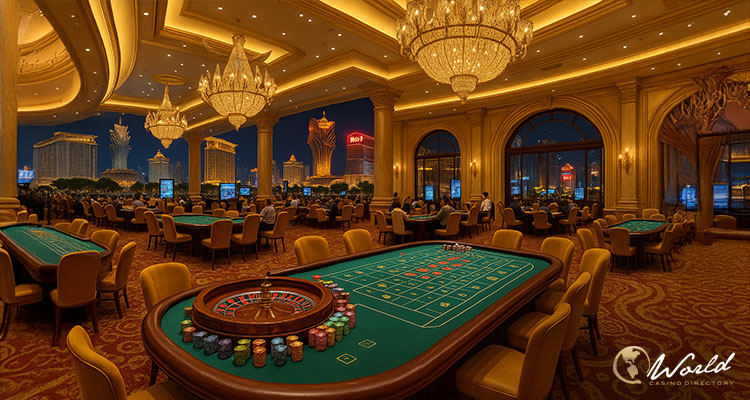
Macau’s casino operators have adjusted mass-market baccarat pricing in recent months as competition has intensified following the closure of satellite casinos, according to recent market data and government figures. Analysts tracking table activity report that minimum bets have softened since October, a shift attributed to efforts by concessionaires to attract players previously served by now-shuttered satellite venues.
Citigroup’s latest monthly table survey shows that average minimum bets for mass baccarat tables across Macau stood at HK$2,058 in December. While that figure represented a 4 percent increase compared with the same month last year, it marked a 3 percent decline from November. Analysts linked the month-on-month easing to a more aggressive push by operators to capture displaced demand as satellite casinos exited the market.
The last remaining satellite casino, Casino Landmark, is set to cease operations on December 30, marking the end of a long-standing segment of Macau’s gaming landscape. In response, several integrated resorts have opened new gaming areas designed to absorb former satellite players, often featuring significantly lower minimum bets.
Lower Minimum Bets Appear at Newly Opened Gaming Areas
Since October, properties including StarWorld, City of Dreams, Wynn Macau on the peninsula, and Casino Lisboa have introduced new gaming zones offering lower entry points for mass baccarat players. Citigroup reported that some tables in these areas carried minimum bets as low as HK$300, a notable departure from prevailing levels earlier in the year.
“These areas were quite crowded when we visited. We believe satellite casino players are still trying out these new products in the market (and we expect Sands Macao will join the race soon),” the Citi analysts said. Sands Macao is the only Sands China property located on the Macau peninsula, where many satellite casinos had previously operated.
The analysts added that average mass baccarat minimums have been “lowering, as casinos are fighting for satellite casino market share”. They noted that three of the four properties introducing lower minimums are based in downtown Macau, underscoring how operators are targeting customers accustomed to the satellite casino environment.
SJM Holdings Ltd, which provided gaming licenses to most satellite casinos, has stated that its revamped Crystal Palace gaming zone within the Hotel Lisboa complex aims to recapture market share previously held by satellites. Citigroup observed, however, that “How much market share SJM will eventually be able to defend remains to be seen.”
Premium Mass Segment Continues to Show Momentum
While mass-market pricing has softened, Citigroup’s surveys indicate continued strength in the premium mass segment. In December, total premium mass wager observed during the survey rose 18 percent year-on-year to HK$12.6 million. The number of premium mass players increased 5 percent to 534 during the same period.
The data also showed a rise in spending intensity. Average wager per premium mass player grew 13 percent year-on-year to HK$23,654, compared with HK$20,943 in December 2024. According to Asia Gaming Brief, Citigroup said the figures pointed to improvements in both participation levels and average spending.
Competition has also intensified at the upper end of the market. Citigroup reported 28 “whales” during the December survey, up from 21 a year earlier. The institution defines whales as players wagering HK$100,000 or more. Galaxy Entertainment Group Ltd ranked second in December with a 21 percent share of observed premium mass betting and eight whales at Galaxy Macau in Cotai.
Sands China regained the top position in premium mass during December, with a 29 percent share compared with 23 percent a year earlier. Citigroup linked some of that performance to entertainment-driven foot traffic. “When we were at the Venetian [Macao], foot traffic seemed to be heavier than usual. We think the strength can be attributed to the concert by Cantopop legend Alan Tam that was happening at the Venetian Arena on the day,” the analysts said.
Gaming Tax Revenue Reflects Sustained Market Activity
Government data released by Macau’s Financial Services Bureau show that gaming tax revenue has continued to rise alongside overall gaming activity. The government collected MOP9.27 billion in gaming taxes in November, a 15.9 percent increase year-on-year and 31.3 percent higher than October, partly reflecting seasonal factors.
The November tax figure corresponds to October gross gaming revenue of MOP24.09 billion, which marked the sector’s strongest monthly performance since January 2020. For the first 11 months of 2025, gaming tax revenue reached MOP86.7 billion, up 7.0 percent from the same period last year. Gaming taxes accounted for 82.9 percent of the government’s total revenue of MOP104.6 billion during that period.
Under Macau’s current concession framework, which began on January 1, 2023, casino gross gaming revenue is subject to an effective tax rate of 40 percent. The government has budgeted MOP93.1 billion in gaming tax revenue for the full year, meaning collections through November have already reached about 98 percent of that target.
Citigroup’s surveys conducted so far in 2025 suggest that premium mass participation remains resilient despite broader economic uncertainties. Around 8,000 premium mass players observed during the year wagered a combined HK$191.4 million, reflecting a 12 percent year-on-year increase. The analysts noted that both the number of players and average wager per player rose over the period.
