

 United States
 Macau, China
 France
 Philippines
 Singapore
 Netherlands
 United Kingdom
 Canada
 Argentina
 Germany
 Estonia
 Peru
Peru Russia
 Australia
 South Africa
 Nigeria
 Malaysia
 Singapore
 India
India Finland
 China
China Ukraine
 Hong Kong
 Cyprus
 Turkey
 Greece
 Sweden
 South Korea
 Mexico
 Poland
 Ireland lottery results
 New Zealand lottery results
 Puerto Rico lottery results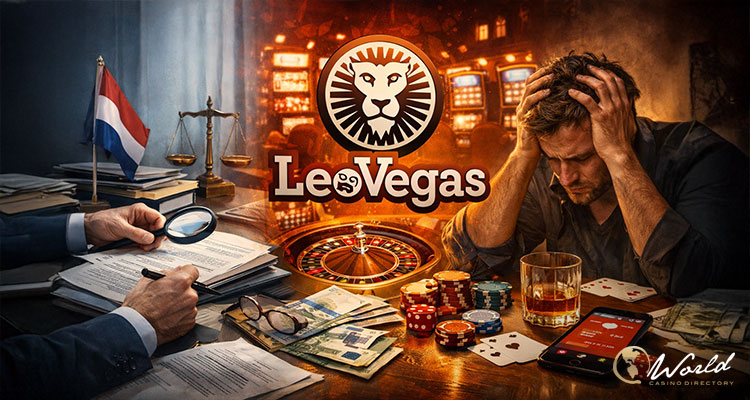
The Dutch gambling regulator has imposed a €500,000 penalty on LeoVegas after determining that the operator repeatedly failed to meet player protection standards required under national law. The decision follows a review of customer activity records covering an eight-month period and highlights growing regulatory pressure on licensed operators to identify and address harmful gambling behavior at an early stage.
Kansspelautoriteit (KSA), the Netherlands Gambling Authority, cited by SBC News, said its investigation focused on LeoVegas’ compliance with the country’s duty of care rules between October 2023 and May 2024. During that period, the regulator requested multiple player files and found shortcomings in every case it examined.
The KSA stated that gambling providers must actively work to limit the risks of excessive play and addiction. In its findings, the authority said: “As far as we are concerned, LeoVegas did not comply sufficiently with that duty of care.”
Among the cases cited was one involving a customer who lost sums amounting to “tens of thousands of euros” within a short timeframe. According to the regulator, LeoVegas did not intervene quickly enough despite the scale and speed of the losses. Another reviewed file involved a player displaying what the KSA described as “serious” signs of gambling harm. The only initial response in that instance was a pop-up warning, which the authority noted could be dismissed easily and did not amount to an effective safeguard.
Michel Groothuizen, Board Chairman of the KSA, said these failures struck at the core of the regulatory framework. He stated: ‘The duty of care is an essential part of the wider range of player protection. Providers must respond adequately to immoderate play. Large losses in a short time are an important signal of this. We have intensified our supervision of the duty of care and gambling providers are tackling this hard, because such an important part should not be neglected.”
Enforcement Action and Industry Context
In a separate statement, the regulator underlined that the duty of care obligations are a legal requirement for all licensed operators. Under Dutch gambling law, companies must take reasonable and timely steps to protect customers from excessive gambling and related harm.
Groothuizen also reiterated the regulator’s stance in comments linked to the enforcement action, saying: The duty of care is an essential component of the broader spectrum of player protection. Providers must respond appropriately to excessive gambling. Significant losses in a short period of time are a key indicator of this.
“We have intensified our oversight of this duty of care and are taking a firm stance against gambling providers, as such a crucial element cannot be neglected.”
The €500,000 fine adds to the KSA’s record of strict enforcement. The authority has gained a reputation for imposing penalties that are considered high relative to operator size, reflecting its emphasis on consumer protection within the regulated market.
Operator Response and Ongoing Appeal
The operator, which is owned by MGM Resorts International, has said it does not accept the regulator’s conclusions and is continuing to challenge the sanction. The company confirmed that the appeal process remains ongoing.
A LeoVegas spokesperson said: “LeoVegas Group takes responsible gaming and our Duty of Care obligations very seriously. While we fully respect the regulatory framework in the Netherlands and always seek to work closely with our regulators, we disagree with the KSA’s findings and the fine remains under appeal. Since the KSA initiated the review, we have continued to develop and enhance our responsible gaming processes, which remain subject to ongoing evaluation and development.”
The case comes during a period of broader change for the Dutch gambling market. Recent and upcoming tax increases, along with unresolved reforms to the Remote Gaming Act, have contributed to a challenging environment for licensed operators. Against this backdrop, the KSA has signaled that close monitoring of duty of care compliance will remain a priority as the market continues to evolve.
