

 United States
 Macau, China
 France
 Philippines
 Singapore
 Netherlands
 United Kingdom
 Canada
 Argentina
 Germany
 Estonia
 Peru
Peru Russia
 Australia
 South Africa
 Nigeria
 Malaysia
 Singapore
 India
India Finland
 China
China Ukraine
 Hong Kong
 Cyprus
 Turkey
 Greece
 Sweden
 South Korea
 Mexico
 Poland
 Ireland lottery results
 New Zealand lottery results
 Puerto Rico lottery results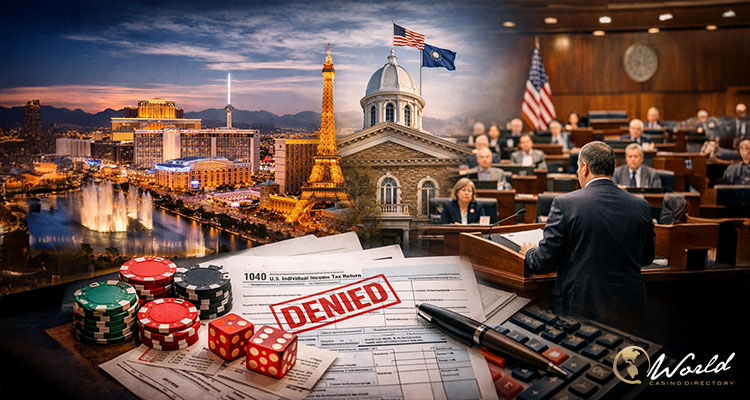
Nevada’s gaming industry and its congressional delegation are intensifying efforts to overturn a federal tax change that is set to take effect in 2026 and would limit how much gamblers can deduct in losses. The provision, passed as part of the One Big Beautiful Bill Act signed into law in July by President Donald Trump, alters a long-standing rule that allowed gamblers to deduct all losses up to the amount of their winnings. Industry leaders, professional players, and lawmakers argue the change will force people to pay taxes on income they never actually earned, with consequences for jobs, tourism, and wagering activity.
Beginning with the 2026 tax year, gamblers will only be able to deduct 90 percent of their losses against winnings, replacing the previous 100 percent standard. A break-even year can now generate taxable income. For example, a player with $100,000 in winnings and $100,000 in losses would only be able to deduct $90,000, leaving $10,000 subject to federal taxes. The same math applies at smaller scales, such as $50,000 in wins and losses resulting in $5,000 of taxable income.
Poker Hall of Famer Erik Seidel, a longtime Las Vegas resident, said the change has already prompted serious career decisions. “Next year I am kind of forced into retirement,” he told The Nevada Independent. “Everyone who I’ve spoken to plans on either cutting back or stopping.” Seidel warned that fewer tournaments and reduced participation could quickly translate into lost work for dealers and support staff.
Congressional push and bipartisan bills
Nevada lawmakers say the provision surfaced late in the legislative process and caught many by surprise. Sen. Catherine Cortez Masto said, “My understanding is many Republicans, many Democrats did not even know it was part of that process.” Sen. Ron Wyden echoed that view, describing colleagues who “didn’t even know anything about this policy.”
In the House, Rep. Dina Titus has introduced the FAIR BET Act to restore the full deduction. She said public reaction has been unusually strong, noting, “Turns out, we got a million responses to our tweet when we put it out there, more than I’ve ever gotten for anything.” In the Senate, Cortez Masto and Sen. Jacky Rosen have put forward the bipartisan FULL HOUSE bill with the same goal.
Support has also come from Nevada’s lone Republican in the House. Rep. Mark Amodei said, “We have been assured that when we wrap up this stuff in ’26 appropriations, that fix will be in there.” House Ways and Means Chair Jason Smith later added, “I believe there is a bipartisan path forward to restoring full deductibility of gambling losses.”
Industry warnings and economic concerns
Casino operators say uncertainty alone is already shaping behavior. Circa Casino Resorts CEO Derek Stevens said gamblers plan trips well in advance and are trimming future budgets. “This could be fixed next year. The reality is that it needs to be done now,” he said. “It’s already impacting wagering that goes into 2026.” Stevens also cautioned that major events such as the Super Bowl and March Madness could see reduced betting and that some players may turn to offshore or Canadian casinos.
The Nevada Resort Association called the deduction a matter of fairness, stating, “The deduction of gaming losses against wins has been in the IRS code for decades.” The group urged Congress to act quickly so taxpayers are “only be taxed on their net gains.”
Professional gamblers have voiced similar concerns. Poker commentator Tony Dunst said, “We’re all furious. We’re extremely upset and feel that essentially we’re being highlighted to try and extort more money out of us.” He added, “I‘ve been told by a number of my peers that they will essentially either retire from being a professional poker player or professional gambler or shift the majority of their volume and attention to offshore sites.”
Timing, revenue, and what comes next
While many lawmakers express support for reversing the policy, the path forward remains uncertain. Estimates suggest the cap would raise more than $1.1 billion over eight years, complicating efforts to remove it without finding offsets. American Gaming Association CEO Bill Miller said, “The question is, ‘What are the vehicles to fix this?’” He added, “There’s a fundamental fairness issue here. People shouldn’t pay taxes on phantom income.”
Tax professionals are advising caution in the meantime. Enrolled agent Russell Fox said, “The best advice I can give today is to keep excellent records. Make sure that any possible netting can be done.” He warned, “The courts have no sympathy for gamblers who do not keep logs.”
As Congress debates next steps, Seidel summed up the frustration felt across the industry: “There’s no real benefit to anybody in this tax. I guess politics can be irrational sometimes.”
