

 United States
 Macau, China
 France
 Philippines
 Singapore
 Netherlands
 United Kingdom
 Canada
 Argentina
 Germany
 Estonia
 Peru
Peru Russia
 Australia
 South Africa
 Nigeria
 Malaysia
 Singapore
 India
India Finland
 China
China Ukraine
 Hong Kong
 Cyprus
 Turkey
 Greece
 Sweden
 South Korea
 Mexico
 Poland
 Ireland lottery results
 New Zealand lottery results
 Puerto Rico lottery results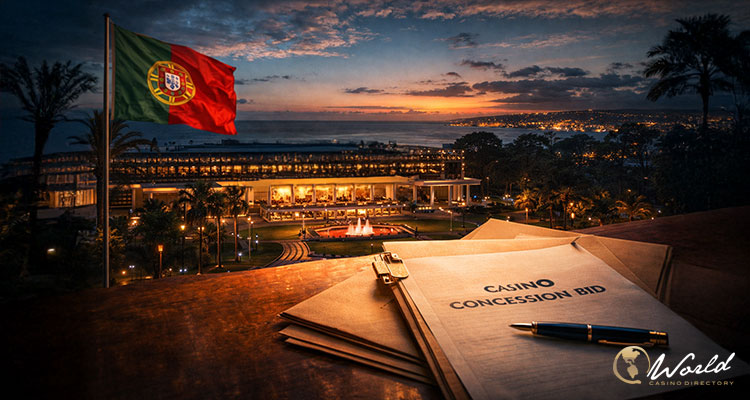
Portugal’s government has moved to temporarily prolong existing casino concessions after an international bidding process for five properties failed to reach completion before the end of the year. The decision affects land-based casinos in the Algarve, Espinho, and Póvoa de Varzim gaming zones, where current operators Solverde and Estoril Sol will remain in place while the tender process continues.
According to The Portugal News, which cited the Ministry of Economy and Territorial Cohesion, the extensions will apply for a “strictly necessary period” as officials work through remaining procedural steps. The government has not specified how long into 2026 the interim arrangements may last, although sources connected to the process indicated that the additional period could range from one to three months unless legal challenges emerge.
The tender, launched by the state on July 24, was designed to award new 15-year concessions for five casinos: three in the Algarve and one each in Espinho and Póvoa de Varzim. Applications closed on September 5, when the government confirmed that eight bids had been received, without disclosing the identities of the applicants. The authorities initially aimed to complete the process, including final contract awards, by December 31.
Temporary extensions to maintain operations
The immediate effect of the delay is the continuation of casino operations under existing concessionaires. Solverde currently operates casinos in Espinho and key Algarve locations, while Estoril Sol, chaired by Macau-based gaming executive Pansy Ho, runs the casino in Póvoa de Varzim. The government has confirmed that both groups will keep operating during the extension period.
In a separate statement outlining the rationale for the decision, officials said the extension was required “to comply with all required formalities” associated with the tender. The most recent extension runs for three months and follows earlier delays in the licensing round. Existing contracts had already been extended through the end of 2025 after their original 2023 expiry date, compensating operators for pandemic-related shutdowns.
The current pause applies to the Algarve, Espinho, and Póvoa de Varzim gaming zones, covering a total of five casinos. While final proposal deadlines have already passed for Espinho and Póvoa de Varzim, submissions for the Algarve licenses remain open until January 4, 2026.
Tender process and evaluation steps
The Ministry of Economy and Territorial Cohesion outlined the remaining stages of the competition. Once submissions close, bids will be opened and examined by a government-appointed jury. The panel will prepare a preliminary assessment that will be shared with bidders, allowing them to submit comments or objections. As the ministry explained, “After analysing any objections and if nothing else prevents it, the final report with a proposed award will be prepared.”
Only after these steps are completed will the government move toward formal awards. Officials have emphasized that the extension is intended to avoid an abrupt interruption in casino activity while preserving the integrity of the procurement process.
The qualification phase concluded on December 29, producing a shortlist of bidders. Alongside the incumbent operators, qualified groups include Spain’s Cirsa, which is backed by U.S. investment firm Blackstone, Spanish group Comar, France’s Lucien Barrière group, and Canada-based Mercan.
Political scrutiny and market significance
The handling of the casino concessions became a political issue during Portugal’s last legislative election campaign. Amid controversy linked to the Spinumviva case, Socialist Party leader Pedro Nuno Santos accused Prime Minister Luís Montenegro of favoring Solverde by allowing extensions without an international tender. Montenegro rejected the allegation, noting that “the last two extensions were decided by PS governments” and insisting that the tender process was progressing as planned.
After Montenegro’s coalition returned to power, the government proceeded with the public tender but was unable to finalize it within the original timeline. As a result, the year-end deadline has shifted from a fixed cutoff to a transitional phase.
For the state, the interim extension ensures that casino operations and associated revenues continue while the evaluation advances. For bidders, the delay means waiting longer for clarity in one of Europe’s most tightly regulated land-based gaming markets, particularly in the Algarve, where casino activity plays a role in the regional tourism economy.
