

 United States
 Macau, China
 France
 Philippines
 Singapore
 Netherlands
 United Kingdom
 Canada
 Argentina
 Germany
 Estonia
 Peru
Peru Russia
 Australia
 South Africa
 Nigeria
 Malaysia
 Singapore
 India
India Finland
 China
China Ukraine
 Hong Kong
 Cyprus
 Turkey
 Greece
 Sweden
 South Korea
 Mexico
 Poland
 Ireland lottery results
 New Zealand lottery results
 Puerto Rico lottery results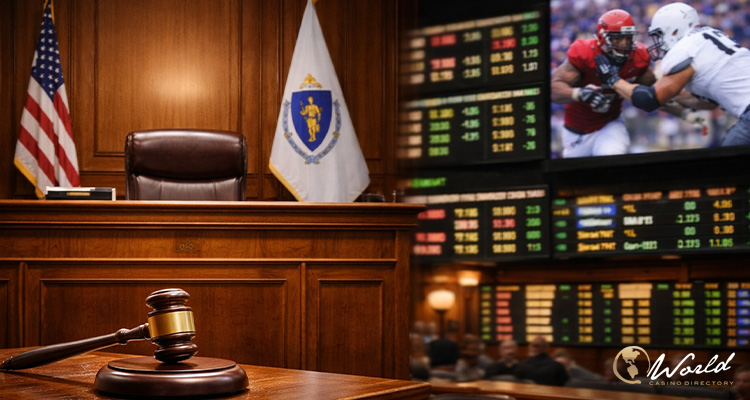
A Massachusetts court decision has opened the door for state regulators to force prediction market operator Kalshi to suspend its sports-related offerings, marking a first-of-its-kind injunction against such platforms in the United States. The ruling signals a shift in how courts may treat companies that frame sports wagers as federally regulated financial contracts rather than state-licensed gambling products.
Judge Christopher Barry-Smith of Suffolk County Superior Court ruled that Massachusetts authorities can enforce an order requiring Kalshi to stop offering sports-related event contracts to residents. The preliminary injunction could take effect as soon as Friday, pending further court proceedings. Judges issue such orders only when they find a strong likelihood that the requesting party will prevail as the case continues, according to decrypt.
Court backs state authority over sports wagering
Massachusetts Attorney General Andrea Joy Campbell and the Massachusetts Gaming Commission sued Kalshi in September, arguing that the company operated an unlicensed sports betting platform. According to the state, Kalshi allowed users to wager on sporting events without obtaining approval from the Massachusetts Gaming Commission, which oversees licensed operators.
In his decision, Barry-Smith emphasized the public interest served by licensing requirements. “There is no real question that licensure, and the consequent oversight, of sports wagering operations in the state serves both public health and safety, and the Commonwealth’s financial interest,” he wrote.
The judge plans to finalize the injunction after a hearing on Friday. At that hearing, he will also consider whether to delay enforcement to give Kalshi time to appeal. Campbell described the ruling as “a major step toward fortifying Massachusetts’ gambling laws and mitigating the significant public health consequences that come with unregulated gambling.”
Kalshi declined to comment on the decision but has previously said it would challenge any injunction. The New York-based firm offers markets tied to outcomes in sports, entertainment, politics, and economic indicators. Sports contracts, introduced nationwide in January 2025, quickly grew into a majority of its trading volume.
Federal oversight claims rejected
Kalshi has argued that its sports contracts fall under the exclusive jurisdiction of the U.S. Commodity Futures Trading Commission because they function as derivatives known as swaps. The company points to its status as a registered contract market with the CFTC and contends that federal law preempts state gambling regulations.
Barry-Smith rejected that interpretation, calling Kalshi’s reading of federal law too expansive. He concluded that Congress did not intend the Commodity Exchange Act to override traditional state authority over gambling. In explaining his reasoning, the judge wrote, “Although I agree that the exclusive jurisdiction provision evidences an intent to preempt some state law, I disagree that it extends as far as state gaming laws.”
He further noted that state and federal systems can coexist. “That both systems may operate in harmony demonstrates a lack of frustration against Congress’s intent,” Barry-Smith added. The ruling also referenced Kalshi’s loss in a similar case in Nevada, where a federal judge determined the company was subject to state gaming rules.
Business impact and broader implications
Data cited in the proceedings show that sports-related wagers account for more than 80% of Kalshi’s business, with over $26 billion in trading volume generated in just over a year. Kalshi argued that an injunction would severely harm its operations, but the court found that the company assumed that risk by entering states with strict licensing laws.
Barry-Smith pointed to a warning issued by the CFTC in October advising event contract providers to prepare for the possibility of being ordered out of states through court action. “Kalshi knowingly proceeded in Massachusetts and other states that require sports wagering entities to be licensed,” he wrote, adding that any hardship from compliance “is of its own making.”
The judge also compared Kalshi’s user experience to gambling platforms. “The manner in which Kalshi’s contracts are offered mirrors other digital gambling experiences,” he wrote in a separate passage, citing features designed to encourage repeated engagement.
The Massachusetts Gaming Commission welcomed the decision. “The Commission appreciates the efforts of Attorney General Campbell and the Office of the Attorney General to enforce Massachusetts gaming laws and is thankful for the recent ruling – we are hopeful this issue can be settled soon,” MGC Chair Jordan Maynard said. “The MGC reminds Massachusetts residents that the safest place to wager, if they choose to do so, is with a legal regulated operator.”
Massachusetts is the first state to secure an injunction against Kalshi, but the ruling may influence similar disputes nationwide. The company continues to contest restrictions elsewhere and remains active in all 50 states while pursuing appeals.
