

 United States
 Macau, China
 France
 Philippines
 Singapore
 Netherlands
 United Kingdom
 Canada
 Argentina
 Germany
 Estonia
 Peru
Peru Russia
 Australia
 South Africa
 Nigeria
 Malaysia
 Singapore
 India
India Finland
 China
China Ukraine
 Hong Kong
 Cyprus
 Turkey
 Greece
 Sweden
 South Korea
 Mexico
 Poland
 Ireland lottery results
 New Zealand lottery results
 Puerto Rico lottery results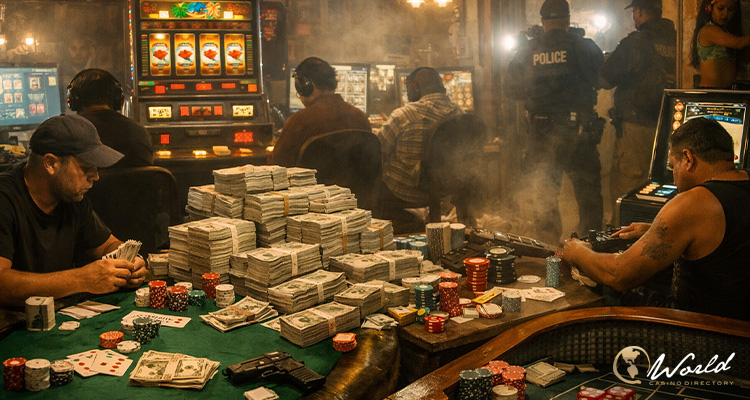
Hawaii lawmakers have once again turned their attention to gambling, as a new legislative session coincides with updated estimates showing that illegal wagering remains widespread across the islands. Although most forms of gambling remain prohibited under state law, testimony before a newly formed Tourism and Gaming Working Group underscored that underground activity continues to generate large sums of money and draw law enforcement resources.
Officials from the Honolulu Police Department and the Department of Law Enforcement told lawmakers that illegal game rooms operate openly enough to be tracked, even as enforcement efforts intensify. Police estimate they are currently aware of about 50 such locations on Oahu, a decline from more than 100 after stepped-up raids and investigations. Despite that reduction, authorities said the financial scale of the activity remains substantial, with some game rooms believed to earn more than $10,000 a day.
Scope of the Illegal Gambling Market
State enforcement leaders provided lawmakers with a broad estimate of how much money flows through illegal gambling statewide. Mike Lambert, director of the Department of Law Enforcement, placed the figure between $700 million and $800 million annually. “This is a very anecdotal statement, somewhere around 700 to 800 million in play. And that’s being very conservative,” Lambert said according to Hawaii News Now.
Law enforcement officials said West Oahu and Kalihi continue to stand out as areas where illegal game rooms are concentrated. They also noted that sports betting, particularly online wagering, presents additional challenges because of its less visible nature, even though authorities are aware it is occurring.
Honolulu Prosecutor Steve Alm emphasized that these operations often intersect with other criminal activity. “There’s loan sharking. There’s threatening behavior, but there are a bunch of murders connected with it. So you know that that’s why it’s so important, we have a full-time deputy working on these cases with HPD, and shutting down game rooms is a high priority, and I think we will keep doing that,” Alm said. Investigators have also linked game rooms to illegal drugs and unregistered firearms.
Lawmakers Press for Accountability and Data
During the working group’s initial hearing, lawmakers raised questions about how enforcement dollars are used and how success should be measured. State Rep. Greggor Ilagan said additional funding may be difficult to justify without clearer benchmarks. “We would love to give you additional funding, but if we don’t know how it’s going to be implemented, it just feels like we’re just giving it out, and we don’t know what’s going on. So I think we definitely need some metrics and some data,” Ilagan said.
Ilagan, who co-chairs the working group, told colleagues that ignoring the illegal market is not a realistic option. “We have a prohibition of gaming in the state, and even though the prohibition of gaming is in place, we have illegal gambling happening, and it’s an industry that’s up to 800 million on an annual basis,” he said.
Prosecutors also pointed to tips from residents as a critical factor in identifying and shutting down game rooms, noting that community reports often initiate investigations.
Working Group Studies Legalization and Risks
The Tourism and Gaming Working Group was created through a legislative resolution directing the Department of Business, Economic Development and Tourism to study how other states approach gaming. Its assignment includes reviewing prior Hawaii proposals, assessing enforcement and regulatory needs, and considering treatment resources for people with gambling addiction. The group must also evaluate potential gaming at the New Aloha Stadium Entertainment District and on vessels operating in Hawaii’s waters, with a report due before the 2027 legislative session.
At the first meeting, law enforcement officials warned that legalization would not necessarily eliminate illegal operations. Alm questioned whether expanding gambling would reduce harm. “I think the unanswered question from this hearing is, even if you legalize gambling, that isn’t going to get rid of these game rooms,” he said. He also objected to the panel’s makeup, saying, “Part of the concern is the makeup of the board. It’s pro-legalization, right? We were not invited to be a part of the board.”
Others offered a different perspective. State Rep. Daniel Holt, whose prior bill to legalize online sports betting failed last year, said the working group could help build support for future proposals. He cited estimates suggesting a casino could generate hundreds of millions of dollars annually and thousands of jobs, while stressing that lawmakers should examine the issue carefully.
DBEDT Director Jimmy Tokioka framed the discussion around long-term financial realities, particularly at the new stadium district. “I do know from all of our data and information that stadiums are not money makers all over the country,” Tokioka said, adding that alternative revenue sources are often needed to cover maintenance costs.
Developers and gaming industry representatives, including companies with longstanding ties to Hawaii, urged lawmakers to rely on research and data rather than rushing decisions. At the same time, legislation moving through the Capitol reflects the ongoing divide, with some bills seeking to prohibit casinos at the stadium site while others proposing limited licenses stalling in committee.
As the working group continues its review, the debate remains sharply drawn between concerns about crime and addiction and arguments centered on revenue and jobs. For now, lawmakers appear focused on gathering information, with the scale of Hawaii’s illegal gambling market serving as a central reference point for discussions ahead.
