

 United States
 Macau, China
 France
 Philippines
 Singapore
 Netherlands
 United Kingdom
 Canada
 Argentina
 Germany
 Estonia
 Peru
Peru Russia
 Australia
 South Africa
 Nigeria
 Malaysia
 Singapore
 India
India Finland
 China
China Ukraine
 Hong Kong
 Cyprus
 Turkey
 Greece
 Sweden
 South Korea
 Mexico
 Poland
 Ireland lottery results
 New Zealand lottery results
 Puerto Rico lottery results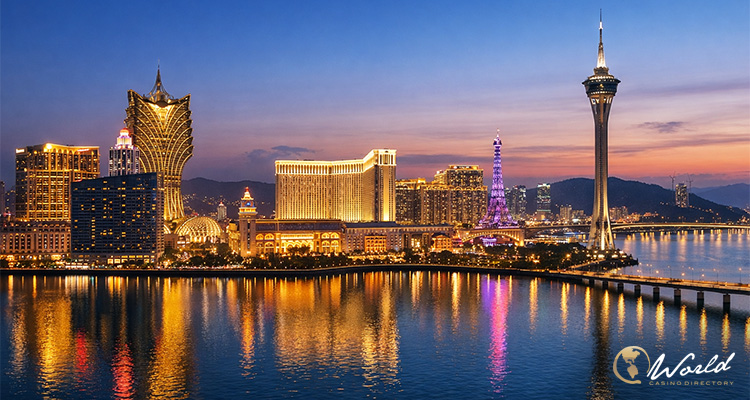
Macau hotels recorded a decline in average room prices in December even as the city enjoyed significant tourism activity and strong guest volumes across multiple accommodation tiers. Data released for the month showed notable pricing adjustments at both premium and mid-range properties, reflecting a trend that also extended across the full calendar year.
Recent figures indicated that the market-wide hotel rate fell 4.7 percent in December, with five-star venues reporting the most pronounced downward adjustment within the major categories. Three-star and four-star establishments also recorded softer pricing over the same period. These reductions occurred during a month in which the city welcomed more than 3.58 million visitors, driven by solid same-day arrivals and overnight guests, alongside the highest December gross gaming revenue since the pandemic period.
Hotel Pricing and Occupancy Trends
Hotel association data attributed the biggest monthly price decline to the five-star category, with room rates down 6.2 percent year-on-year. The corresponding average room price for the segment reached approximately MOP1,391 for the month. Three-star hotels posted a similar decrease of 6.4 percent to roughly MOP949, while four-star venues experienced a smaller 3.6 percent decline to about MOP1,131. Across these categories, occupancy levels remained comparatively strong. High-end properties registered only a small drop in occupancy of roughly 0.6 percentage point, while the three-star tier reported a near-flat change around 97 percent. Four-star hotels recorded a larger occupancy reduction of 1.6 percentage points but still exceeded 90 percent during the period.
Tourism authorities also reported historical comparisons that underscored the shift from pre-pandemic pricing benchmarks. Figures showed that five-star accommodation rates in December 2025 were below those reported in 2019. For the full year, the city’s hotel rate averaged MOP1,353, a 3.5 percent decrease from the prior year. Five-star venues reported a full-year decline of 5 percent to approximately MOP1,513, while four-star hotels recorded a modest year-over-year increase and three-star hotels experienced a slight reduction. According to Asia Gaming Brief, aggregate annual occupancy reached 93.7 percent, up 1.6 percentage points year-on-year, with five-star occupancy rising 1.8 percentage points to 94.5 percent.
Market Structure and Broader Travel Performance
Industry surveys indicated that five-star accommodation accounted for nearly 60 percent of the city’s hotel room supply by late 2025. Government tourism data showed an inventory of approximately 26,000 five-star rooms out of roughly 43,800 total rooms, an increase of 5.4 percent from a year earlier. The concentration of high-end supply largely reflects the location of many properties inside integrated resort complexes.
Tourism arrivals in December reached 3.58 million, marking an annual increase of 17.8 percent. Same-day visitors grew 23 percent to 2.1 million, while overnight travelers increased 10.9 percent to 1.47 million. For the full year, visitation totaled 40.06 million, rising 14.7 percent from the previous period. Same-day traffic expanded significantly at 24.6 percent, while overnight visitation increased 3.1 percent. Macau’s December gross gaming revenue reached MOP20.89 billion, a 14.8 percent year-on-year rise and the strongest December gaming performance since pandemic restrictions were lifted.
While pricing softened during the period, the data depict a hotel market that has maintained elevated occupancy levels with continued reliance on large-scale inbound tourism flows. The multi-tier lodging structure in Macau continues to show variation between supply segments, with the five-star tier exerting outsize influence due to its dominant share of total inventory and integration with gaming resorts. The combination of fuller hotels, higher visitation, and lower average room rates indicates conditions shaped by competition among operators and ongoing adjustments to post-pandemic travel patterns.
