

 United States
 Macau, China
 France
 Philippines
 Singapore
 Netherlands
 United Kingdom
 Canada
 Argentina
 Germany
 Estonia
 Peru
Peru Russia
 Australia
 South Africa
 Nigeria
 Malaysia
 Singapore
 India
India Finland
 China
China Ukraine
 Hong Kong
 Cyprus
 Turkey
 Greece
 Sweden
 South Korea
 Mexico
 Poland
 Ireland lottery results
 New Zealand lottery results
 Puerto Rico lottery results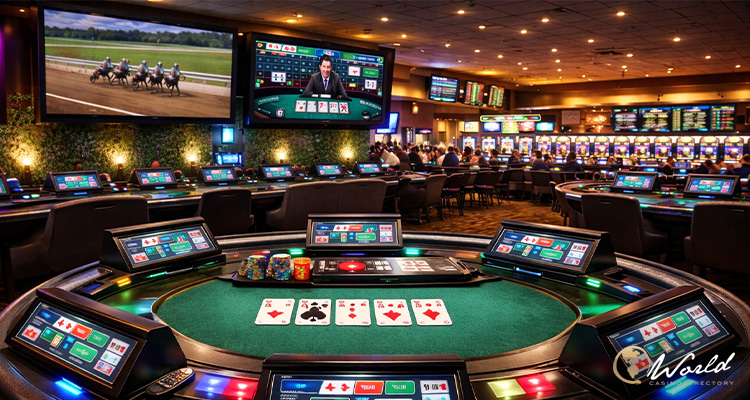
In a closely watched legal battle, the Minnesota Supreme Court has delivered a ruling in favor of Running Aces Casino Hotel & Racetrack, allowing the facility to continue offering dealer-assist table games, despite challenges from the Shakopee Mdewakanton Sioux Community (SMSC). The case centered on whether the racetrack’s use of dealer-assist technology violated the tribal exclusivity on electronic gaming in Minnesota.
The dispute dates back to 2023, when the Shakopee Mdewakanton Sioux Community, which operates the Mystic Lake Casino and Little Six Casino, filed a lawsuit against Running Aces and the Minnesota Racing Commission. The tribe argued that the dealer-assist games at Running Aces, which combine traditional card games with electronic elements, constituted a violation of the state’s gaming laws. Specifically, they contended that these games were a form of electronic gambling that should be reserved for tribal operations under Minnesota law.
The Role of Dealer-Assist Technology
Dealer-assist games, also known as “stadium gaming,” allow players to participate in traditional table games, such as blackjack and poker, using interactive touchscreen terminals arranged in a stadium-style setup. While a live dealer physically handles the cards or dice, players place their bets via the electronic terminals, which also calculate payouts. This format provides a unique blend of live casino interaction with the efficiency of digital technology, allowing for faster gameplay, smaller bets, and greater privacy for players who may feel uneasy in traditional social gambling settings.
Running Aces offers two dealer-assist games: Aces Live and Community Card Blackjack. These games have proven to be a draw for players, with betting minimums as low as 50 cents per hand in Aces Live and $1 in Community Card Blackjack. According to Evan Nelson, the attorney for Running Aces, these games cater to a new generation of players who may be more comfortable with technology than with the social pressures of traditional casino tables.
Initially, the Minnesota Racing Commission approved the use of dealer-assist games in 2017. However, the approval faced immediate resistance from the Shakopee Mdewakanton Sioux Community, which took the issue to the Minnesota Court of Appeals. The lower court sided with Running Aces, ruling that dealer-assist games did not fall under the category of electronic gambling, as they still involved human dealers and were more akin to traditional table games than video slots.
The tribe then escalated the matter to the state’s highest court. The Minnesota Supreme Court’s decision was a deadlock, with three justices in favor of the lower court’s ruling and three opposed. Associate Justice Theodora Gaitas recused herself from the case due to her prior involvement in the appeals court decision. With no majority opinion, the court effectively upheld the lower court’s decision, allowing Running Aces to continue offering dealer-assist games.
Tribal Disappointment and Legal Ramifications
The Shakopee Mdewakanton Sioux Community expressed disappointment with the court’s decision, reiterating that it believed dealer-assist games violate Minnesota’s law on tribal exclusivity in gaming. In a statement, the tribe declared, “We believe these games are a clear violation of Minnesota law.”
While the tribe may have been dissatisfied with the outcome, the ruling has significant implications for the future of non-tribal casinos in the state. Running Aces has long argued that the dealer-assist format is a vital part of their card room offerings and provides a less intimidating environment for newcomers to the casino world. As reported by MPR News, Nelson emphasized the technology’s appeal, stating, “This is an important part of the card room for Running Aces. This is innovative technology that allows for maybe a different generation of people who want to play card games to interact with the games.”
The case represents a broader debate on the scope of tribal gaming rights in Minnesota. Tribes in the state hold exclusive rights to certain types of gaming, particularly electronic devices like video slots, while non-tribal casinos are limited in their gaming offerings. The court’s decision reflects a recognition that dealer-assist games, despite incorporating electronic components, remain rooted in traditional card game formats and should not be classified as electronic gaming devices.
This ruling marks a significant victory for Running Aces, which has been at the center of an ongoing struggle to innovate and adapt to modern gaming preferences. The casino now stands to continue its operations without legal hindrance, while the Shakopee Mdewakanton Sioux Community must find other avenues to address their concerns about the legality of these games.
