

 United States
 Macau, China
 France
 Philippines
 Singapore
 Netherlands
 United Kingdom
 Canada
 Argentina
 Germany
 Estonia
 Peru
Peru Russia
 Australia
 South Africa
 Nigeria
 Malaysia
 Singapore
 India
India Finland
 China
China Ukraine
 Hong Kong
 Cyprus
 Turkey
 Greece
 Sweden
 South Korea
 Mexico
 Poland
 Ireland lottery results
 New Zealand lottery results
 Puerto Rico lottery results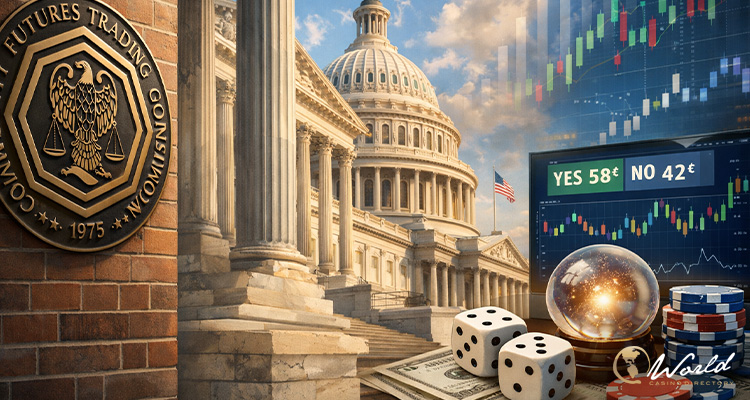
Michael Selig, the new chairman of the Commodity Futures Trading Commission (CFTC), has announced plans to overhaul the regulatory approach for event contracts, often referred to as prediction markets. These markets, which allow traders to bet on the outcomes of events ranging from political results to sports outcomes, have grown rapidly in popularity but have faced legal and regulatory uncertainty.
In his first major remarks since taking office, Selig emphasized the need for clear, modern regulations that would provide certainty for market participants while maintaining critical protections for investors. “It is time for clear rules and a clear understanding that the CFTC supports lawful innovation in these markets,” he said during a joint meeting with the Securities and Exchange Commission (SEC).
Reversal on Proposed Ban for Sports and Political Contracts
One of the most significant moves announced by Selig was the withdrawal of a proposed 2024 rule that would have prohibited political and sports-related event contracts. The proposal, along with a 2025 staff advisory warning platforms about the risks of offering such contracts amid ongoing litigation, has been a point of contention. According to Selig, these measures had contributed to confusion and uncertainty in the market, hindering its development. “For too long, the CFTC’s existing framework has proven difficult to apply and has failed our market participants,” he explained, according to MSN.
Selig’s decision to withdraw these proposals signals a shift towards a more supportive regulatory environment for prediction markets, particularly those dealing with sports outcomes. This change comes at a time when major players in the sector, including Kalshi, Polymarket, and Crypto.com, are facing legal challenges regarding the legality of offering event contracts tied to sports betting. These platforms argue that they are not engaged in illegal betting but instead provide a financial product that allows traders to speculate on various outcomes.
As part of the broader regulatory overhaul, Selig announced that the CFTC would work closely with the SEC to develop a joint interpretation of financial products. This collaboration aims to clarify the distinctions between CFTC-regulated commodity derivatives, SEC-regulated security-based swaps, and other financial instruments. Selig noted that it was essential to modernize the regulatory framework for prediction markets to keep pace with innovations in the financial sector while protecting investors from fraud and manipulation.
The partnership between the two agencies is part of a broader effort to reduce fragmentation in federal oversight, which has been a source of confusion for market participants. Selig stressed that harmonizing regulatory approaches would help ensure that prediction markets can operate lawfully and effectively across the U.S.
Tribal and State Pushback on Prediction Markets
Despite the optimistic tone set by Selig, his proposals have already drawn criticism from various stakeholders. Tribal gaming groups, in particular, have voiced concerns that expanding the scope of prediction markets could undermine tribal sovereignty. James Siva, chairman of the California Nations Indian Gaming Association (CNIGA), criticized the CFTC’s approach, arguing that the move could “flagrantly violate federal and state law, undermine tribal sovereignty, compromise sports integrity, and inflict grave harm on consumers.”
Additionally, state gaming regulators have raised alarms about the spread of prediction markets and their potential to function as unregulated sports betting platforms. Siva and other critics are calling on Congress to intervene and ensure that prediction markets are not allowed to operate outside the bounds of established gaming laws. The American Gaming Association (AGA) and the Indian Gaming Association (IGA) have also urged lawmakers to address these concerns, stressing the importance of maintaining consumer protection and regulatory oversight in the gaming industry.
Selig’s push for clearer regulations and his commitment to supporting innovation come as prediction markets are gaining mainstream attention. Companies like Kalshi and Polymarket have rapidly gained traction, with platforms now offering billions in activity as traders speculate on a wide range of topics, including political races and sports events. Selig acknowledged that these markets have become integral to the broader financial system and are no longer niche products.
The CFTC’s new focus on prediction markets aligns with Selig’s broader agenda to modernize financial regulations in the U.S., particularly in the rapidly evolving cryptocurrency and derivatives spaces. “As the new frontier of finance descends upon us, regulators must relentlessly modernize, harmonize, and future-proof their approach to regulation,” Selig said, highlighting the need for flexibility in a changing financial landscape.
