

 United States
 Macau, China
 France
 Philippines
 Singapore
 Netherlands
 United Kingdom
 Canada
 Argentina
 Germany
 Estonia
 Peru
Peru Russia
 Australia
 South Africa
 Nigeria
 Malaysia
 Singapore
 India
India Finland
 China
China Ukraine
 Hong Kong
 Cyprus
 Turkey
 Greece
 Sweden
 South Korea
 Mexico
 Poland
 Ireland lottery results
 New Zealand lottery results
 Puerto Rico lottery results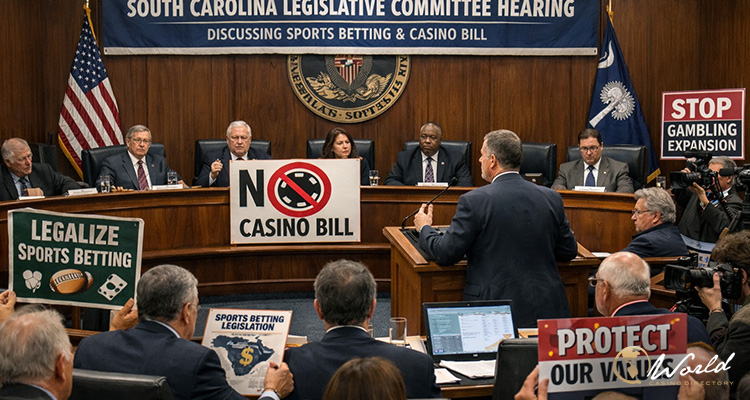
The prospect of casinos coming to South Carolina remains unlikely as the state’s legislature has once again stalled a casino bill. House Bill 4176, which proposed the creation of a Las Vegas-style casino along the I-95 corridor, was sent back to the House Ways and Means Committee last week, effectively killing the proposal for this year. The bill had initially been pushed by Rep. Bruce Bannister (R-Greenville), who hoped to build support by directing 35% of the casino’s gambling revenue toward environmental conservation. However, the lack of support from Governor Henry McMaster, who has long opposed gambling in the state, led to the bill’s apparent demise.
South Carolina is one of the few states that does not allow casinos beyond the state lottery, and McMaster’s steadfast resistance has long been a roadblock for any efforts to expand gambling. “I think the majority of the people in the state do not want casino gambling, and I don’t either,” McMaster stated, reiterating his position. Despite an amendment to the bill designed to secure McMaster’s backing, it seems clear that casinos will not be coming to South Carolina while he remains in office.
Governor McMaster’s Strong Opposition to Casinos
Governor McMaster’s opposition to casinos in South Carolina is well known. He has made his position clear since taking office, and despite efforts by supporters of the bill to modify it in ways that would align with McMaster’s priorities, his opposition remains unyielding. McMaster’s stance is not new; he has repeatedly voiced his concerns, and his influence is significant. “I’ve always opposed gambling. I think the majority of the people in the state do not want casino gambling,” McMaster has said, citing the moral concerns of his constituents and the potential negative impact on communities.
Rep. Bannister, who introduced the bill, has conceded that McMaster’s opposition is likely to kill the casino proposal for the foreseeable future. While Bannister still sees a path forward after McMaster’s term ends in 2027, he acknowledged that the current climate makes such an endeavor impossible. “I don’t see that pathway right now based on the current circumstances,” Bannister admitted.
South Carolina is located in the Bible Belt, where religious organizations have a significant influence over state politics. Opposition from faith-based groups has been a major factor in stymieing efforts to expand gambling in the state. In fact, just last year, a group of Christian leaders gathered at the State House to protest the legalization of casino gambling.
Chad Connelly, founder of Faith Wins, expressed the group’s concerns about the potential societal harm that could come from casinos. “We prayed together, spoke with lawmakers, and held a press conference — bringing light to issues that affect every family in South Carolina,” Connelly said. He and other faith leaders have made it clear that opposing casinos in South Carolina remains a top priority for them.
The Sports Betting Bill: A New Hope for Gambling Expansion
While the casino bill has been put on hold, South Carolina lawmakers are considering a new measure that could bring online sports betting to the state. The proposal, which is still in its early stages, has made its way to a subcommittee after being carried over from the 2024 legislative session.
The sports betting bill proposes that South Carolina would allow online sportsbooks, with a minimum betting age of 18, and would cap the number of sportsbooks at eight. A new body, the South Carolina Sports Wagering Commission, would be created to oversee the industry. Importantly, this bill focuses solely on online sports betting, and would not authorize retail sportsbooks.
The bill has a tax rate set at 12.5% for businesses operating in the state, and it is expected that it could bring significant revenue to South Carolina, which currently does not allow sports betting. South Carolina remains one of only 12 states that have yet to legalize the practice. According to WSAV, the S.C. Labor and Commerce subcommittee is scheduled to hear arguments for the bill on February 18, and if it passes, it could bring a much-needed boost to the state’s economy.
While the casino bill appears to be a non-starter for the time being, the sports betting proposal may offer some hope for the future of legalized gambling in South Carolina. Governor McMaster’s resistance to casinos seems unlikely to change before his term ends in 2027, but the sports betting bill, which has a narrower scope, may have a better chance of gaining traction.
Developers have long seen the potential for gambling revenue in the state, especially in areas like Santee, a small town in South Carolina that has expressed interest in hosting a casino. However, with ongoing opposition from both the governor and religious groups, the state’s gambling landscape remains largely unchanged for the foreseeable future.
