

 United States
 Macau, China
 France
 Philippines
 Singapore
 Netherlands
 United Kingdom
 Canada
 Argentina
 Germany
 Estonia
 Peru
Peru Russia
 Australia
 South Africa
 Nigeria
 Malaysia
 Singapore
 India
India Finland
 China
China Ukraine
 Hong Kong
 Cyprus
 Turkey
 Greece
 Sweden
 South Korea
 Mexico
 Poland
 Ireland lottery results
 New Zealand lottery results
 Puerto Rico lottery results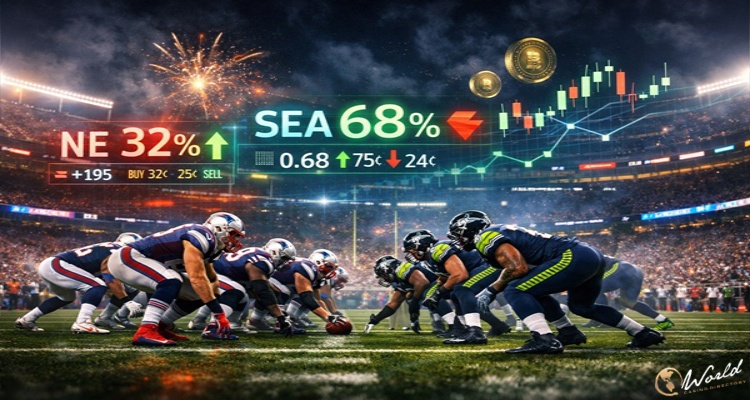
As Super Bowl LX approaches, the National Football League (NFL) has begun to publicly soften its stance on prediction markets, a rapidly growing segment of sports-related financial trading. While league officials continue to raise concerns about regulation and game integrity, recent comments suggest the NFL is studying the space more closely than before, even as it avoids immediate partnerships.
Speaking to Front Office Sports on Radio Row in San Francisco, NFL Executive Vice President Jeff Miller acknowledged that the league has increased its attention on prediction markets. “It’s innovative, that marketplace is dynamic,” Miller said. “We’re not quite sure what regulation is gonna look like.” His remarks reflect a notable change in tone from the league’s more critical posture late last year.
A measured reassessment driven by market growth
Miller emphasized that regulation remains central to the league’s evaluation, though it is no longer the sole factor. “It isn’t just about anticipating the worst,” he said. “It is a fan engagement tool, there’s no question around that, and that’s been good for the league.” He added that internal discussions are far from over. “There’s no question that we’re going to be spending a lot of time talking about this in the coming months, and maybe even years,” Miller said. “But our principles are going to remain the same.”
Those principles were clearly outlined in December, when Miller submitted written testimony to the House Committee on Agriculture. At that time, he warned lawmakers that the league was “particularly troubled that several sports-related futures contracts have been launched nationwide, including in jurisdictions where sports betting has not been legalized.” He also highlighted the absence of protections common in regulated sports betting, pointing to missing safeguards such as integrity monitoring, official league data requirements, information-sharing obligations, know-your-customer rules, and problem gambling resources.
In that testimony, Miller cautioned that prediction markets could attract more money than traditional sportsbooks, creating what he described as “substantially greater risks to contest integrity.” He urged federal regulators to intervene, stating that existing guardrails used by state-regulated betting markets “do not exist in prediction markets.”
From legal opposition to cautious observation
The league’s evolving language stands out against its long history of resistance to gambling. For years, the NFL actively fought efforts to legalize sports betting, including New Jersey’s challenge to the Professional and Amateur Sports Protection Act. Between 2012 and 2018, the league repeatedly went to court to block legalization, with Commissioner Roger Goodell warning that betting would cause “irreparable harm” to the sport.
That posture shifted after the U.S. Supreme Court struck down PASPA in 2018. Even then, the NFL moved slowly. “We were the last in with partners,” Miller said, explaining that the league wanted time to understand the marketplace and evaluate risks and benefits. Today, the NFL maintains partnerships with sportsbooks such as DraftKings and FanDuel, built on regulatory frameworks the league views as protective of both consumers and competition.
Miller said any future engagement with prediction-market platforms would require similar standards. “The same thing will have to happen if the Polymarkets and Kalshis of the world end up continuing on this trajectory to become a regulated business,” he said. “We’ll have to figure out how to do that.”
Super Bowl LX spotlight intensifies scrutiny
The timing of the league’s comments coincides with Super Bowl LX, where the New England Patriots and Seattle Seahawks are set to play at Levi’s Stadium on February 8. Interest in wagering surrounding the game continues to grow. The American Gaming Association projects that Americans could place $1.76 billion in legal bets on the game, with global estimates nearing $4 billion when international activity is included.
Prediction markets account for a growing share of that activity. Although the NFL barred these platforms from advertising during the Super Bowl broadcast, trading volume has climbed. Kalshi reported more than three million downloads in January and said trading on its Super Bowl winner contract exceeded $161 million, representing a 450% increase from the prior year. Other platforms, including Polymarket, have seen similar activity tied to both game outcomes and novelty event contracts.
Despite this growth, the NFL remains cautious. The league has no immediate plans to partner with prediction-market operators, and Miller stressed that observation remains the current strategy. “We’re interested, of course, in watching the marketplace move,” he said. “But we’re also going to be cautious.”
