

 United States
 Macau, China
 France
 Philippines
 Singapore
 Netherlands
 United Kingdom
 Canada
 Argentina
 Germany
 Estonia
 Peru
Peru Russia
 Australia
 South Africa
 Nigeria
 Malaysia
 Singapore
 India
India Finland
 China
China Ukraine
 Hong Kong
 Cyprus
 Turkey
 Greece
 Sweden
 South Korea
 Mexico
 Poland
 Ireland lottery results
 New Zealand lottery results
 Puerto Rico lottery results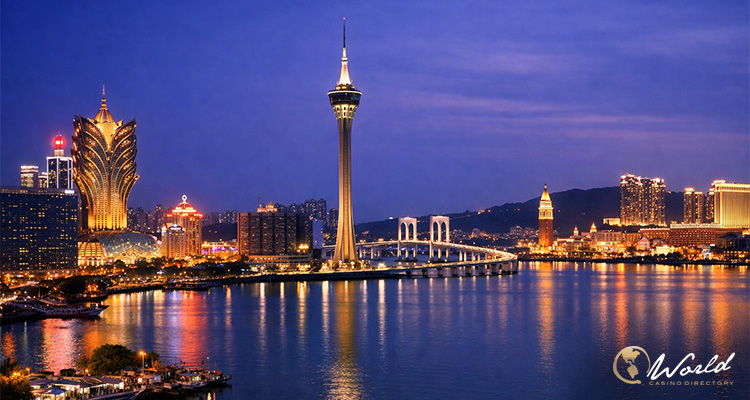
Macau’s casino sector recorded a softer start to February as the period leading into Chinese New Year showed reduced gaming activity. Analysts estimate gross gaming revenue reached roughly MOP$5.0 billion during the first eight days of the month, translating to about MOP$625 million per day. This daily pace sits below January levels and trails figures reported for February last year. Observers link the decline mainly to seasonal travel patterns rather than structural weakness in the market.
Early February Performance Reflects Seasonal Patterns
Industry analysts note that Chinese New Year often shifts gaming demand into a narrower timeframe. Early February typically sees players postpone trips until the holiday period itself. Research commentary indicates the slowdown reflects expected seasonal behavior tied to holiday timing, with gaming volumes easing before the peak travel window.
Estimates show the early-month daily average sits about 14 percent below January’s roughly MOP$730 million run rate. Comparisons with February 2025 also indicate a drop of around 11 percent. Analysts describe this trend as consistent with historical patterns, particularly as travel activity across mainland China centers on family reunions before leisure travel resumes.
Industry data suggest VIP gaming activity declined between 12 percent and 14 percent compared with January. Mass-market revenue appears lower by about 11 percent to 13 percent over the same comparison period. Analysts state that hold rates in VIP gaming remain broadly normal, indicating revenue changes stem mainly from volume rather than changes in win rates.
Tourism indicators provide additional context for the softer gaming numbers. Early February coincides with one of the busiest travel periods in China, when many travelers return to hometowns. Reports show transportation volumes rising nationally during this time. Some analysts interpret the data as evidence that casino visits may shift later into the holiday cycle rather than disappear entirely.
Revenue Outlook Still Points To Growth
Despite the quieter start, analysts have not revised their full-month forecasts. Projections continue to place February gross gaming revenue at about MOP$20.5 billion, suggesting approximately 4 percent growth compared with the same month last year. If achieved, the implied daily average for the remainder of February would approach MOP$775 million.
Combined performance across January and February also remains under close scrutiny due to Chinese New Year timing differences between years. As reported by Inside Asian Gaming, current estimates place the two-month total around MOP$43.1 billion, which would represent roughly 13.5 percent year-on-year growth after adjusting for calendar variations. January alone generated MOP$22.6 billion in revenue, marking a 24 percent increase compared with the previous year.
Industry commentary suggests operators remain optimistic about holiday demand. Some earnings discussions referenced encouraging booking levels leading into the festive period, reinforcing expectations of stronger activity once celebrations begin. Chinese New Year this year falls on February 17, with a nine-day holiday period starting February 15 on the mainland.
Border traffic statistics indicate strong visitor movement despite softer early gaming revenue. Authorities reported 867,000 cross-border movements on February 7, the highest daily total recorded. Visitors accounted for around 40 percent of crossings, with approximately 174,000 tourists entering the city that day.
The Border Gate checkpoint alone handled nearly 463,000 passenger movements, marking the strongest flow in five years and the busiest period since pandemic-related restrictions eased. These figures suggest that tourism momentum may support gaming activity as the holiday period unfolds.
