

 United States
 Macau, China
 France
 Philippines
 Singapore
 Netherlands
 United Kingdom
 Canada
 Argentina
 Germany
 Estonia
 Peru
Peru Russia
 Australia
 South Africa
 Nigeria
 Malaysia
 Singapore
 India
India Finland
 China
China Ukraine
 Hong Kong
 Cyprus
 Turkey
 Greece
 Sweden
 South Korea
 Mexico
 Poland
 Ireland lottery results
 New Zealand lottery results
 Puerto Rico lottery results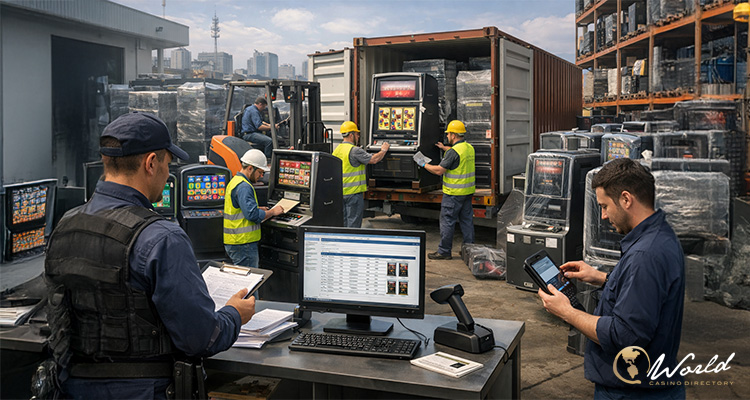
Colombia’s gambling regulator has introduced a new framework to monitor the importation and distribution of electronic slot machines, aiming to address illegal activity while safeguarding financial contributions to public healthcare. The measure establishes a centralized registry that importers and distributors must join before bringing gaming devices into the country starting in 2026.
Authorities formalized the initiative through Resolution 8594 of 2025, which created the Single Registry of Importers and Distributors, commonly referred to as the RIC. Officials expect the system to improve transparency regarding how slot machines enter the market and where they ultimately operate.
New Registration Requirement Targets Equipment Oversight
Importers and distributors will have 45 calendar days from the publication of the resolution on January 26, 2026, to enroll in the registry. Registration must be completed through an official online form provided by the regulator. The rules also require companies to report the destination of each gaming machine within 10 days after customs clearance.
According to the regulator, these steps will allow authorities to track gaming equipment more effectively and limit the possibility that unlicensed operators acquire machines. The measure applies specifically to electronic slot machines, known locally as METS.
Marco Emilio Hincapié Ramírez, president of the regulatory authority, described the registry as a necessary development for the domestic gaming sector. “The creation of the RIC is fundamental to controlling the import and marketing of slot machines entering the country, and to stop the illegal activity that is so damaging to health revenues,” he stated, as reported by Coljuegos.
Coordination with the National Directorate of Taxes and Customs will form part of the oversight process. Officials expect this cooperation to ensure that all imported gaming equipment remains traceable and properly licensed, which in turn supports the allocation of gambling-related taxes to public services.
Healthcare Funding And Market Scale Drive Regulation
Land-based gambling continues to represent a major source of funding for Colombia’s subsidized healthcare system. During 2025, localized gaming activities transferred approximately COP378.3 billion, equivalent to around $104.8 million, to healthcare programs. This amount represented 39% of the industry’s overall revenue contributions.
The scale of the domestic slot machine market has influenced the regulatory approach. Current figures indicate about 109,000 licensed machines operate in more than 3,700 authorized establishments nationwide. Imports of slot machines and related components exceeded $22.5 million in 2024, reflecting continued demand and reinforcing the case for tighter monitoring.
Authorities have emphasized that illegal machines threaten both industry integrity and public finances. Stronger controls aim to prevent unlicensed operators from diverting revenue that would otherwise support healthcare funding.
Changes affecting the land-based sector coincide with evolving policy discussions around online gambling taxation. A recent decision by Colombia’s Constitutional Court suspended Decree 1390, which introduced a 19% value-added tax on gross gaming revenue from online gambling. The court questioned whether conditions justified the declaration of an economic emergency used to enact the measure.
As a result of the suspension, online operators currently remain subject to the existing 15% tax on gross gaming revenue. Legal observers have suggested the reinstatement of the additional tax may face political challenges, particularly during an election year.
The introduction of the slot machine import registry therefore forms part of a wider regulatory landscape in which authorities continue to balance industry oversight, fiscal policy, and public funding priorities. Officials expect the RIC system to improve compliance while maintaining financial flows that support healthcare initiatives.
