

 United States
 Macau, China
 France
 Philippines
 Singapore
 Netherlands
 United Kingdom
 Canada
 Argentina
 Germany
 Estonia
 Peru
Peru Russia
 Australia
 South Africa
 Nigeria
 Malaysia
 Singapore
 India
India Finland
 China
China Ukraine
 Hong Kong
 Cyprus
 Turkey
 Greece
 Sweden
 South Korea
 Mexico
 Poland
 Ireland lottery results
 New Zealand lottery results
 Puerto Rico lottery results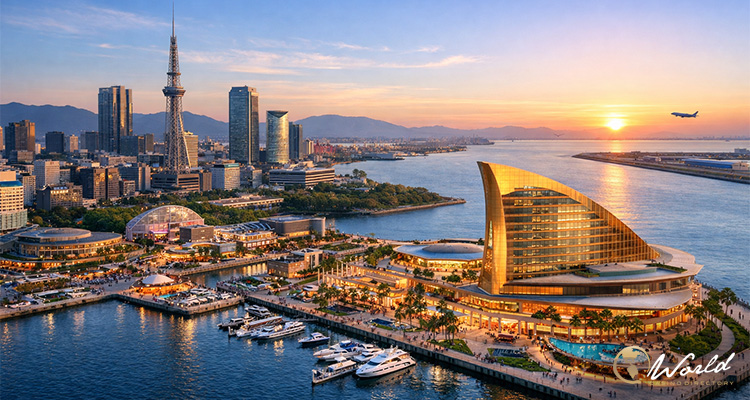
Aichi Prefecture, a key region in central Japan, is preparing to re-enter the bidding process for the development of an integrated resort (IR) that would feature a casino. According to local media reports, Aichi is among the few regions expressing interest in the upcoming round of applications, following a period of deliberation and shifting priorities. Governor Hideaki Omura is expected to make an official announcement soon regarding the prefecture’s commitment to pursuing a license for an IR.
Aichi’s Renewed Pursuit of an Integrated Resort
The decision to reenter the IR bidding process marks a significant shift for Aichi, which had initially shown interest but chose not to submit a formal bid during the first round of applications. Media outlets reported on Thursday, February 12, that the prefecture intends to submit a bid in the next round of applications, set for May to November 2027. This aligns with the Japan Tourism Agency’s announcement that it will accept new applications for integrated resorts during that period.
Notably, Aichi is not alone in its renewed efforts. Hokkaido, another prefecture in Japan, also confirmed its intent to pursue a bid for an IR, making Aichi and Hokkaido the first two regions to formally express their plans since the government’s decision to reopen the process. While Aichi had previously considered submitting a proposal during the first round, it opted to forgo an application in 2022, citing disruptions caused by the COVID-19 pandemic as a key factor in the decision.
Local reports suggest that the site Aichi is eyeing for the IR project is located on reclaimed land near Chubu Centrair International Airport. The airport serves as a major transport hub in the region, making it a strategic location for an integrated resort that aims to draw both domestic and international visitors.
To assess potential interest from developers, the Aichi Prefectural Government is planning to launch a request for information (RFI). This step is designed to gauge the level of interest from potential developers before making a decision on whether to proceed with a formal bid. The results of this survey will play a crucial role in determining the next steps for Aichi’s IR aspirations.
Governor Omura, who is currently serving his fourth term as the prefectural governor, is expected to brief the public shortly on Aichi’s renewed plans. The governor has previously indicated a strong commitment to securing an IR license for the region, which would contribute to the local economy and tourism sector.
The Status of Japan’s Integrated Resort Licensing Process
Japan’s national government has set the stage for a new application window for integrated resorts, with the next round of submissions opening from May 6, 2027, to November 5, 2027. This follows the original plans outlined by the Integrated Resort Act, passed in 2018, which aimed to legalize and regulate the development of casinos in Japan. According to Inside Asian Gaming citing Mainichi Shimbun, only three integrated resort licenses will be issued under the current framework, leaving two licenses still available for interested regions.
While Aichi and Hokkaido are re-engaging with the process, other regions like Nagasaki are also expected to submit applications for the next round. Notably, Wakayama, which nearly submitted a bid during the first round, has decided to sit out the upcoming application period.
The first round of applications saw Osaka emerge as the only region to secure approval, with the MGM-ORIX consortium breaking ground on their $10 billion MGM Osaka IR project. The MGM Osaka resort is scheduled to open in 2030, marking a significant milestone for Japan’s gambling industry.
Aichi’s decision to re-enter the IR bidding process signals the region’s recognition of the economic potential of an integrated resort. While Aichi and other regions face challenges in competing for a limited number of licenses, the possibility of creating an IR near a major international airport like Chubu Centrair provides a competitive advantage. Additionally, the prefecture’s strategic location in the central part of Japan positions it as an appealing destination for both tourists and business travelers.
