

 United States
 Macau, China
 France
 Philippines
 Singapore
 Netherlands
 United Kingdom
 Canada
 Argentina
 Germany
 Estonia
 Peru
Peru Russia
 Australia
 South Africa
 Nigeria
 Malaysia
 Singapore
 India
India Finland
 China
China Ukraine
 Hong Kong
 Cyprus
 Turkey
 Greece
 Sweden
 South Korea
 Mexico
 Poland
 Ireland lottery results
 New Zealand lottery results
 Puerto Rico lottery results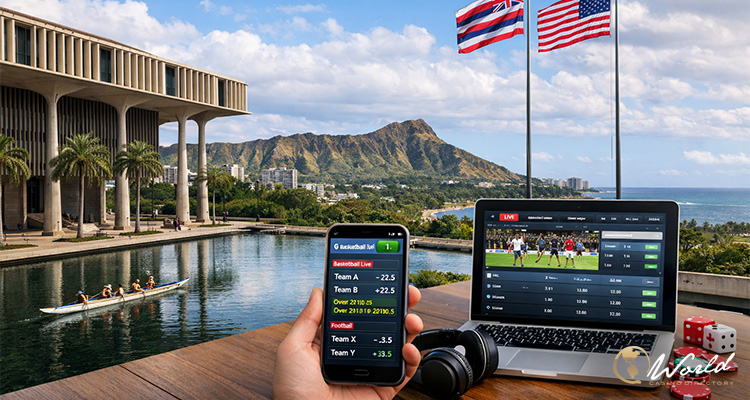
A bill to legalize online sports betting in Hawaii has passed the first legislative hurdle despite significant opposition. The bill, HB 2570, was advanced by the House Committee on Economic Development & Technology after a divided vote, with 5-2 in favor, including some “yes” votes with reservations. The proposal aims to introduce a regulated online sports betting market, but has raised concerns over its potential societal impact and alignment with the state’s values.
Hawaii’s Push for Legalized Online Sports Betting
Introduced by Rep. Daniel Holt, HB 2570 aims to create a legal framework for online sports betting in Hawaii, which has long resisted gambling in any form since statehood in 1959. If passed, the bill would permit at least six online sports betting platforms to operate, each required to pay a high licensing fee of $500,000 for both initial application and annual renewal. The bill proposes a 15% tax on sports betting revenues, which would generate significant revenue for the state, particularly aimed at funding problem gambling prevention programs.
Rep. Holt, who has previously supported legal sports betting, voiced his support for the bill but also expressed dissatisfaction with the current version, stating, “I appreciate you moving this forward, and all the work you have done, but it was not my idea and I was not consulted, and I just want to put that out there.” Despite his reservations, the bill continues to progress through the legislative process, with further discussions and amendments expected.
The strongest opposition to HB 2570 came from a wide range of local residents and organizations who argue that legalizing online sports betting would harm the state’s culture and social fabric. Testimonies from 41 individuals or groups opposed the bill, with many citing personal stories of gambling addiction and the associated financial and social damage. As reported by InGame, Honolulu prosecutor Steve Alm emphasized the risks of normalizing gambling in Hawaii, stating, “sports betting is already tarnishing sports,” and raised concerns that the state’s decision could lead to profiting from addiction.
Further criticism came from Les Bernal of Stop Predatory Gambling, who pointed out that some major sportsbook operators are already circumventing state laws with prediction markets—platforms that offer financial products disguised as sports betting. Bernal warned that such practices were inconsistent with the “Aloha spirit” and could further complicate Hawaii’s gambling regulations.
Proponents of the bill, however, argue that gambling is already happening in Hawaii through illegal, unregulated operators. They contend that legalizing sports betting would allow the state to capture tax revenue from these activities and ensure that proper safeguards, such as responsible gambling tools, are implemented. Kathleen Owen, representing the Sports Betting Alliance, emphasized that regulation would help reduce the outflow of gambling dollars to offshore platforms, while also ensuring greater consumer protection.
The Role of Prediction Markets and Competing Bills
In addition to HB 2570, lawmakers are also considering a separate bill, HB 2198, which seeks to ban prediction markets in Hawaii. These markets allow participants to bet on outcomes of specific events, such as sports contests, and have raised concerns about their potential to circumvent state gambling laws. The introduction of prediction markets has become a key issue, with opponents arguing that they represent a backdoor method for sportsbooks to operate without proper regulation.
The debate surrounding these markets underscores the complexity of the issue, as lawmakers face pressure to regulate a form of gambling that falls outside traditional categories. The growing use of prediction markets by major sportsbooks has led to calls for clarity on what constitutes legal betting, especially in a rapidly evolving industry.
Despite the heavy opposition, HB 2570 continues to advance through Hawaii’s legislative process. However, the contentious debate surrounding the bill suggests that it may face additional hurdles before any final decisions are made. As lawmakers continue to deliberate, the question of how to balance economic benefits with potential societal costs remains at the heart of the discussion.
