

 United States
 Macau, China
 France
 Philippines
 Singapore
 Netherlands
 United Kingdom
 Canada
 Argentina
 Germany
 Estonia
 Peru
Peru Russia
 Australia
 South Africa
 Nigeria
 Malaysia
 Singapore
 India
India Finland
 China
China Ukraine
 Hong Kong
 Cyprus
 Turkey
 Greece
 Sweden
 South Korea
 Mexico
 Poland
 Ireland lottery results
 New Zealand lottery results
 Puerto Rico lottery results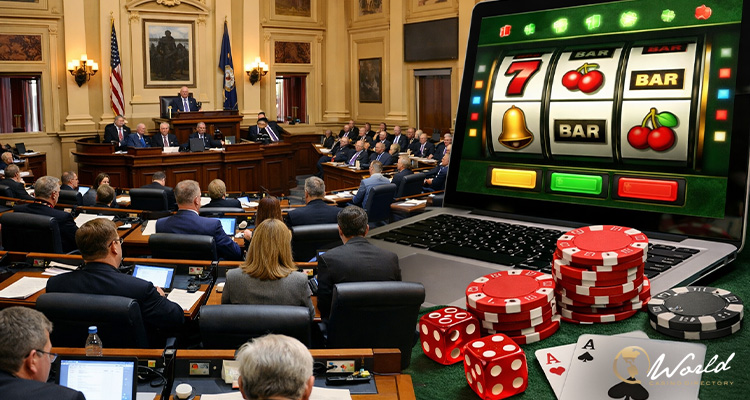
Virginia lawmakers have brought efforts to legalize online casino gambling to a halt after failing to reach a final agreement before the legislative session ended. The decision followed months of debate and came despite earlier approvals of related bills in both chambers of the General Assembly.
The proposal, which would have allowed casino-style gaming on mobile devices with continuous access, stalled in a conference committee as legislators were unable to reconcile differences between competing versions of the legislation. With the session closing on March 14, the measure cannot advance further this year and would need to be reintroduced in a future session.
Legislative Disagreements Stop iGaming Push
Two bills—House Bill 161 and Senate Bill 118—had progressed through the House of Delegates and the Senate earlier in 2026. While both measures aimed to establish a regulated online casino market, disagreements over key provisions ultimately prevented a final compromise.
Lawmakers could not align on how tax revenue from online gambling would be distributed or the mechanisms governing that allocation. Although both chambers had worked to reconcile other elements, including provisions that would delay implementation until at least 2028, those remaining differences proved decisive.
Each proposal would have permitted Virginia’s land-based casinos to partner with up to three online platforms, creating a statewide iGaming market regulated by the Virginia Lottery Board. The framework included a 20% tax on adjusted gross gaming revenue, a $2 million platform fee, and a $500,000 initial licensing cost. Portions of the tax revenue were also intended to address concerns that online gaming could reduce in-person casino activity.
The legislation also depended on the approval of separate efforts to establish a unified gambling regulatory body. Those efforts faced similar setbacks, with Senate Bill 609 failing in conference and House Bill 271 postponed until 2027.
Because the conference committee did not produce a unified bill before the deadline, the entire legislative process must restart if lawmakers choose to revisit the issue next year.
Opposition Highlights Concerns Over Accessibility
Advocacy groups and industry stakeholders had raised concerns throughout the legislative process, particularly about the potential social and economic effects of online casino gambling.
The National Association Against iGaming (NAAiG), a coalition that includes local businesses and casino operators, welcomed the outcome. The group argued that allowing casino-style games on mobile devices would increase risks tied to gambling behavior and financial stability.
“Virginia lawmakers made the right decision by rejecting online casino gambling,” said NAAiG spokesman Oliver Barie in a press release. “This proposal would have placed casino-style gambling on every phone and smart device, creating serious risks for families, workers and local communities. Policymakers demonstrated leadership by putting people before profit.”
The organization also pointed to polling data suggesting that many Virginia residents oppose legalizing online casinos. According to those findings, concerns include potential addiction, financial strain on households, and the impact on jobs supported by physical casino locations. Opposition to iGaming spans political affiliations, and many voters expressed reluctance to support candidates who back such measures.
Barie reiterated those concerns in a separate statement following the legislative outcome.
“Virginia lawmakers made the right decision today by rejecting the expansion of online casino gambling,” he said. “Virginians made their voices heard and stopped a proposal that would have placed casino-style betting on every phone and smart device with 24/7 access. iGaming carries serious consequences, including increased risk of addiction and financial harm for families, while diverting money away from brick-and-mortar businesses and our local communities. We thank the legislators who chose to protect Virginia and rejected the expansion of this harmful policy.”
Other Gambling Measures Move Forward
While the online casino effort did not succeed, lawmakers approved several other gaming-related measures before the session concluded.
The General Assembly passed legislation authorizing a new land-based casino in Fairfax County, contingent on voter approval. Additional bills addressed other areas of the gaming industry, including restrictions on sports betting payments and changes to daily fantasy sports operations.
Virginia also moved to prohibit the use of credit cards for sports betting transactions. Lawmakers approved a measure targeting certain daily fantasy sports formats, banning against-the-house contests while setting a 10% tax rate for peer-to-peer operators. Another bill allows skill gaming machines to return to certain retail and hospitality venues, such as convenience stores, restaurants, and bars.
These measures successfully cleared the legislative process and now await action from Governor Abigail Spanberger. Although the online casino proposal did not pass, it remains a topic of ongoing discussion in Virginia. With prior progress made in both chambers, lawmakers may revisit the issue in a future session, though any renewed effort will require starting the legislative process again from the beginning.
