

 United States
 Macau, China
 France
 Philippines
 Singapore
 Netherlands
 United Kingdom
 Canada
 Argentina
 Germany
 Estonia
 Peru
Peru Russia
 Australia
 South Africa
 Nigeria
 Malaysia
 Singapore
 India
India Finland
 China
China Ukraine
 Hong Kong
 Cyprus
 Turkey
 Greece
 Sweden
 South Korea
 Mexico
 Poland
 Ireland lottery results
 New Zealand lottery results
 Puerto Rico lottery results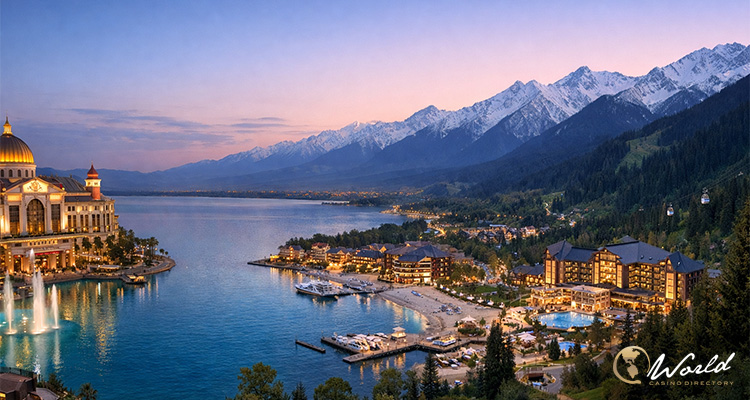
Kazakhstan has taken a significant step toward expanding its tourism sector by approving new locations for casino development across multiple regions. The move follows legislative amendments signed by President Kassym-Jomart Tokayev, introducing changes to existing gambling laws and redefining how the industry operates within the country.
The updated framework allows for the establishment of gambling zones in four distinct regions, with a focus on attracting international visitors while maintaining strict regulatory oversight. Officials view the decision as part of a broader effort to diversify the economy and increase tourism-related investment.
New Gambling Areas Approved Across Key Regions
Under the revised legislation, casino zones will be introduced in several geographically diverse locations. These include the Mangistau region along the Caspian Sea coastline, as well as parts of the Zhetysu region, specifically the Panfilov district and the Lake Alakol area. Additional zones are planned in the Talgar district of the Almaty region and in East Kazakhstan, covering the Markakol area and the Zaisan district.
Authorities have emphasized that these locations were selected based on their tourism potential and existing or developing infrastructure. Regional administrations will play a role in determining the exact sites for casino construction, allowing local governments to evaluate readiness and suitability before projects move forward.
Despite the expansion, restrictions remain in place. Gambling establishments such as casinos, slot machine halls, betting shops, and totalizators are not permitted in protected natural areas or on land designated for historical, cultural, defense, or national security purposes.
Shift Toward Foreign Visitor-Focused Gambling
A notable change in the updated policy involves access rules. The new casino zones will primarily cater to foreign citizens and stateless individuals, along with authorized personnel working in the facilities. This marks a shift toward a model designed to support inbound tourism rather than domestic gambling activity.
At present, Kazakhstan’s casino industry operates in only two designated areas: the city of Konaev in the Almaty region and the Shchuchinsk-Borovoye resort zone in the Akmola region. Both locations currently admit local and international visitors. The newly approved zones, however, signal a more targeted approach aimed at international tourism growth.
The government has maintained tight control over gambling activities, ensuring they remain confined to specific regions under a regulated framework, according to Kazinform International News Agency.
Economic Goals and Tourism Growth Strategy
Officials have linked the expansion of casino zones to broader economic objectives, including increased investment and job creation. Kazakhstan’s tourism sector has already attracted more than 1.2 trillion tenge in investments, largely driven by hotel construction and resort development.
Government representatives have highlighted the financial potential of casino projects. Tourism and Sports Minister Yerbol Myrzabosynov stated, “A single casino can generate between 2 to 3 billion tenge in tax revenue for the budget and create approximately 500 jobs.” He also addressed speculation about tax changes, saying, “There is no question of lowering taxes. Casinos pay taxes on every gaming table. Overall, annual tax contributions are expected to range from two to three billion tenge.”
Each new development is expected to support local employment while also contributing to regional economies through related services such as hospitality and entertainment.
Kazakhstan has seen a rise in international interest in recent years, welcoming a record 16 million foreign visitors. The country has worked to improve its appeal by easing visa requirements and promoting its varied landscapes, from mountain ranges to coastal areas.
The World Economic Forum recently moved Kazakhstan up 10 positions to 62nd place in its Travel & Tourism Development Index, reflecting progress in the sector. Authorities have set a goal of entering the top 50 destinations globally.
