

 United States
 Macau, China
 France
 Philippines
 Singapore
 Netherlands
 United Kingdom
 Canada
 Argentina
 Germany
 Estonia
 Peru
Peru Russia
 Australia
 South Africa
 Nigeria
 Malaysia
 Singapore
 India
India Finland
 China
China Ukraine
 Hong Kong
 Cyprus
 Turkey
 Greece
 Sweden
 South Korea
 Mexico
 Poland
 Ireland lottery results
 New Zealand lottery results
 Puerto Rico lottery results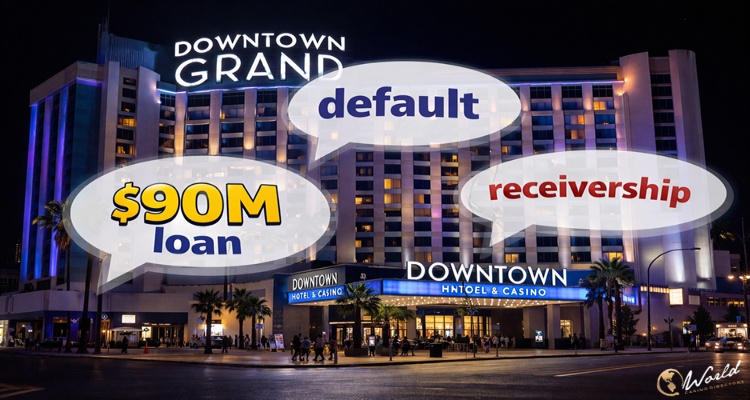
The Downtown Grand Hotel and Casino in Las Vegas has entered a new phase following a court-ordered receivership, with a sale process now underway after its ownership group defaulted on a major construction loan.
Receiver Takes Control and Stabilizes Operations
Court records reportedly show that the property was placed under the control of a receiver on January 5, after lender Banc of California filed a legal complaint against the ownership entities. The dispute centers on a loan originally valued at $82.5 million in 2019, which was later increased by $7.5 million in 2020. According to filings, required interest payments stopped on March 21, 2025, and the loan remained unpaid when it reached maturity on August 19, 2025.
The court determined that the ownership companies were unable to meet their financial obligations and approved the appointment of a receiver to oversee the property. Paul Huygens of Henderson-based Province LLC was assigned to take control of operations and manage the asset during the legal proceedings.
Following the court’s decision, Huygens assumed responsibility for the hotel-casino and its associated entities. As reported by the Las Vegas Review-Journal, legal filings state that he has taken “possession and control” of the property and has “largely stabilized operations,” supported by additional funding from the lender.
The Downtown Grand has continued to operate during this period, with the receiver working alongside existing staff and vendors. While the property remains open, the focus has shifted toward preparing it for a potential transaction.
The Nevada Gaming Control Board confirmed awareness of the situation and stated it is monitoring developments, though it did not comment on licensing requirements tied to the receivership.
The use of a receiver in this case reflects the legal framework available under Nevada law, where third-party management can be introduced to oversee distressed assets. Under the Uniform Commercial Real Estate Receivership Act, a receiver has the authority to manage contracts, maintain operations, and pursue a sale process with court approval.
Marketing Process Attracts Early Interest
Efforts to market the property began soon after the receiver took control. A detailed outreach campaign has already been launched, with materials distributed to a wide group of potential buyers.
According to court filings, sale documents were sent to 162 prospective purchasers at the end of January. By mid-February, 25 parties had signed nondisclosure agreements and gained access to an online data room containing more than 500 documents. In addition, 17 groups engaged directly with the receiver’s team through meetings or calls.
A 53-page confidential information memorandum was prepared as part of the process, outlining key details of the property and its operations. These steps indicate that the sale effort has moved quickly, with early engagement from interested parties.
The receiver is expected to file a motion with the court in the coming weeks to formally establish bidding procedures and a structured timeline for the sale. This filing will likely define how offers are submitted, whether a lead bidder is selected, and what criteria potential buyers must meet.
The situation highlights broader financial challenges affecting some properties in downtown Las Vegas. While the area has seen new developments, certain operators have faced difficulties tied to debt obligations and changing market conditions.
The Downtown Grand occupies a prominent location at North 3rd Street and Ogden Avenue, making it a notable asset within the downtown gaming landscape. Any change in ownership could influence the surrounding area, including employment, tenant relationships, and tourism activity.
Court documents indicate that the receiver is working to maximize value for creditors while maintaining business continuity. The legal process will continue to shape the timeline for a sale, with further details expected once the court reviews the proposed procedures.
It remains unclear when a transaction may be completed. The duration of the receivership will depend on the progress of the sale process and the outcome of court approvals.
For now, the Downtown Grand continues operating under court supervision as potential buyers evaluate the opportunity and prepare for the next stage of bidding.
