

 United States
 Macau, China
 France
 Philippines
 Singapore
 Netherlands
 United Kingdom
 Canada
 Argentina
 Germany
 Estonia
 Peru
Peru Russia
 Australia
 South Africa
 Nigeria
 Malaysia
 Singapore
 India
India Finland
 China
China Ukraine
 Hong Kong
 Cyprus
 Turkey
 Greece
 Sweden
 South Korea
 Mexico
 Poland
 Ireland lottery results
 New Zealand lottery results
 Puerto Rico lottery results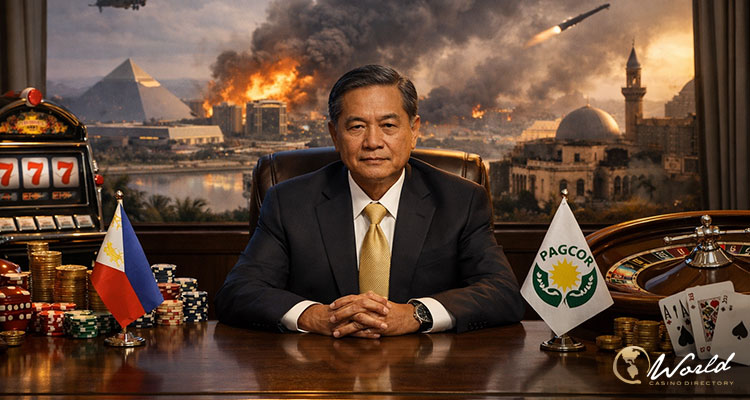
The head of the Philippine gaming regulator said the industry is operating under growing pressure from the crisis in the Middle East, while calling on stakeholders to stay connected as market conditions become more difficult. PAGCOR Chairman and CEO Alejandro Tengco made the remarks in Manila during a networking event attended by more than 150 industry representatives, where he pointed to the effect of rising energy costs on gaming jurisdictions in the Philippines and abroad.
Tengco Says Industry Dialogue Matters
Tengco delivered the comments at the first Manila After Dark gathering of 2026, held at LaVie Resort & casino. The event took place in the renovated LaVie Grand Lobby and brought together people from different parts of the gaming business. During his speech, Tengco said the wider international situation has created strain across markets and added that the Philippines has felt those effects in a direct way.
“This is not a good time for everyone. Gaming jurisdictions globally are feeling the impact of the oil crisis, and even more progressive countries like Singapore, Macau and the United States are not spared.”
His remarks came as the Gulf region, which supplies around one-fifth of the world’s oil and gas, has faced disruption to maritime trade and energy flows since military action by the United States and Israel against Iran on February 28. The Philippines, which relies heavily on fossil fuel imports from the Middle East, has already introduced energy-saving measures in government departments. Reports provided in the source material also said diesel and gasoline prices in the country have more than doubled since the conflict began, while the national government has suspended several taxes on fuel products to help ease the pressure on consumers.
Tengco used the Manila event to argue that industry engagement matters more when business conditions weaken. He said gatherings of this kind help participants maintain working relationships and keep communication open during periods of uncertainty.
“Being together like this makes us forget, even for a while, the challenges we face. It allows us to rekindle relationships – whether as clients, suppliers or partners – and that is important, especially in difficult times.
“It is important that we come together, that we continue these conversations, and that we support each other as an industry.”
The Manila After Dark series has been running since 2019 and is organized as a recurring networking format in Macau and Manila. According to the supplied material, the events are usually held six times each year and are designed to bring key decision-makers together in relaxed hospitality settings across the region. The format rotates among a mix of prominent venues and lesser-known locations.
According to Inside Asian Gaming, Tengco said the regulator also needs to respond to current conditions rather than operate as if the market has stayed the same.
“At PAGCOR, we will adjust what we need to do. We have to be in tune with the times and ensure that responsible gaming remains at the center of what we do.”
Pressure Extends Beyond the Philippines
The comments also reflected broader concern about the effect of higher energy costs on gaming markets in Asia and elsewhere. The supplied reports noted that analysts have recently pointed to headwinds for Macau’s casino sector linked to the energy crunch. Tengco likewise named Singapore, Macau and the United States among the places dealing with the fallout.
His message suggested that the issue extends beyond operating costs in one jurisdiction. Fuel prices, consumer spending pressure and broader economic uncertainty can all affect gaming demand, investment sentiment and business planning. The remarks did not include a policy package or new operating measures, though Tengco indicated PAGCOR would adapt its approach where needed.
One report also said Tengco spoke about a separate long-running proposal involving the future structure of PAGCOR. The plan under review would separate the agency’s regulatory responsibilities from its commercial role as operator of the state-owned Casino Filipino venues.
He said the Governance Commission for Government-Owned and Controlled Corporations, or GCG, is still reviewing that proposal.
“Many are asking for the decoupling, and we are awaiting the decision of the GCG,” he said. “If we get the approval to privatise, it will be a game changer.”
The proposal would leave PAGCOR as the regulator while removing its role in operating Casino Filipino properties through a sale process. According to the supplied information, Tengco had said in September 2024 that privatization of PAGCOR’s gaming operations was likely to begin in 2026, although the agency’s charter would first need to be amended.
Tengco’s appearance in Manila showed PAGCOR balancing immediate market pressure with longer-term structural questions about the future of the regulator itself. His comments on the oil crisis addressed a problem affecting operators and consumers now, while his remarks on decoupling pointed to a possible change in how the Philippine gaming market is organized later on.
For the moment, the message from the regulator’s chairman centered on continuity. He called for industry participants to keep talking, support each other and keep responsible gaming in focus while the sector deals with external economic pressure.
