

 United States
 Macau, China
 France
 Philippines
 Singapore
 Netherlands
 United Kingdom
 Canada
 Argentina
 Germany
 Estonia
 Peru
Peru Russia
 Australia
 South Africa
 Nigeria
 Malaysia
 Singapore
 India
India Finland
 China
China Ukraine
 Hong Kong
 Cyprus
 Turkey
 Greece
 Sweden
 South Korea
 Mexico
 Poland
 Ireland lottery results
 New Zealand lottery results
 Puerto Rico lottery results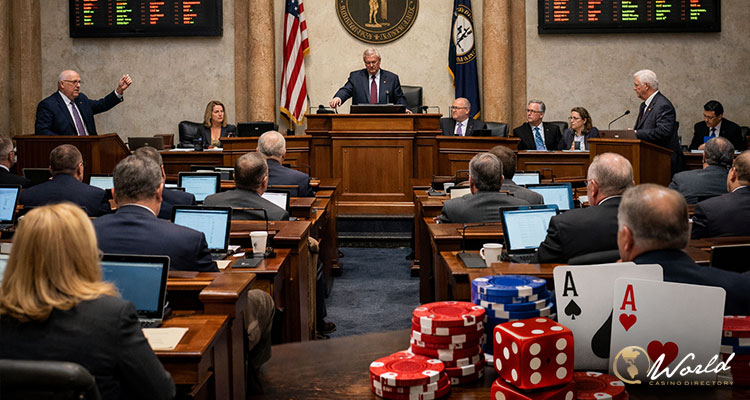
Kentucky’s legislature has moved forward with sweeping changes to the state’s gambling framework after overriding a veto from Governor Andy Beshear, setting the stage for a major shift in how betting operates across the state.
Lawmakers in both chambers acted decisively, securing enough votes to bypass the governor’s objections and ensure House Bill 904 becomes law. The measure introduces wide-ranging updates that touch nearly every segment of legal wagering, from sports betting to horse racing and daily fantasy sports.
Legislature Pushes Through Major Gambling Changes
The Kentucky General Assembly voted to override Beshear’s veto with strong margins, according to Covers. The House approved the override by a 67-7 vote, while the Senate followed with a 26-5 decision. With those votes, lawmakers ensured the bill will take effect 90 days after the legislative session concludes.
The legislation raises the legal age for sports betting from 18 to 21, aligning Kentucky with most other states that have legalized sports wagering. Previously, the state had matched the minimum age for sports betting with horse racing, which remains unchanged.
In addition to the age increase, the bill places new limits on betting activity. Sportsbooks will no longer be allowed to offer certain types of wagers involving in-state college teams, including player-specific proposition bets such as points or touchdowns. The law also bans “under” prop bets on college athletes attending Kentucky schools, a move lawmakers supported due to concerns about harassment directed at players.
The measure also prohibits betting on elections and introduces restrictions on prediction markets. Operators licensed in Kentucky cannot run or partner with platforms offering event contracts within the state.
Regulatory Authority at the Center of Dispute
Governor Beshear’s veto focused on concerns about regulatory oversight rather than the gambling provisions themselves. He objected to language that allows state agencies to issue regulations without requiring his approval.
“I am vetoing House Bill 904 because it would authorize two Executive Branch agencies, the Kentucky Lottery Corporation and Kentucky Horse Racing and Gaming Corporation, to file emergency and ordinary administrative regulations without the Governor’s review and signature,” Beshear wrote in his veto note.
He further explained his concerns about constitutional responsibilities, stating: “Under the Kentucky Constitution, the Governor is the Chief Magistrate of the Executive Branch and has a duty to ensure all laws are faithfully executed, including by agencies carrying out the laws through regulation. In that role, the Governor reviews proposed emergency regulations to ensure they are necessary and meet legal requirements for emergency filing.”
Beshear warned that the provision could weaken executive oversight, adding: “Authorizing an agency to file an emergency regulation in this manner would prevent the Governor from carrying out his constitutional duties and allow boards and agencies to impose rules on Kentuckians without executive oversight, including boards whose decisions impact public safety.”
Despite these objections, lawmakers chose to proceed, signaling confidence in the regulatory framework outlined in the bill.
Horse Racing and Fantasy Sports See Structural Updates
Beyond sports betting, House Bill 904 introduces notable changes to Kentucky’s horse racing industry. Racetracks will now be permitted to offer fixed-odds wagering alongside traditional pari-mutuel betting. This approach allows bettors to lock in potential payouts at the time a wager is placed, rather than relying on odds that fluctuate before a race begins.
Supporters argue that this format could make racing more appealing to modern audiences and help the industry compete with sportsbooks that already offer fixed-odds betting. The legislation also establishes tax structures for these wagers and directs some revenue toward supporting racetrack operations.
Daily fantasy sports will also face new requirements. Operators must obtain licenses to operate in Kentucky, and contests must involve participants competing against each other rather than against the house. Peer-to-peer fantasy sports will be regulated and taxed under the new framework.
Additionally, the bill prevents operators from offering prediction markets within Kentucky, though companies that run such platforms elsewhere can continue operating in the state as long as those services are not available locally.
Broader Impact on Kentucky’s Betting Market
House Bill 904 represents one of the most comprehensive updates to Kentucky’s gambling laws in recent years. It affects sportsbooks, racetracks, fantasy sports providers, and charitable gaming operations.
The legislation also includes a requirement that sportsbooks accept wagers with potential payouts up to $1,000, aiming to prevent operators from limiting successful bettors.
While some lawmakers raised concerns about specific provisions—particularly those involving prediction market restrictions and potential effects on major racing events—the overall legislative consensus favored modernization and expansion of the state’s betting industry.
With the veto override complete, Kentucky is now set to implement these changes in the coming months, reshaping its wagering landscape and bringing it closer in line with national trends.
