

 United States
 Macau, China
 France
 Philippines
 Singapore
 Netherlands
 United Kingdom
 Canada
 Argentina
 Germany
 Estonia
 Peru
Peru Russia
 Australia
 South Africa
 Nigeria
 Malaysia
 Singapore
 India
India Finland
 China
China Ukraine
 Hong Kong
 Cyprus
 Turkey
 Greece
 Sweden
 South Korea
 Mexico
 Poland
 Ireland lottery results
 New Zealand lottery results
 Puerto Rico lottery results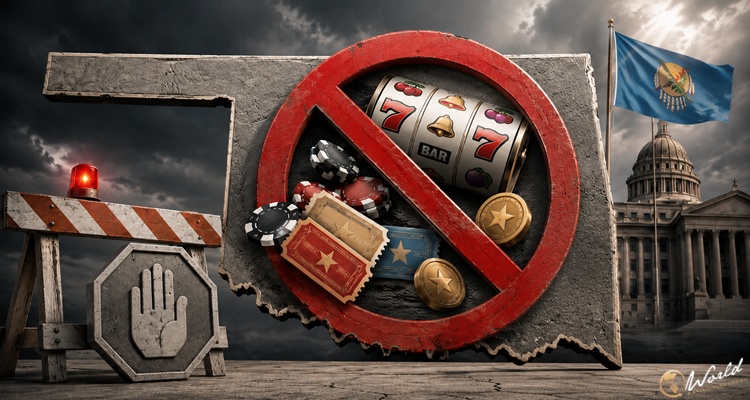
Oklahoma lawmakers voted to override Gov. Kevin Stitt’s veto of Senate Bill 1589, clearing the way for a statewide ban on sweepstakes-style online casino gaming and related dual-currency platforms.
The override votes took place during the closing days of the 2026 legislative session. The Oklahoma Senate approved the measure by a 34-10 margin, while the House passed the override 68-19, exceeding the two-thirds threshold required in both chambers, according to SBC Americas.
The legislation targets online casino-style games that use dual-currency systems involving free and purchasable tokens. Under the new law, operators, suppliers, affiliates, payment processors, geolocation providers, and promoters connected to sweepstakes casinos could face criminal penalties.
SB 1589 classifies violations as a felony offense carrying fines ranging from $500 to $2,000 and possible jail time. One report identified the offense as a Class C felony, while another described it as a Class C2 felony with penalties including up to 30 days in jail.
The law will take effect Nov. 1, giving sweepstakes operators several months to leave the Oklahoma market or alter their products to comply with the legislation.
Legislature Rejects Stitt’s Objections
The bill received strong bipartisan support earlier in the year. Sponsored by Sen. Todd Gollihare and House Speaker Kyle Hilbert, SB 1589 passed the Senate unanimously in March before the House approved it in early May.
“These illegal offshore entities and foreign operators cost the state of Oklahoma millions of dollars in lost revenue,” Gollihare said during a Senate debate in March.
Gov. Stitt vetoed the proposal on May 7, arguing the legislation was written too broadly and could create unintended consequences for businesses operating legally.
“Oklahoma’s gaming laws must be clear, targeted, and fair. Senate Bill 1589 does not accomplish that end. This bill is so broad that it criminalizes everyday apps people use for fun. It also unnecessarily creates a new felony and extends criminal liability to businesses and service providers,” Stitt wrote in his veto letter.
“That kind of vague and overbroad approach creates uncertainty for businesses operating in good faith and discourages innovation and investment in our state. Oklahoma can protect consumers without adopting criminal penalties that reach beyond the problem they are intended to solve.”
Some coverage of the legislation questioned whether the governor misunderstood the scope of the bill, noting that SB 1589 specifically addresses games using dual-currency systems tied to “representatives of value” rather than traditional free-to-play mobile games.
The legislation includes an exemption for tribal gaming conducted under the Indian Gaming Regulatory Act, preserving gaming rights already granted to Oklahoma’s tribal nations.
Sweepstakes Restrictions Expand Across States
Oklahoma became one of several states taking action against sweepstakes-style gaming platforms, which critics argue imitate online casinos while avoiding licensing and regulatory structures required for traditional gambling operations.
Indiana and Maine also passed sweepstakes bans in 2026. Other states with restrictions on dual-currency gaming include California, Connecticut, Montana, New Jersey, Nevada, New York, and others listed in legislative reports.
Tennessee lawmakers approved similar legislation that awaits action from Gov. Bill Lee. Louisiana legislators also passed a measure targeting sweepstakes operators and increasing penalties connected to illegal gaming activity.
The Oklahoma law focuses specifically on sweepstakes coin systems often used by social casinos and sportsbooks. According to one report, operators may still legally offer play using Gold Coins that carry no redeemable value, though many companies are expected to leave the state entirely.
The legislation also closes the door on social sportsbooks operating under sweepstakes models. Oklahoma currently does not permit legal online or retail sports betting, though the state has more than 100 tribal casinos operating land-based gaming facilities.
Some sweepstakes operators had previously offered sports wagering products designed to resemble licensed sportsbook platforms available in other states.
Gaming Disputes Continue Between Stitt and Legislature
The veto override marks another chapter in Oklahoma’s ongoing disputes over gambling policy involving Gov. Stitt, lawmakers, and tribal gaming interests.
The governor previously clashed with both legislators and tribes over sports betting compacts negotiated with the Comanche Nation and Otoe-Missouria Tribe. Those agreements attempted to authorize sports wagering without legislative approval before the Oklahoma Supreme Court ruled Stitt exceeded his authority.
“From the start, this was about separation of powers, and the Supreme Court affirmed as much with a decisive ruling,” former House Speaker Charles McCall said following the court decision. “Oklahoma and its tribal nations can move forward from this together as partners, as we have done for decades with great success.”
Efforts to legalize sports betting in Oklahoma again failed during the 2026 session after Senate lawmakers rejected proposed legislation in April. A House measure also stalled, leaving Oklahoma among a small group of states without legalized sports wagering.
Several reports connected the sweepstakes debate to the state’s broader relationship with tribal gaming operators, who argued that unregulated sweepstakes casinos compete with tribal gaming revenue while contributing no tax revenue to Oklahoma.
The legislature’s willingness to override Stitt’s veto was consistent with recent sessions. Lawmakers overturned dozens of gubernatorial vetoes in 2025, reflecting continued friction between the executive branch and the legislature on multiple policy issues, including gambling regulation.
