

 United States
 Macau, China
 France
 Philippines
 Singapore
 Netherlands
 United Kingdom
 Canada
 Argentina
 Germany
 Estonia
 Peru
Peru Russia
 Australia
 South Africa
 Nigeria
 Malaysia
 Singapore
 India
India Finland
 China
China Ukraine
 Hong Kong
 Cyprus
 Turkey
 Greece
 Sweden
 South Korea
 Mexico
 Poland
 Ireland lottery results
 New Zealand lottery results
 Puerto Rico lottery results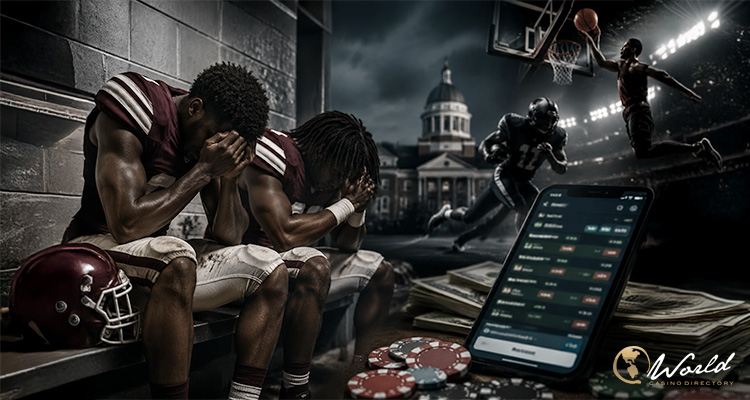
Two Mississippi State football players received NCAA sanctions after placing sports-related trades through prediction market platform Kalshi, according to documents obtained by the Clarion Ledger. The cases involved wagers tied to the Super Bowl and NBA All-Star Weekend and were classified as Level III violations, the lowest category under the NCAA’s enforcement structure.
The players’ identities were not disclosed in the documents. NCAA rules prohibit athletes, staff members and conference employees from participating in sports wagering activities, including those involving professional sports leagues. The violations fell under NCAA bylaw 10.3, which governs gambling-related conduct.
Although Kalshi operates legally in Mississippi, NCAA policy extends beyond state gambling laws and bars athletes from betting on sporting events through sportsbooks, prediction markets or similar platforms. The organization previously explored a proposal that would have allowed athletes to wager on professional sports, but the idea did not advance after drawing opposition from conference commissioners and coaches.
Super Bowl and NBA Trades Trigger Compliance Review
The first case emerged on Feb. 8, the day of the Super Bowl, when ProhiBet alerted Mississippi State officials that an athlete had placed a sports-related trade through Kalshi. ProhiBet, developed by Integrity Compliance 360, is used by the NCAA to identify betting activity involving athletes and athletics personnel.
According to the reports, the player spent $50 on a contract tied to the championship game, selecting the New England Patriots to defeat the Seattle Seahawks. The trade proved unsuccessful after Seattle secured a 29-13 victory.
The athlete later met with Mississippi State’s compliance department on Feb. 17 and acknowledged making the trade. He told officials it was the only sports-related wager he had ever placed. The university reviewed his Kalshi account and confirmed that statement.
As a result, the player was required to complete rules education. No additional punishment was imposed.
A second football player came under review one week later after ProhiBet detected activity connected to NBA All-Star Weekend. Mississippi State received the alert on Feb. 15, shortly after the NBA 3-Point Contest and on the same day as the All-Star Game.
The athlete admitted to placing two $10 trades through Kalshi. One involved predicting the winner of the 3-Point Contest and resulted in a payout of $64 when Damian Lillard won the event. The second trade concerned whether a game announcer would use specific words during the broadcast. That prediction was unsuccessful.
University compliance staff met with the player on Feb. 17. During the meeting, he stated that the two trades represented his only involvement in sports wagering activities. Mississippi State officials reviewed the matter and issued a corrective penalty requiring him to donate $66.47 to a charity of his choice. He also completed educational programming focused on NCAA gambling regulations.
Additional Infractions Reported by Mississippi State
The gambling-related cases were among several NCAA compliance matters reported by Mississippi State during 2026.
Documents indicate that the football program also reported an incident involving an assistant coach who co-signed an apartment lease for a player. Separately, the men’s track and field program disclosed a recruiting violation after two meals were provided to a recruit’s girlfriend during an official visit.
Those matters were reported independently from the sports wagering cases involving the football players.
NCAA Continues to Face Growing Betting Challenges
The Mississippi State incidents reflect a broader trend facing college athletics since the 2018 repeal of the Professional and Amateur Sports Protection Act (PASPA), which opened the door for states to legalize sports betting.
Many NCAA gambling violations have resulted in limited penalties, particularly when the activity involved small amounts and no evidence of betting on college competitions. However, recent years have also produced more severe cases.
One example involved former Texas Tech quarterback Brendan Sorsby, who was found to have placed thousands of wagers, including bets made while underage and wagers involving his own team. The NCAA declared him permanently ineligible. Sorsby later challenged the decision in court and entered a gambling addiction treatment program before abandoning efforts to compete during the season.
College basketball has also faced scrutiny following a federal investigation into a large betting-related scheme. Prosecutors indicted more than 20 individuals, while nearly 40 players from at least 17 schools were identified as participants in the investigation. Several athletes lost NCAA eligibility as a result.
Against that backdrop, the Mississippi State cases were treated as minor violations. The total amount involved across both athletes was approximately $70, and neither player lost eligibility. Still, the incidents underscore the NCAA’s continued enforcement of its blanket prohibition on sports wagering by athletes, regardless of whether the activity occurs through a traditional sportsbook or a legal prediction market platform.
