

 United States
 Macau, China
 France
 Philippines
 Singapore
 Netherlands
 United Kingdom
 Canada
 Argentina
 Germany
 Estonia
 Peru
Peru Russia
 Australia
 South Africa
 Nigeria
 Malaysia
 Singapore
 India
India Finland
 China
China Ukraine
 Hong Kong
 Cyprus
 Turkey
 Greece
 Sweden
 South Korea
 Mexico
 Poland
 Ireland lottery results
 New Zealand lottery results
 Puerto Rico lottery results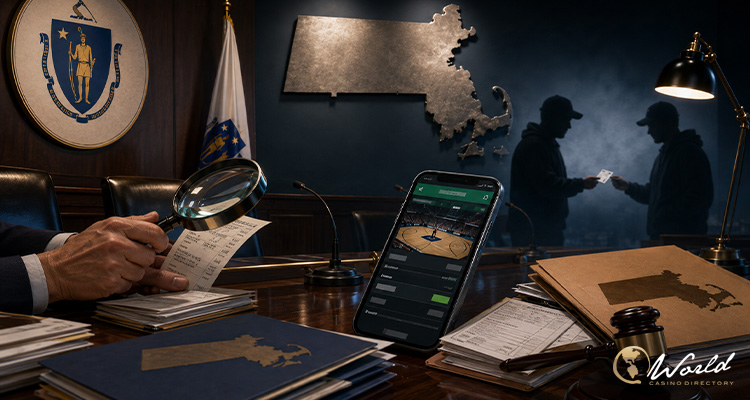
Sports media personality Bill Simmons is under review by Massachusetts regulators after revealing on his podcast that he used his daughter’s boyfriend to place wagers through his FanDuel account while he was located in California.
The Massachusetts Gaming Commission (MGC) confirmed it is examining the matter following comments made by Simmons during a recent episode of The Bill Simmons Podcast. The discussion centered on NFL season win totals, during which Simmons described how he arranged for bets to be placed in Massachusetts, where sports wagering is legal, despite residing in California, a state that has not authorized sports betting.
“The Commission is aware of the comments made on The Bill Simmons Podcast and staff are currently reviewing the matter,” MGC spokesperson Thomas Mills said according to Front Office Sports.
FanDuel, which serves as The Ringer’s exclusive sports betting partner, stated that it responded after learning of the remarks. According to the operator, the wagers were voided, the account was sanctioned and the issue was reported to regulators.
“We became aware of the issue and handled it consistent with our Terms and Conditions and Massachusetts Gaming Commission regulations, including reporting the matter to the MGC, voiding the bets, and actioning the account,” FanDuel said.
Podcast Remarks Draw Regulatory Attention
The review stems from comments Simmons made while discussing bets he wanted to place before betting markets adjusted.
“There was a couple bets I really wanted to get in. I wanted—there was UCLA overs, but Houston, the market had not shifted appropriately yet,” Simmons said. “I can’t have my daughter do it. My dad would have no idea how to do it. But [my daughter’s boyfriend] Hank, I really trust Hank. I let Hank log into my FanDuel as me. I get the code to make sure it’s me to my phone. I give him the code, he logs in, and I have all this money that I had from last year because I actually hit a bunch of futures last year. And he’s putting in bets for me, and honestly, it was the closest I’ve ever felt to Hank. It’s a real bonding moment for us.”
Simmons later added: “A week later, called him up, ran it back. We did some more.”
Massachusetts law prohibits proxy betting, a practice in which one person places wagers on behalf of another. State regulations classify individuals who place bets for someone else as “prohibited persons,” requiring sportsbooks to cancel the wagers and confiscate associated funds.
FanDuel’s terms also forbid customers from allowing others to access their accounts or place wagers on behalf of another individual. The operator warns that violations can lead to permanent account suspension and forfeiture of winnings.
According to industry experts, restrictions on proxy betting serve several purposes. Regulators seek to prevent individuals from placing wagers from jurisdictions where betting is prohibited, stop underage gambling through verified accounts and reduce the risk of bettors concealing their identities in integrity-related cases.
One widely cited example involved former Toronto Raptors player Jontay Porter, who received a lifetime NBA ban in 2024 after using an associate’s betting account to place wagers on NBA games.
Simmons Says He Was Unaware of the Rules
After the issue gained attention, Simmons addressed it during a subsequent podcast episode and acknowledged his misunderstanding of the regulations.
“Did not know about the proxy rules. Yeah, there’s some real rules with this stuff… and I learned my lesson. Proxy betting: not allowed. I actually thought it was, but that’s fine… but I did learn. Not allowed to do that.”
He also commented: “I talked about how I got my daughter’s boyfriend to place some bets for me in Massachusetts, because I was in (Los Angeles). I didn’t know about the proxy rules. Yeah, there are some real rules with this stuff, and they’ve ruled that not only are the best going to voided … and I learned my lesson.”
As of midweek, The Ringer’s webpage for the podcast continued to display a responsible gaming message linking readers to FanDuel’s Play with a Plan initiative.
Incident Sparks Wider Discussion Around Betting Rules
The case has generated broader debate about whether gambling regulations and sportsbook policies have become increasingly difficult for casual bettors to understand.
Commentary surrounding the incident noted that many consumers may focus on placing bets without carefully reviewing sportsbook terms and conditions. Simmons’ admission drew attention because he regularly discusses sports wagering and has a commercial relationship with FanDuel, leading some observers to argue that he would be expected to know the applicable rules.
The discussion also arrives during a period of change in the U.S. betting landscape. While state-regulated sportsbooks remain unavailable in California, prediction markets offering sports-related event contracts have expanded across much of the country. These products operate under different regulatory frameworks and, in some cases, are accessible in states where traditional sportsbooks are not.
As a result, some industry commentators argue that distinctions between legal betting products have become less clear for everyday consumers. Questions about account access, location requirements, age restrictions and wagering rules vary across operators and platforms, creating a more complex environment than existed only a few years ago.
