

 United States
 Macau, China
 France
 Philippines
 Singapore
 Netherlands
 United Kingdom
 Canada
 Argentina
 Germany
 Estonia
 Peru
Peru Russia
 Australia
 South Africa
 Nigeria
 Malaysia
 Singapore
 India
India Finland
 China
China Ukraine
 Hong Kong
 Cyprus
 Turkey
 Greece
 Sweden
 South Korea
 Mexico
 Poland
 Ireland lottery results
 New Zealand lottery results
 Puerto Rico lottery results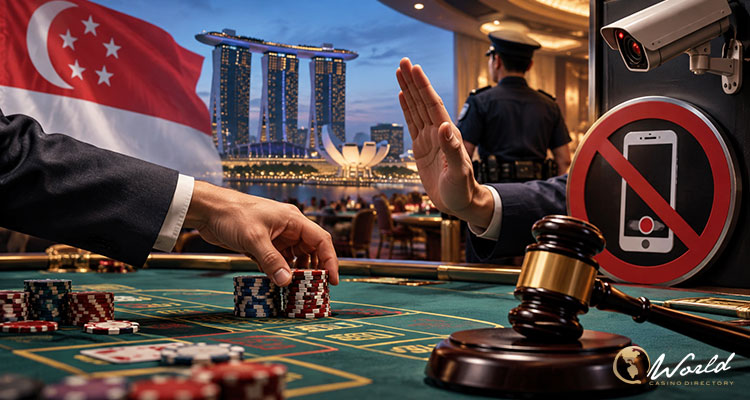
Singapore has brought a second tranche of Casino Control Act amendments into force, adding new criminal offences for casino patrons and expanding the Gambling Regulatory Authority’s powers over operators. The measures took effect on September 21, 2026, under reforms contained in the Casino Control (Amendment) Act 2024.
The updated framework covers conduct inside casinos, exclusion and visit-limit breaches, operator suitability, financial-crime controls and future forms of casino gaming. Singapore currently has two integrated resorts with casino gaming, Marina Bay Sands and Resorts World Sentosa.
New Offences Cover Betting Conduct and Game Recording
Inside Asian Gaming reported that the latest changes now make it an offence to withdraw a bet after the result of a game is already known. Singapore previously prohibited placing a bet after the outcome was known, while authorities relied on other laws when dealing with cases involving the withdrawal of wagers. Between 2010 and 2023, police investigated 10 people for withdrawing bets after results had been determined.
The Ministry of Home Affairs explained the reason for placing the conduct directly under the Casino Control Act: “Previously, it was an offence for patrons to place a bet in a casino after the result is known but not an offence to withdraw a bet after the result is known, and the police have had to use provisions in other laws to deal with such cheating cases,” the MHA said. “This right-sites the provisions under the CCA.”
The amendments also criminalize the recording of non-card games, including gaming machines, when patrons use devices to capture play patterns. The earlier law specifically addressed devices used to record cards dealt during gaming.
The MHA stated: “Previously, it was an offence to use a device to record cards dealt in the course of gaming. However, the police have encountered cases of patrons who attempt to cheat the casinos by recording play patterns of non-card games (e.g. gaming machines). The Act expands the current offence to cover the recording of non-card games.”
The law also changes the standard applied to people subject to casino exclusions. Authorities can now prosecute an excluded person for entering, remaining in or gambling at a casino when that person knew, or reasonably ought to have known, that the exclusion was in force. The previous framework required authorities to establish actual awareness of the exclusion status.
Family Limits and Operator Oversight Become Stricter
Breaching a Family Visit Limit now carries criminal consequences. Before the amendment took effect, exceeding a family-imposed visit restriction did not constitute an offence. Records from 2010 through 2023 show that about five people breached these limits each year. A new offence can lead to a prison term of up to one year or a fine of up to S$10,000.
The Ministry of Social and Family Development said authorities received between three and 14 applications for Family Visit Limits annually over the previous decade. Families may apply when a person’s gambling affects family responsibilities.
The National Council on Problem Gambling can also replace an existing Exclusion Order with a Visit Limit, or a Visit Limit with an Exclusion Order, immediately. The earlier process could take one to two months, leaving a period when neither safeguard applied.
The amendments expand the criteria used to assess whether a casino operator remains suitable to hold a licence. The Gambling Regulatory Authority may consider unethical business conduct and systemic failures involving internal controls or corporate governance. If the regulator finds that breaches of these criteria affect an operator’s suitability, it can take disciplinary action.
Casino operators must now share patron information with one another when addressing financial-crime risks, including money laundering and financing connected to terrorism or proliferation. The authorities said the information-sharing requirement should allow operators to respond faster when a patron presents a higher risk.
GRA Gains Wider Powers Over Casino Technology
The latest provisions also broaden the GRA’s regulatory scope. The authority can regulate betting and lotteries inside casinos alongside games of chance. It can also approve gaming software, including software used on mobile devices, if such approval becomes necessary.
Any approved mobile gaming software may only operate and remain playable within casino premises. Supporting regulations also classify electronic credits as casino chips and allow the framework to accommodate other wagering instruments if the GRA considers them suitable.
These changes support cashless gaming within the regulatory framework. The provisions give the regulator a legal structure for reviewing payment methods, wagering products and other casino technologies before approving their use.
The reforms form part of the Casino Control (Amendment) Act 2024. Singapore implemented the first tranche of the changes in October 2024, followed by the second tranche on September 21, 2026.
Summing up the latest measures, the MHA said: “Taken together, these amendments will keep Singapore’s casino regulatory framework robust and responsive to emerging risks, uphold the integrity of casino operations, and strengthen safeguards against gambling-related harm.”
