

 United States
 Macau, China
 France
 Philippines
 Singapore
 Netherlands
 United Kingdom
 Canada
 Argentina
 Germany
 Estonia
 Peru
Peru Russia
 Australia
 South Africa
 Nigeria
 Malaysia
 Singapore
 India
India Finland
 China
China Ukraine
 Hong Kong
 Cyprus
 Turkey
 Greece
 Sweden
 South Korea
 Mexico
 Poland
 Ireland lottery results
 New Zealand lottery results
 Puerto Rico lottery results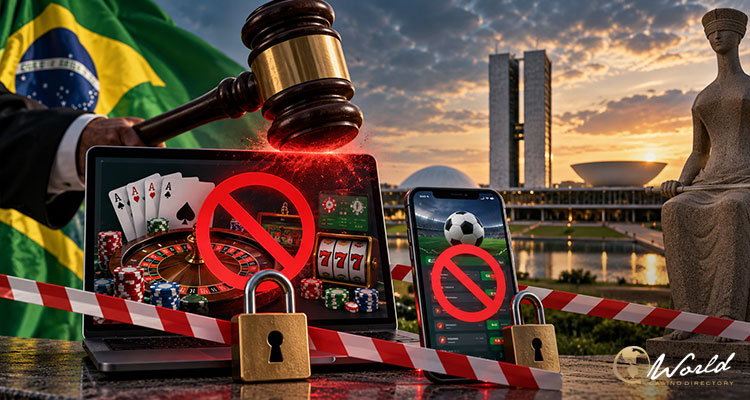
Brazil’s government is preparing a major change to the country’s regulated gambling framework, with President Luiz Inácio Lula da Silva expected to approve a measure that would prohibit online casino operations. Early reports also raised the prospect of restrictions or a ban covering sports betting. More recent information indicates that the current proposal would leave fixed-odds sports wagering and related sports sponsorship agreements outside the prohibition.
The proposal could arrive before Brazil’s first round of general elections on October 4. Three people familiar with discussions inside the presidential office said Lula is expected to approve the final wording before that date. One source described the president’s position by saying he “wants and will take action,” although ministers were still discussing the details.
Lula has publicly confirmed that his government has held several discussions about online gambling. Earlier this week, he said: “We are discussing it. I have already held three meetings within the government and met with civil society, and my personal position is to end betting,” while also saying that the government needed to act responsibly.
Casino Proposal Develops as Sports Betting Remains
According to SBC Noticias Brasil, a provisional measure could prohibit online casinos and impose substantial restrictions on sports betting. At this stage, the text remaines unfinished and could still change. The proposal was described as “almost as an extinction of online gambling in the country.” That report also indicated that the sports-betting provision still required a final review.
The online casino prohibition would exclude sports betting and sponsorship agreements involving clubs or sporting competitions. Policymakers had considered including sports betting before leaving it outside the proposed casino ban. Further restrictions affecting betting remain under discussion.
The proposed change would affect a market that only recently completed its transition into the federal regulatory system. Brazil legalized fixed-odds sports betting in 2018, and authorities completed the regulation and licensing process during Lula’s administration in 2024. The regulated market began operating under the new federal framework in January 2025. Law No. 14,790, commonly known as the Betting Law, received presidential approval at the end of 2023.
Brazil currently has 188 authorized betting operators. Government licenses cover both sports betting and online casino games, creating a significant issue for companies that conduct both activities under the same authorization. The National Association of Gaming and Lotteries estimates that casino gaming generates about three-quarters of revenue for operators active across both segments.
Tax Revenue and Licensing Enter the Discussion
The possible casino prohibition has also raised questions about government revenue. Treasury figures show that Brazil collected almost R$10 billion, equivalent to about $1.95 billion, through sector taxes and licensing fees last year.
At the same time, the Finance Ministry estimates that Brazilians spend approximately R$60 billion each year on betting. Banks and industry organizations have pointed to indications that some gambling expenditure is drawing money away from household purchases and bills. Lula’s administration has introduced measures addressing excessive household indebtedness, placing gambling expenditure within a broader government debate over family finances.
The government is also considering an electoral program involving Brazilians affected by gambling addiction. Another recent meeting brought together representatives from civil society alongside business, religious, health and consumer groups to discuss the effects of online betting. Representatives from the betting regulator and the sector’s principal trade organizations did not participate in that meeting. Afterward, Lula said a “drastic” measure concerning online gambling was being prepared.
Finance Minister Dario Durigan has supported additional restrictions on the sector while opposing a complete prohibition. The Ministry of Finance’s Secretariat of Prizes and Bets has continued developing measures aimed at unauthorized gambling activity. On September 14, the regulator issued Ordinance No. 2,750/2026, establishing procedures connected with financial flows involving illegal betting operations.
Licensed Operators Raise Legal and Market Concerns
Industry organizations have responded to the proposed restrictions by focusing on the potential expansion of unauthorized gambling. The National Association of Games and Lotteries argued that severe restrictions could move customers toward operators outside the regulated system.
“Instead of reducing the problem, it may transfer it to an environment in which the State has less capacity to monitor, prevent indebtedness, and protect the citizen.”
The Brazilian Association for Compliance, Best Practices, Ethics and Transparency in Betting has also called for continued regulation rather than a wider prohibition, publishing the message: “Don’t weaken regulation. Strengthen it,”
Licensed companies could also pursue legal claims if the government restricts activities already covered by existing concessions. The National Association of Gaming and Lotteries has called for economic and legal studies before authorities introduce changes affecting previously authorized operations. Its legal adviser, Bernardo Cavalcanti Freire, said operators that paid concession fees could seek reimbursement or compensation.
“Based on a preliminary estimate, compensation liabilities could reach 120 billion reais,” he said.
Officials also recognize that removing online casino activity from operators’ portfolios could substantially reduce company revenue. Such a reduction could also affect the amount operators spend on sports sponsorship agreements and lower future government receipts from the licensed market. The final scope of the measure remained subject to government discussions, leaving the precise rules for sports betting and other potential restrictions awaiting formal publication.
