

 United States
 Macau, China
 France
 Philippines
 Singapore
 Netherlands
 United Kingdom
 Canada
 Argentina
 Germany
 Estonia
 Peru
Peru Russia
 Australia
 South Africa
 Nigeria
 Malaysia
 Singapore
 India
India Finland
 China
China Ukraine
 Hong Kong
 Cyprus
 Turkey
 Greece
 Sweden
 South Korea
 Mexico
 Poland
 Ireland lottery results
 New Zealand lottery results
 Puerto Rico lottery results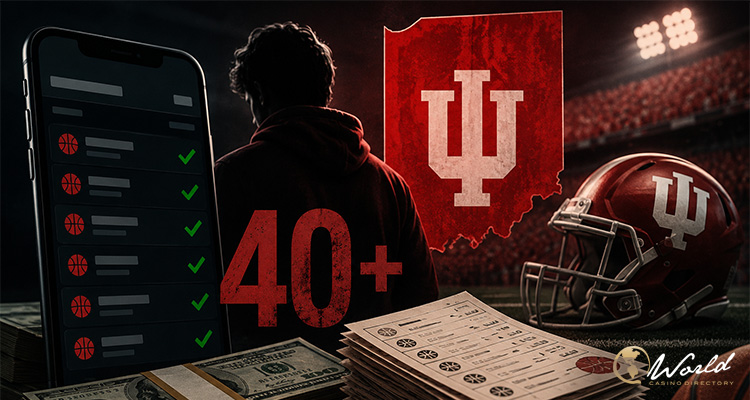
Former Indiana and current Texas Tech quarterback Brendan Sorsby placed at least 40 bets on Indiana football while redshirting, according to court documents filed in Lubbock, Texas. Over four years, he wagered approximately $90,000 using accounts registered to friends and family, and continued gambling after transferring from Cincinnati to Texas Tech in December. Documents submitted by Sorsby’s legal team reveal transfers totaling at least $60,000 to cover bets placed on his behalf.
Sorsby has been diagnosed with gambling and anxiety disorders and completed a 35-day treatment program at a gambling rehabilitation center in Arizona. He is requesting a temporary injunction from the NCAA to preserve his college eligibility, with a hearing scheduled Monday in Lubbock.
“It became a habit for me to bet,” Sorsby stated to the NCAA. “My betting became a compulsion which made it virtually impossible to resist the constant notifications I received from betting apps. I lost complete control of my addiction. I now realize the apps controlled me and I did not control them.”
Legal Arguments and NCAA Response
Sorsby’s attorneys are urging the NCAA to treat his gambling as a mental health issue and reduce penalties. “Brendan asks only for the NCAA to abide by its commitment to evaluate his reinstatement appeal based on his actual conduct and the mental health condition that spurred it,” attorney Scott Tompsett wrote. He argued that the NCAA’s enforcement staff sometimes applies a broad approach that does not reflect the specific facts of the violation.
Court documents indicate that during his time at Indiana (2022–23) and Cincinnati (2024–25), Sorsby placed thousands of impermissible bets through platforms including Hard Rock Bet, FanDuel, Underdog, and PrizePicks, reports ESPN. While redshirting at Indiana, he wagered at least 2,900 times, totaling over $30,000, and made at least 40 bets on Indiana football from September to October 2022, ranging from $1 to $114, totaling at least $850. Sorsby did not bet on games in which he participated, nor did he attempt to affect game outcomes.
“Once I became part of the active roster with an opportunity to play, I immediately stopped betting on Indiana,” Sorsby said. “However, my gambling on other sports did not stop; it escalated and became compulsive. What started small when I was in high school turned into a daily habit of betting on all kinds of sports, including some sports that I didn’t follow and had no interest in like tennis and Romanian soccer. Gambling became an addiction.”
Ongoing Court Hearing and Implications
Texas Tech is supporting Sorsby’s appeal. President Lawrence Schovanec emphasized that gambling addiction is a recognized behavioral disorder and highlighted the NCAA’s commitment to student-athlete well-being. The NCAA has denied Sorsby’s initial reinstatement request, asserting that reinstating him could destabilize competitive integrity. Sorsby agreed to continue treatment, take gambling education classes, and collaborate with the NCAA to educate other student-athletes about gambling risks.
The stipulated facts submitted to the NCAA were not contested and confirm that Sorsby never bet on games he played for Indiana or Cincinnati, and his bets on other sports continued compulsively even after transferring. The hearing on Monday in Lubbock will determine whether Sorsby can maintain eligibility for the 2026 season, prior to the June 22 deadline for declaring for the NFL Supplemental Draft.
Sorsby enters the 2026 season as one of the top NCAA transfer prospects, with expected earnings exceeding $5 million and significant attention as the most anticipated supplemental draft prospect since Josh Gordon in 2012. The outcome of the case may set precedent for how gambling addiction is treated in NCAA enforcement moving forward.
