

 United States
 Macau, China
 France
 Philippines
 Singapore
 Netherlands
 United Kingdom
 Canada
 Argentina
 Germany
 Estonia
 Peru
Peru Russia
 Australia
 South Africa
 Nigeria
 Malaysia
 Singapore
 India
India Finland
 China
China Ukraine
 Hong Kong
 Cyprus
 Turkey
 Greece
 Sweden
 South Korea
 Mexico
 Poland
 Ireland lottery results
 New Zealand lottery results
 Puerto Rico lottery results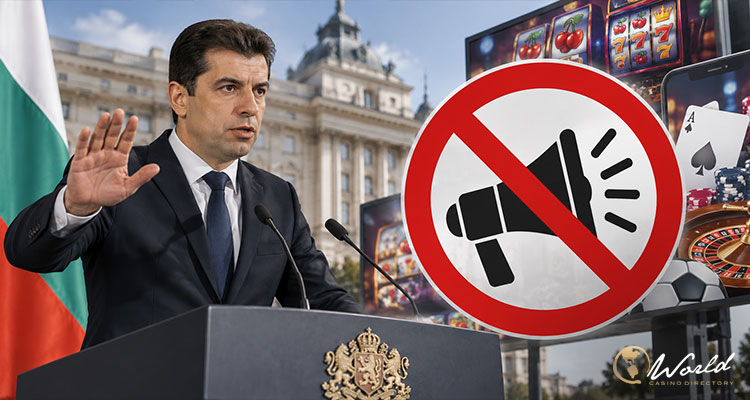
The Bulgarian government has launched a broad reform effort aimed at reshaping the country’s gambling sector, proposing extensive advertising restrictions, higher taxes for online operators, tighter financial oversight, and new measures designed to address gambling-related harm.
Prime Minister Rumen Radev announced that draft amendments to Bulgaria’s Gambling Act have been submitted for public consultation, outlining what officials describe as a significantly stricter regulatory framework for the industry. The proposals come as lawmakers, regulators, and opposition parties continue to debate the effectiveness of restrictions introduced in 2024.
Speaking during a Council of Ministers meeting on September 23, Radev said the government intends to reduce the visibility of gambling in everyday life while strengthening state supervision of licensed operators.
“We want to introduce a new, far stricter model for regulatory control over the sector,” Radev said according to Balkan Insight. “The goal is more transparency, fairer taxation and most importantly, minimisation of gambling harm.”
The prime minister also identified advertising as a key focus of the proposed reforms.
“The first major change will focus on advertising. We don’t want gambling to be present in the everyday life of Bulgarian citizens. We don’t want aggressive marketing, which reaches young people and children.”
Advertising Restrictions at the Center of Reform Plans
Among the most prominent measures under discussion is what the government has described as an almost complete prohibition on gambling advertising.
Under the proposals, billboards, posters, banners on buildings, and other outdoor promotional materials would no longer be permitted. Illuminated signage, neon displays, and highly visible promotional elements outside casinos and gaming halls would also be restricted.
Radev argued that gambling promotion has become too prominent across the country, telling ministers that “our towns and villages have come to look like Las Vegas”.
Current plans would preserve limited opportunities for operators to display branding through sports sponsorships, including logos on team kits and advertising within sports venues. However, the exact scope of the exemptions will become clearer as the consultation process progresses.
The proposed changes would significantly expand existing restrictions. Bulgaria already prohibits gambling advertisements on television, radio, and online channels under rules adopted in 2024, although critics have argued that operators shifted their marketing efforts toward outdoor advertising after those measures took effect.
Opposition lawmakers have voiced similar concerns. Earlier this month, Democratic Bulgaria (DB) and We Continue the Change (PP) called for stronger enforcement and additional restrictions, arguing that the existing framework has not delivered the expected results.
“Gambling has turned into an epidemic. We accepted amendments in 2024 that also introduced serious limitations but these regulations are not being followed, nor is the state implementing sanctions,” Democratic Bulgaria MP Bozhidar Bozhanov said on September 9.
DB and PP have proposed even stricter measures, including a complete ban on outdoor gambling advertising, substantial financial penalties for violations, tighter online advertising restrictions, limits on gambling-related informational websites, and a prohibition on cryptocurrency gambling. The parties have also called for restrictions preventing minors from entering sports betting bars.
A protest against gambling advertising is scheduled to take place in Sofia’s Parliament Square on September 25.
Taxation and Oversight Measures Expanded
Alongside advertising reforms, the government plans to overhaul the way gambling activities are monitored and taxed.
Radev said authorities intend to move toward a system that reflects the actual financial performance of gambling operations. Currently, land-based casinos, gaming halls, and slot machine venues pay fixed fees based on the number of gaming tables and machines rather than on the volume of activity conducted through them.
If adopted, the reforms would require gaming equipment to connect directly to the National Revenue Agency, allowing authorities to receive real-time operational data. According to Radev, this is “something that needed to be done a long time ago.”
The government has also proposed stronger anti-money laundering controls and additional measures targeting tax evasion.
Online gambling taxation is expected to increase further under the draft legislation. Bulgaria raised the gross gaming revenue tax on online operators to 25% at the beginning of 2026, up from 20%, while companies remain subject to a 10% corporate tax. Radev indicated that the government is considering another substantial increase.
Part of the additional tax revenue generated by the sector would be directed toward sports and education programs.
Foreign Operators Face New Reporting Requirements
The reform package also targets international operators licensed to offer gambling services in Bulgaria.
Under the proposals, foreign companies would be required to register their financial activity locally and report revenue generated from Bulgarian operations within the country. Officials argue that this will strengthen oversight and ensure tax obligations are fulfilled domestically.
“Whoever operates on the Bulgarian market and profits from it will report their activity here, pay taxes here, and be subject to the full control of the Bulgarian state,” the prime minister said. In a separate but related initiative announced during the same cabinet meeting, the government revealed plans to amend Bulgaria’s Criminal Code by turning customs violations into criminal offences.
The gambling reforms will now undergo public consultation before being submitted to parliament. With Radev’s Progressive Bulgaria party holding a strong parliamentary majority, the government appears well positioned to advance its legislative agenda. At the same time, opposition parties continue to push for even tougher restrictions as the debate over gambling regulation in Bulgaria intensifies.
