

 United States
 Macau, China
 France
 Philippines
 Singapore
 Netherlands
 United Kingdom
 Canada
 Argentina
 Germany
 Estonia
 Peru
Peru Russia
 Australia
 South Africa
 Nigeria
 Malaysia
 Singapore
 India
India Finland
 China
China Ukraine
 Hong Kong
 Cyprus
 Turkey
 Greece
 Sweden
 South Korea
 Mexico
 Poland
 Ireland lottery results
 New Zealand lottery results
 Puerto Rico lottery results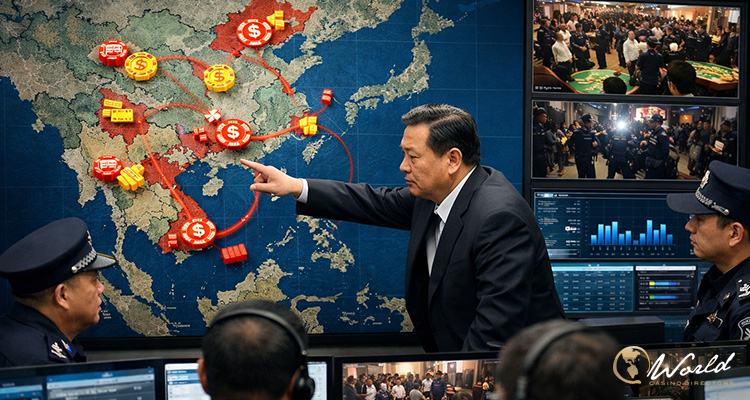
Senior Chinese officials have reinforced directives to intensify action against cross-border gambling, outlining an extended campaign that combines enforcement pressure, institutional coordination, and stricter punishment for criminal networks. The initiatives come amid ongoing national concerns regarding overseas gambling groups targeting Chinese citizens and the social and financial risks associated with such activities.
Judicial Measures Enter the Spotlight
China’s broader campaign includes directives issued during a national video conference in which Wang Xiaohong, a member of the Secretariat of the Communist Party of China Central Committee and state councilor, highlighted the urgency of addressing cross-border gambling. According to China Daily, he underscored the need to pursue coordinated strategies rather than isolated actions, stressing that enforcement must concentrate on criminal gambling networks, key fugitives, and complex cases. Officials laid out expanded objectives involving persistent and precise operations aimed at dismantling group structures and obstructing the financial flows enabling their activities.
China’s Supreme People’s Court issued additional instructions urging courts across the country to impose stern penalties on individuals tied to organizing cross-border gambling, particularly in cases involving violent offenses. The court noted the escalation of overseas casinos enticing Chinese nationals, stating that “with economic and internet development, the problem of overseas casinos enticing Chinese citizens to engage in gambling has become increasingly prominent.” It also disclosed several illustrative cases intended to reinforce the judiciary’s expectations for handling cross-border gambling matters.
One case involved a defendant identified as Wu, who was described as the leader of a gambling syndicate operating out of Macau. Wu received a six-year prison sentence after running an operation that reportedly generated profits exceeding RMB300 million ($41.22 million) from domestic residents. According to the disclosure, other members received sentences ranging from 30 to 36 months. The court commented that Wu deserved severe punishment due to the significant capital outflow his organization caused.
The court also reported instances in which gambling activities were disguised as tourism campaigns. These tactics prompted warnings to the public to recognize the serious consequences associated with participation. It stated that “Gambling not only results in financial losses and broken families, but also fosters other forms of violent crimes,” citing a case from the Guangxi Zhuang autonomous region. Previous similar directives from the country’s top court surfaced in July last year, reaffirming that courts should prioritize harsh punishment for organizers, ringleaders, and repeat offenders.
Coordinated Measures and Enforcement Structures
Following the national video conference, officials emphasized the expansion of full-spectrum strategies that support enforcement from multiple directions. This included guidance for improving organizational structures, enhancing professional capacity, strengthening data sharing, and aligning operations between departments. Wang urged coordination as a crucial element for increasing efficiency, particularly as gambling networks frequently function across borders and jurisdictions.
Internal enforcement plans contained recommendations to improve personnel training and refine interdepartmental mechanisms. These changes were demonstrated as necessary to respond effectively to evolving threats linked to online platforms and transnational criminal syndicates. As part of the nationwide campaign, video conferences brought together representatives across multiple levels, reinforcing the characterization of cross-border gambling as a crime category requiring unified institutional response.
Senior officials linked the sustained campaign to national security and broader social stability objectives. The described strategy insisted on uninterrupted operations, precision targeting, and structural disruption. Enforcement authorities framed the long-term nature of this approach as essential for weakening networks over time, especially those whose leadership structures operate from international hubs.
In a separate development, Foreign Minister Wang Yi urged Southeast Asian nations to increase cooperation against online gambling and telecom fraud. The request included calls for decisive measures and highlighted rising threats tied to human trafficking and cross-border criminal activity in the region. China has sought deeper coordination with ASEAN member states, including Myanmar and Thailand, as part of efforts to limit criminal syndicates operating beyond China’s borders.
