

 United States
 Macau, China
 France
 Philippines
 Singapore
 Netherlands
 United Kingdom
 Canada
 Argentina
 Germany
 Estonia
 Peru
Peru Russia
 Australia
 South Africa
 Nigeria
 Malaysia
 Singapore
 India
India Finland
 China
China Ukraine
 Hong Kong
 Cyprus
 Turkey
 Greece
 Sweden
 South Korea
 Mexico
 Poland
 Ireland lottery results
 New Zealand lottery results
 Puerto Rico lottery results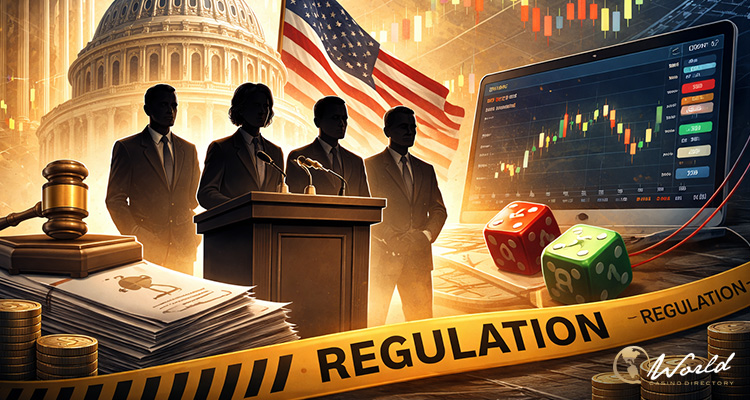
Two Democratic lawmakers introduced legislation on Tuesday, March 17, aimed at restricting wagers on sensitive government events, including military operations and acts of terrorism. The proposal, known as the Banning Event Trading on Sensitive Operations and Federal Functions (BETS OFF) Act, would prohibit online prediction markets from offering contracts related to government actions, assassinations, wars, or any event where a single individual has control over the outcome.
Concerns Over Insider Knowledge and Incentives
The measure comes amid growing scrutiny of prediction markets, which allow users to wager on real-world events and have drawn criticism for permitting high-stakes bets on geopolitical conflicts. U.S. Senator Chris Murphy and Representative Greg Casar cited recent examples of unusual betting activity on Polymarket, where accounts placed significant wagers ahead of U.S.-Israeli military strikes on Iran and a U.S. operation in Venezuela. Casar noted, “Around 150 accounts placed highly unusual bets the day before the strikes that U.S. military action would begin the following day. Of those, 109 accounts made over $10,000, 16 made over $100,000, and one individual made nearly half a million dollars.”
Murphy and Casar raised concerns that these markets could create perverse incentives for government officials. “There are likely people who have placed bets on whether the United States is going to take a particular military action overseas, and they are giving advice to the President not based on what’s best for national security, but based upon what will make them money,” Murphy said. Casar added that similar risks extend to private-sector events where a single individual controls the outcome, such as awards shows or speeches, highlighting the potential for insider advantage.
The legislators also emphasized the Trump family’s involvement in the prediction market sector. Donald Trump Jr. serves as an investor in Polymarket and a paid adviser to Kalshi, and he is developing a Trump-branded prediction platform called “Truth Predict.”“This administration is not going to be cracking down on this form of corruption anytime soon since they’re cashing in on it,” Casar said.
Public Support and Legislative Context
According to Reuters, the BETS OFF Act follows other congressional efforts to regulate prediction markets, including the DEATH BETS Act, which seeks to prevent CFTC-registered entities from listing contracts related to terrorism, assassination, war, or individual deaths. Democrats, including Senators Richard Blumenthal, Jeff Merkley, and Amy Klobuchar, have proposed additional measures to ensure consumer protections and restrict elected officials from participating. Minnesota lawmakers are pursuing a ban on prediction markets altogether, and Arizona has filed criminal charges against Kalshi over similar concerns.
Polling suggests significant public support for restricting these markets. Data for Progress found that 59% of voters oppose wagering on potential government actions, with strong backing across party lines. Support for barring elected officials from using prediction markets reaches 67%, while concern is highest for contracts tied to terrorism and political assassinations, with 82% and 78% of voters expressing alarm.
Murphy highlighted broader moral concerns: “The heavy, weighty public policy questions, whether we go to war, whether people are dying of famine, become empty and corrupted if they just become a money-making opportunity for people.” The proposed legislation would amend illegal gambling laws to block payment processing for prohibited markets and impose criminal penalties on U.S. operators or promoters of such platforms.
