

 United States
 Macau, China
 France
 Philippines
 Singapore
 Netherlands
 United Kingdom
 Canada
 Argentina
 Germany
 Estonia
 Peru
Peru Russia
 Australia
 South Africa
 Nigeria
 Malaysia
 Singapore
 India
India Finland
 China
China Ukraine
 Hong Kong
 Cyprus
 Turkey
 Greece
 Sweden
 South Korea
 Mexico
 Poland
 Ireland lottery results
 New Zealand lottery results
 Puerto Rico lottery results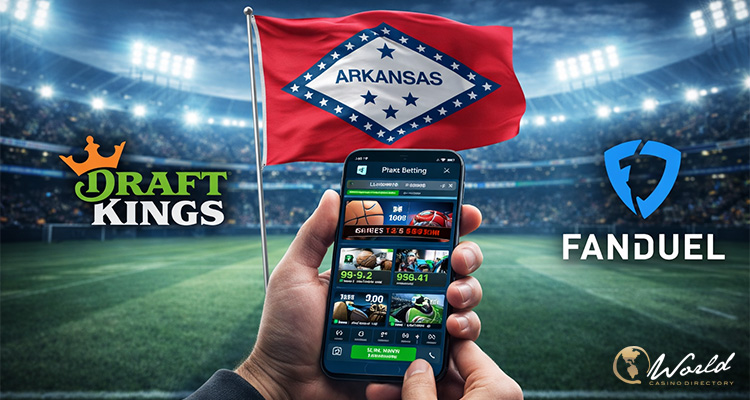
Arkansas has expanded its sports betting landscape with the arrival of two major operators, as DraftKings and FanDuel officially rolled out online and mobile wagering services across the state. The launch follows regulatory approval granted in late February by the Arkansas Racing Commission and comes at a strategic moment, coinciding with heightened interest in college basketball.
Casino Partnerships Shape Market Structure
The two platforms entered the market through required partnerships with local casino operators. DraftKings aligned with Southland Casino Hotel, while FanDuel partnered with Oaklawn Racing Casino. Under Arkansas rules, mobile betting must operate through land-based casinos, which retain control of the platforms while external providers supply technology and services.
The rollout adds Arkansas to the growing list of jurisdictions for both companies. With this launch, DraftKings now operates in 30 regulated U.S. sports betting markets, while FanDuel expands its footprint to 26 states. The move also marks another recent expansion effort for both brands, following their entry into Missouri in December and DraftKings’ February launch in Puerto Rico.
Arkansas legalized online sports betting in 2022, but its model differs from other states. Operators must partner with local casinos and share 51% of revenue with those entities. This structure previously slowed the entry of national brands, which had raised concerns about the viability of the revenue split.
Despite earlier hesitation, both companies have now entered the market as vendors rather than direct operators. They provide sportsbook technology and data services, while casinos maintain operational control and ensure compliance with state regulations. Officials confirmed that auditors will monitor these partnerships to enforce the 51% revenue rule.
Before this launch, statewide betting options were limited to platforms such as Betly Sportsbook and Oaklawn’s in-house solution. The arrival of DraftKings and FanDuel introduces more widely recognized brands, which state officials expect could significantly increase wagering activity.
A spokesperson for the Arkansas Department of Finance and Administration indicated that the expansion could reshape the market’s financial outlook, describing it as “a game-changer” with the potential to shift revenue from millions into much higher levels.
Timing Aligns with College Basketball Demand
The launch coincides with the NCAA men’s basketball tournament, giving bettors immediate access to wagering opportunities involving the Arkansas Razorbacks. The team advanced to the second round and is set to face High Point, creating a surge of local interest.
Razorbacks head coach John Calipari acknowledged the challenge ahead, stating: “I’ll be walking the streets of Portland tonight enjoying this, but I’ve got three tapes that I got to watch of High Point,” Calipari said. “They’re good. Wisconsin found out they are good, and they’re not afraid.”
The timing is expected to drive early betting activity. Without access to national platforms, Arkansas previously reported one of the lowest per capita sports betting revenues among states with mobile wagering. The introduction of these two operators is likely to change that dynamic.
While expectations for increased wagering are high, regulators are also watching how the market develops under Arkansas’ specific rules. One area of attention involves promotional spending and how it affects reported revenue.
Concerns have already been raised by in-state operators, including Saracen Casino Resort, which questioned whether the use of promotional credits and free bets could distort revenue figures. Similar patterns have been observed in other states, where heavy promotional activity has temporarily reduced taxable income.
According to SBC Americas, officials acknowledged that monitoring will be ongoing. “You would expect that tax revenue would increase along with that. So, if it doesn’t, then that’s going to be something we’re watching closely, and the [Racing] Commission is going to be watching closely.”
The Department of Finance and Administration also confirmed that compliance measures are in place to ensure the revenue-sharing requirement is upheld.
