

 United States
 Macau, China
 France
 Philippines
 Singapore
 Netherlands
 United Kingdom
 Canada
 Argentina
 Germany
 Estonia
 Peru
Peru Russia
 Australia
 South Africa
 Nigeria
 Malaysia
 Singapore
 India
India Finland
 China
China Ukraine
 Hong Kong
 Cyprus
 Turkey
 Greece
 Sweden
 South Korea
 Mexico
 Poland
 Ireland lottery results
 New Zealand lottery results
 Puerto Rico lottery results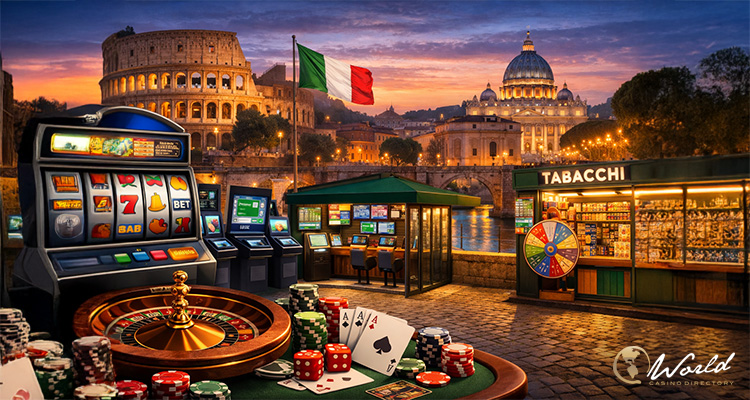
Italy’s gambling landscape is undergoing a significant overhaul aimed at creating a more standardized and secure framework across the country. The government, led by Prime Minister Giorgia Meloni, is taking strides to modernize regulations that govern retail gambling, including slot machines, betting shops, and bingo halls. After years of negotiations with local authorities, the government is preparing to roll out a draft decree that will introduce national regulations, addressing inconsistencies across Italy’s 20 regions and 110 municipalities. The reform is seen as a necessary step to modernize Italy’s gambling sector and bring about clearer, more uniform standards.
A Nationwide Strategy for Retail Gambling
The new draft decree, which will soon be reviewed by the Council of Ministers, focuses on harmonizing the regulations governing the retail network for gambling machines, including slot machines and VLTs (Video Lottery Terminals). This effort builds on the earlier overhaul of Italy’s online gambling laws, which was completed in 2024. The retail gambling reform, however, has proven to be more complex, as it requires balancing national consistency with regional concerns about revenue and tax implications.
The reform is expected to significantly impact the number of gambling outlets across Italy. Approximately 10% of locations currently hosting slot machines—bars, tobacconists, and gaming halls—will lose their ability to operate these machines. This reduction will bring the total number of outlets down to 40,000, while the number of betting shops will remain capped at 10,000 nationwide. The distinctions between specialized betting shops and “betting corners” within bars and other hospitality venues will also be abolished.
Central to the reform is the introduction of a certification system designed to ensure that gambling outlets meet higher standards of player protection and addiction prevention. The Italian Customs and Monopolies Agency (ADM) will oversee the certification process. Certified venues will be required to implement video surveillance systems, ensure minors are prohibited from entering, and create separate areas for non-cash gaming, which minors may access.
Businesses that obtain certification will enjoy more flexibility in terms of operating hours and the ability to host more gaming devices. In contrast, non-certified venues will face stricter limits, including longer mandatory closures. The certification system is seen as a key part of the government’s efforts to strengthen consumer protection across all gambling channels while curbing gambling-related harms.
Setting New Distance Standards for Sensitive Locations
As part of the reform, designated sensitive locations such as secondary schools, addiction treatment centers, and hospitals will be protected by new distance regulations. Certified businesses will need to maintain a minimum distance of 100 meters from these sensitive areas, while non-certified businesses will be required to stay at least 200 meters away. This change aims to mitigate the impact of gambling on vulnerable populations, including minors and individuals undergoing addiction treatment.
The law also seeks to regulate gambling hours more strictly. Certified venues will be subject to a mandatory closure period from 3:00 AM to 8:30 AM and again from 1:30 PM to 2:30 PM, amounting to 6.5 hours of daily closure. Non-certified establishments will face longer mandatory closures, from 3:00 AM to 9:00 AM and from 1:00 PM to 3:00 PM, a total of 8 hours per day.
New Concessions and the Future of Gambling in Italy
Another major element of the reform is the introduction of new concession tenders for gaming machines, betting shops, and bingo halls. These tenders will be available to businesses based in the European Economic Area that meet financial and technological requirements. The auctions for concessions are expected to generate close to €2 billion in new tax revenues, further bolstering Italy’s fiscal position.
As reported by AgiproNews, the new concessions will be divided into several categories. For example, a “base” lot worth €25 million will include 4,000 advanced AWP (Amusement with Prize) rights and 900 VLT machines. In the betting sector, the total number of rights available will be 10,000, which can be used for sports betting, horse racing, sweepstakes, and virtual betting. These rights will be auctioned off in units, with the minimum lot size set at 25 rights, each valued at €1.4 million.
The reform coincides with ongoing consolidation within Italy’s land-based gambling market. In 2024, Lottomatica expanded its reach by acquiring SKS365 for €650 million, adding over 1,100 betting and arcade franchises to its portfolio. Similarly, Flutter Entertainment made significant acquisitions, purchasing Sisal and Snaitech for €2 billion and €2.3 billion, respectively. These mergers have solidified the position of major operators in the Italian market, making it increasingly difficult for smaller, independent franchises to thrive.
While the government views consolidation as a stabilizing force that can improve compliance and consumer protection, some industry observers warn that the new regulatory framework may disproportionately affect smaller operators, raising their operating and licensing costs. The challenge will be to create a regulatory environment that balances the interests of large operators with the need for smaller businesses to remain competitive.
