

 United States
 Macau, China
 France
 Philippines
 Singapore
 Netherlands
 United Kingdom
 Canada
 Argentina
 Germany
 Estonia
 Peru
Peru Russia
 Australia
 South Africa
 Nigeria
 Malaysia
 Singapore
 India
India Finland
 China
China Ukraine
 Hong Kong
 Cyprus
 Turkey
 Greece
 Sweden
 South Korea
 Mexico
 Poland
 Ireland lottery results
 New Zealand lottery results
 Puerto Rico lottery results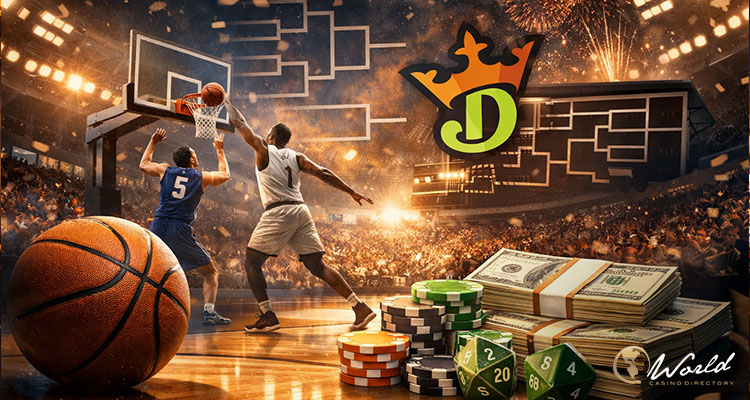
A federal judge has declined to grant the National Collegiate Athletic Association (NCAA) a temporary restraining order against DraftKings, allowing the sportsbook to continue using well-known tournament-related terms during the ongoing college basketball season.
The case, filed in the Southern District of Indiana, centers on trademark infringement claims brought by the NCAA. The organization sought to prevent DraftKings from using phrases such as “March Madness,”“Final Four,” “Elite Eight,” and “Sweet Sixteen,” arguing that their use in betting promotions could mislead consumers into believing there is an official connection between the parties.
Judge Tanya Walton Pratt ruled that the NCAA failed to meet the legal threshold required for immediate intervention. In her decision, she stated that the association did not sufficiently demonstrate that it would suffer irreparable harm if DraftKings continued using the contested terminology.
“With further discovery the NCAA may be able to show they are entitled to a preliminary or permanent injunction, and those claims remain pending,” Pratt wrote, according to Associated Press.
Court Focuses on Timing and Evidence
One of the key factors influencing the decision was the length of time DraftKings has been using the disputed terms. The sportsbook has incorporated phrases like “March Madness” in its offerings for more than five years, a detail the court considered significant when assessing the urgency of the NCAA’s request.
The extended period during which the terms were used without legal action weakened the argument that immediate relief was necessary. This aspect of the case played a central role in the denial of the temporary restraining order.
While the ruling allows DraftKings to proceed with its current marketing approach during the 2026 tournaments, it does not resolve the broader dispute. The judge made clear that the NCAA’s claims remain active and may still be evaluated further as the case progresses.
Dispute Over Trademark Use and Consumer Perception
DraftKings has defended its position by asserting that its use of the terms falls under fair use principles, which are protected by the First Amendment. The company has also maintained that it has a legal basis to reference widely recognized tournament names in connection with sports betting content.
The NCAA has taken a different stance, emphasizing that it deliberately avoids any association with gambling activities. In its complaint, the organization argued that DraftKings’ use of its trademarks could create confusion among users, potentially leading them to believe that the NCAA endorses or is affiliated with the platform.
The court acknowledged that consumer confusion may be a relevant issue as the case moves forward. The NCAA has pointed to this as an indication that its claims could still succeed at a later stage, particularly if additional evidence is presented.
Although the NCAA did not secure immediate relief, the litigation is ongoing. The case will now proceed through the discovery phase, where both parties will gather and present further evidence to support their positions.
The possibility of a preliminary or permanent injunction remains open, depending on how the arguments develop in court. A trial could also follow if the dispute is not resolved beforehand.
For now, DraftKings retains the ability to use the contested terms throughout the current tournament cycle. However, the outcome of the broader case may determine whether that practice can continue in the future.
