

 United States
 Macau, China
 France
 Philippines
 Singapore
 Netherlands
 United Kingdom
 Canada
 Argentina
 Germany
 Estonia
 Peru
Peru Russia
 Australia
 South Africa
 Nigeria
 Malaysia
 Singapore
 India
India Finland
 China
China Ukraine
 Hong Kong
 Cyprus
 Turkey
 Greece
 Sweden
 South Korea
 Mexico
 Poland
 Ireland lottery results
 New Zealand lottery results
 Puerto Rico lottery results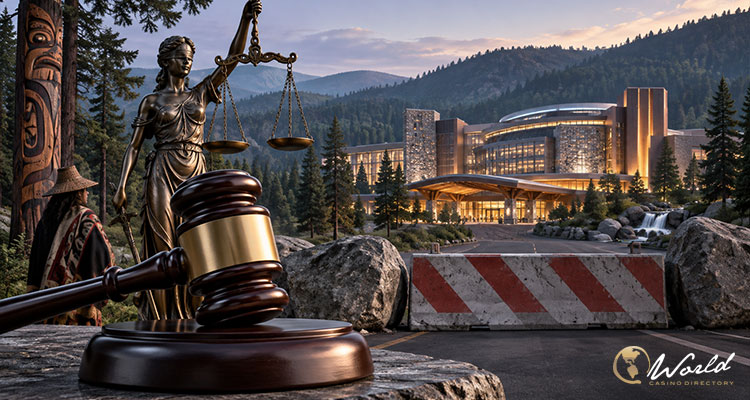
A federal judge has denied the Scotts Valley Band of Pomo Indians’ request for a preliminary injunction that could have reopened the path toward casino gaming at its Vallejo property, California, while its lawsuit against the U.S. Department of the Interior continues.
Judge Trevor N. McFadden of the U.S. District Court for the District of Columbia found that the tribe failed to meet the requirements for preliminary relief. His decision leaves in place Interior’s July determination that the Vallejo property does not qualify for gaming under the Indian Gaming Regulatory Act’s restored-lands exception.
McFadden wrote that Scotts Valley “falters on every front,” described its claimed economic harm as “self-inflicted,” and found that the tribe “has not shown likelihood of success on any of its claims.”
“We remain confident that the law and administrative record clearly support the restoration of our gaming eligibility,“ said Shawn Davis, Tribal Chairman of the Scotts Valley Band of Pomo Indians. “We look forward to the court considering the case over the coming months and upholding our rights.”
Interior Decision Remains in Force
Interior initially granted Scotts Valley gaming eligibility in January 2025. The agency later reconsidered that decision and concluded in July 2026 that the tribe had not demonstrated the significant historical connection required for gaming on the Vallejo land.
Interior had previously acknowledged that its earlier approval may have involved “legal error,” while evidence submitted during reconsideration “raises questions” about whether the property qualified.
McFadden addressed several of Scotts Valley’s arguments in the latest memorandum.
“Scotts Valley has not shown likelihood of success on any of its claims. It has not established that Interior’s decision on gaming eligibility defied the remand order from another judge in this district,” McFadden writes in the memorandum order. “Nor is the Band likely to prevail on its claims that Interior’s reconsideration process was arbitrary and capricious, that the agency disregarded its reliance interests, or that Interior violated its due-process rights. Scotts Valley also does not clear the high bar for irreparable harm, whether for its economic losses or sovereign harm. Finally, the equities and public interest weigh against preliminary relief.”
The land remains in trust for Scotts Valley. The dispute concerns whether it meets the federal requirements for casino gaming.
Other Tribes Back the Ruling
The Yocha Dehe Wintun Nation and Kletsel Dehe Wintun Nation have challenged Scotts Valley’s historical connection to the Vallejo area. The United Auburn Indian Community and Lytton Rancheria have also opposed the casino project.
Yocha Dehe Chairman Anthony Roberts welcomed the court’s decision.
“We appreciate the court’s careful consideration of this matter, and we could not be more pleased by today’s decision,” said Roberts, as reported by Times-Herald.
“The Department of the Interior considered all the evidence and properly concluded Scotts Valley lacks a significant historical connection to Vallejo and Solano County. This decision is another important step in exposing Scotts Valley’s false claims about our Patwin ancestors. Vallejo is Patwin ancestral territory, and we will never relinquish our responsibility to care for and protect these lands.”
Part of the dispute concerns Scotts Valley’s claims involving Pomo ancestor Chief Shuk Augustine. Opposing tribes argue that available records do not support the assertion that Augustine lived in or used land around Vallejo.
Roberts addressed the issue in September 2025.
“Let me be clear. Augustine never lived in Vallejo and never used or occupied lands here,” Roberts said in September. “He had no ties to this land and the surrounding counties. Scotts Valley’s claims about Augustine are simply false. Factually incorrect. As descendants of those who truly did occupy these lands, it’s insulting and hurtful to hear these claims. Even worse is the fact that we gave the Department of the Interior the true facts well in advance of its January decision. But the decision says on its face that our evidence was not considered. The agency just ignored it.”
Davis has argued that some opposition reflects competing casino interests.
“Two of the opposing casinos are located more than an hour from our land and have no reason to interfere with a fair and binary process except to protect their own financial interests,” Davis stated. “We will not bend under the knee of greed. It’s wrong. We will continue to fight valiantly to defend the Tribe’s rights, history, and economic future – both for the Scotts Valley and Vallejo.”
$700 Million Project Remains Stalled
Scotts Valley’s proposed development would cost about $700 million and include a casino resort near Interstate 80 and Highway 37, along with 24 tribal residences, a tribal administration building and a 45-acre biological preserve.
The city of Vallejo previously reached an agreement under which the tribe would pay $502,000 annually for three years to address impacts on police and other municipal services, plus $100,000 upfront in the first year. The arrangement also includes $100,000 annually for a local nonprofit coordinated through the city.
Scotts Valley opened a temporary Class II preview casino on the property on July 24, 2026, using repurposed modular buildings. The operation had approval from the National Indian Gaming Commission and the tribe’s gaming commission.
Court documents state that Scotts Valley “undertook substantial expenditures and financial commitments” of roughly $10 million to develop those gaming operations.
The temporary casino closed after Interior issued its final denial of gaming eligibility at the end of July. McFadden’s ruling means it must remain closed while the underlying lawsuit continues.
Scotts Valley has said it will keep challenging Interior’s determination, but the July decision remains effective for now.
