

 United States
 Macau, China
 France
 Philippines
 Singapore
 Netherlands
 United Kingdom
 Canada
 Argentina
 Germany
 Estonia
 Peru
Peru Russia
 Australia
 South Africa
 Nigeria
 Malaysia
 Singapore
 India
India Finland
 China
China Ukraine
 Hong Kong
 Cyprus
 Turkey
 Greece
 Sweden
 South Korea
 Mexico
 Poland
 Ireland lottery results
 New Zealand lottery results
 Puerto Rico lottery results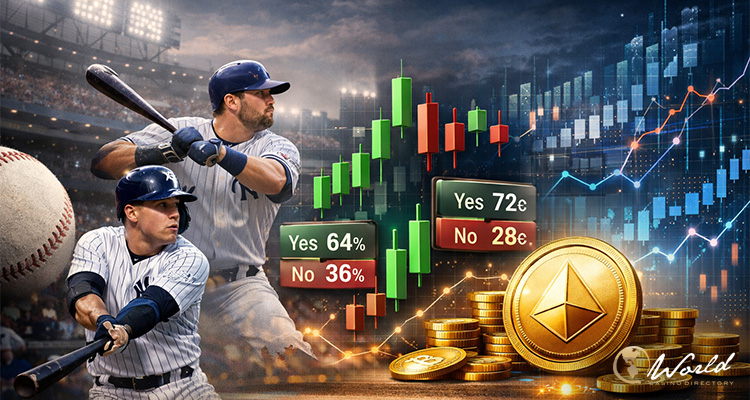
Major League Baseball (MLB) has taken a significant step into the growing prediction market sector through a newly announced multiyear partnership with Polymarket, alongside a separate agreement with a federal regulator aimed at safeguarding the integrity of the sport.
The league confirmed that Polymarket will serve as its exclusive prediction-market partner, gaining rights to use official team branding and access league-related data. While financial details were not publicly disclosed, reports indicate the deal could span several years, with estimates ranging from $150 million to $300 million depending on its duration and potential extensions.
Exclusive Partnership Signals Industry Shift
By entering this agreement, MLB joins other professional sports organizations that have already aligned with prediction market platforms. The NHL, MLS, and UFC have each established similar relationships, reflecting the rapid rise of event-based trading markets tied to sports outcomes.
Under the arrangement, Polymarket will be the only platform authorized to incorporate MLB logos and marks into its offerings. The company will also utilize official league data, distributed through Sportradar, MLB’s global data partner. Despite the exclusivity granted to Polymarket, Sportradar retains the ability to supply data to other prediction-market operators as well as traditional betting and media entities.
The partnership extends beyond branding and data access. Both MLB and Polymarket have agreed to coordinate on limiting certain types of markets that could pose risks to competitive integrity. These include wagers tied to individual pitches, managerial decisions, or umpire performance.
“We’re honored to announce MLB has named Polymarket as their Exclusive Prediction Market Exchange Partner,” the crypto-based platform stated publicly when the deal was revealed.
Federal Cooperation Focused on Integrity
In parallel with its commercial agreement, MLB has formalized a memorandum of understanding with the Commodity Futures Trading Commission (CFTC). The federal agency oversees prediction markets, which operate under a different regulatory framework than traditional sports betting.
The agreement outlines a system for information sharing between the league and the regulator. Representatives from both sides will meet regularly to address concerns tied to game integrity and emerging risks within prediction markets. Confidential data exchanges are expected to support monitoring efforts and allow for faster responses to potential issues.
“Through this MOU, the CFTC is well-positioned to add additional tools to protect these markets and its participants from fraud, manipulation, and other abuses,” CFTC Chairman Michael Selig said in a statement cited by Front Office Sports. “I thank MLB and Commissioner Rob Manfred for partnering with the CFTC and taking a leading role in protecting the integrity of these growing markets.”
MLB Commissioner Rob Manfred also emphasized the importance of these measures. “The new agreements that we formed with Polymarket and the CFTC are imperative steps in proactively managing the new and rapidly growing prediction market space,” he said. “Protecting the integrity of the game on the field is our top priority. By engaging in this community, we are able to work together to create clear boundaries with the goal of mitigating risk while providing fan engagement opportunities.”
Balancing Growth With Oversight
The move comes at a time when prediction markets are drawing increased attention from regulators and industry stakeholders. These platforms allow users to trade contracts tied to future outcomes, often resembling traditional sports betting products. Unlike sportsbooks, which operate under state-level oversight, prediction markets fall under federal jurisdiction through the Commodity Exchange Act.
This distinction has fueled debate over how such platforms should be regulated. Legal challenges have emerged, particularly from state authorities questioning whether these markets function as unregulated betting systems. Industry groups have also voiced skepticism about the legitimacy of prediction market frameworks.
“A multi-hundred million-dollar partnership or a memorandum of understanding with the CFTC doesn’t make an unlawful business model legitimate,” Bill Miller, president and CEO of the American Gaming Association, said in a statement. “State laws and voter-approved frameworks govern sports betting in the U.S. – not federal workarounds. Legal sports betting operates under state and tribal regulation, providing strong consumer protections, transparency, and accountability. Sports betting – by any name – is not under the CFTC’s jurisdiction.”
MLB’s involvement follows internal discussions and prior caution around the subject. The league had previously warned players against participating in prediction markets, citing concerns under its existing gambling policies. Those concerns intensified after allegations surfaced last season involving pitchers accused of manipulating specific in-game actions tied to betting activity.
By partnering directly with a platform and the federal regulator, MLB aims to establish oversight mechanisms rather than remain outside the system. The league has also indicated it intends to maintain integrity relationships with other prediction-market operators that offer baseball-related contracts, requiring them to adopt similar safeguards.
As Opening Day approaches, MLB’s dual agreements position the league within a rapidly evolving segment of the sports economy. The strategy reflects an effort to capture new engagement opportunities while maintaining control over how its games are represented and traded in prediction markets.
