

 United States
 Macau, China
 France
 Philippines
 Singapore
 Netherlands
 United Kingdom
 Canada
 Argentina
 Germany
 Estonia
 Peru
Peru Russia
 Australia
 South Africa
 Nigeria
 Malaysia
 Singapore
 India
India Finland
 China
China Ukraine
 Hong Kong
 Cyprus
 Turkey
 Greece
 Sweden
 South Korea
 Mexico
 Poland
 Ireland lottery results
 New Zealand lottery results
 Puerto Rico lottery results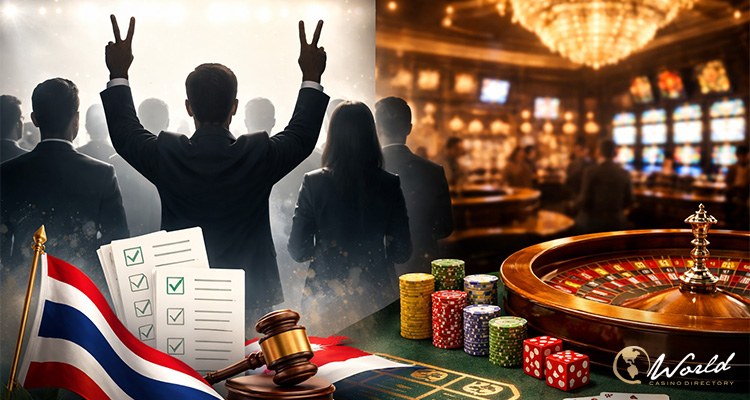
Thailand’s political landscape has shifted again with the return of Prime Minister Anutin Charnvirakul, who has reaffirmed his staunch opposition to casino legalization in the country. Charnvirakul, leader of the Bhumjaithai Party, was re-elected on Thursday, March 19, by the House of Representatives, securing 293 votes out of 498, easily surpassing the 250 votes needed for a majority. This victory positions him to remain in office, pending royal endorsement by King Maha Vajiralongkorn, with the formation of a new cabinet expected in the weeks ahead.
Charnvirakul’s return effectively halts any plans for legal casinos in Thailand, including the Integrated Entertainment Business Act, an initiative backed by his predecessor, Paetongtarn Shinawatra. Shinawatra, former prime minister, had advocated for a major overhaul of Thailand’s tourism and entertainment sectors, including the construction of five casinos across the country. But these plans have now been derailed by Charnvirakul’s conservative stance.
A Return to Conservative Leadership
Anutin Charnvirakul’s leadership marks a significant turn from his predecessor’s vision. Since taking office in September 2025, following the ouster of Paetongtarn Shinawatra, Charnvirakul has been an outspoken opponent of casino development. According to Asia Gaming Brief, his policies reflect a commitment to enforcing stricter regulations on illegal gambling, while opposing broader gambling expansion. His administration has scrapped the previous proposals for integrated resorts (IRs) — a major part of Shinawatra’s economic plan to revive tourism and attract foreign investment post-Covid.
During the 2025 general election, Anutin’s Bhumjaithai Party formed a coalition government with other key political factions, including the Pheu Thai Party, which has historically backed growth-focused policies. However, despite Pheu Thai’s previous support for casino development as part of a broader tourism initiative, Anutin’s government is unlikely to revive such discussions.
The casino issue gained significant attention during the tenure of Paetongtarn Shinawatra, who became embroiled in controversy following an ill-timed phone call with Cambodian Prime Minister Hun Sen. The call, in which she criticized Thailand’s military and referred to Hun Sen as “uncle,” sparked public outrage and led to mass protests. This controversy marked the beginning of Shinawatra’s political downfall, with her approval rating plummeting to just 9.2%. Within months, she was replaced by Charnvirakul, who made it clear that under his leadership, the idea of legalizing casinos would be indefinitely postponed.
In his November 2025 meeting with Chinese President Xi Jinping, Charnvirakul reinforced his position, assuring Xi that the casino plans would be abandoned as long as he remained in office. This move, in exchange for enhanced support for Chinese tourism to Thailand, highlights the delicate balance Charnvirakul is attempting to maintain between domestic political pressures and international relations.
Opposition to Casinos Rooted in Cultural and Social Concerns
Despite the allure of a multi-billion-dollar gaming market, support for the legalization of casinos has remained controversial. The Thai public, predominantly Buddhist, has long had an aversion to gambling, making casino legalization politically fraught. Many of Thailand’s citizens and lawmakers view gambling as incompatible with the nation’s values, a sentiment that has only grown stronger over time.
Even as international gaming operators, including the top six Macau concessionaires, expressed interest in bidding for Thai casino licenses, the project faced skepticism. Hard Rock’s Jim Allen stated that his company had “zero interest” in pursuing a Thai integrated resort (IR), citing the country’s political instability. Macau gaming consultant Ben Lee echoed this sentiment, describing the initiative as “dead in the water,” largely due to the social and political resistance to gambling in the country.
The push for legalized casinos in Thailand, which was initially seen as a potential boon for tourism, has now become a politically sensitive issue. The casino proposal, valued at an estimated THB263 billion (approximately US$8 billion), has now been put on hold indefinitely. Despite this, Thailand continues to focus on other tourism strategies, including attracting Chinese visitors, as part of the broader vision for economic recovery.
Charnvirakul’s policies have garnered both support and criticism, with his firm stance against casino legalization positioning him as a defender of Thai culture. While some view his approach as beneficial for maintaining the nation’s social fabric, others see it as a missed opportunity for economic growth. For now, Thailand will have to wait for a future administration to reconsider the legalization of casinos, as Charnvirakul’s current government remains steadfast in its opposition.
