

 United States
 Macau, China
 France
 Philippines
 Singapore
 Netherlands
 United Kingdom
 Canada
 Argentina
 Germany
 Estonia
 Peru
Peru Russia
 Australia
 South Africa
 Nigeria
 Malaysia
 Singapore
 India
India Finland
 China
China Ukraine
 Hong Kong
 Cyprus
 Turkey
 Greece
 Sweden
 South Korea
 Mexico
 Poland
 Ireland lottery results
 New Zealand lottery results
 Puerto Rico lottery results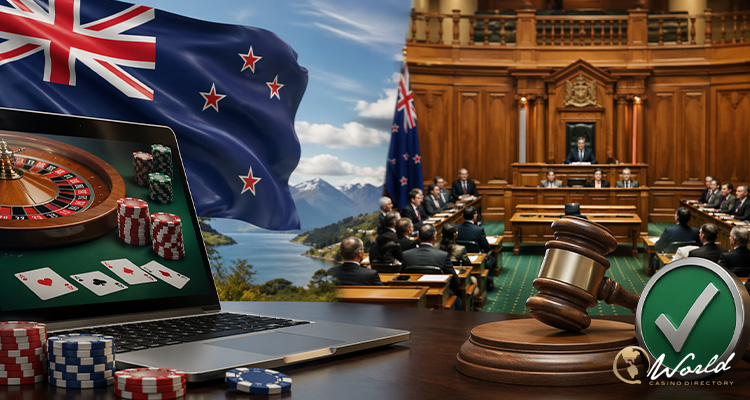
New Zealand has moved closer to launching a regulated online casino market after the Online Casino Gambling Bill passed its third and final reading in Parliament. The legislation now proceeds to Royal Assent, with the government expecting the framework to become law in the coming weeks.
The bill creates a formal licensing system for online casino gambling, introduces taxation for approved operators, and gives regulators stronger powers to police the sector. It also sets the foundation for a market launch currently targeted for 2027.
Internal Affairs Minister Brooke van Velden said the new rules are designed to improve protections for players while ensuring revenue from online casino activity contributes to communities across the country.
“The Bill also supports the coalition agreementby closing the gambling tax loophole and requiring licensed online casino operators to pay tax, just like any other business operating in New Zealand,” she said.
Licensing System to Open With Limited Market Access
Under the new regime, up to 15 licences will be available through a competitive application process. The Department of Internal Affairs will oversee the licensing process and ongoing supervision of operators.
A revised timetable published earlier this year indicated applications could open in July, with a deadline of 1 December 2026 for submissions. Businesses that fail to secure approval or do not apply by the deadline may be required to stop serving customers in New Zealand.
The limited number of licences signals a controlled rollout rather than an open market. Companies seeking entry are already preparing. Entain said in March that it was interested in as many as three licences. The company already operates the TAB brand in New Zealand through an exclusive arrangement in sports betting.
Because of that existing presence, Entain has said it could potentially market casino products to an established customer base once the framework is live.
The government has emphasized harm prevention as a central part of the legislation. Licensed operators will need to exclude problem gamblers and comply with strict responsible gambling and consumer protection obligations.
According to Scoop, Van Velden said the regulator will receive expanded enforcement powers, including take-down notices, formal warnings, enforceable undertakings and financial penalties of up to NZ$5 million for serious or repeated breaches.
“Under the new framework, up to 15 licences will be available through a competitive process. Licensed operators will be required to exclude problem gamblers, and meet strict harm prevention and consumer protection requirements.”
The bill also extends New Zealand law to all online casino services made available to players in the country, regardless of where an operator is based. That extraterritorial approach is aimed at offshore companies currently serving the market without a domestic licence.
“These tools will ensure that New Zealand law applies to all online casino gambling available in New Zealand, regardless of where operators are located, closing off avenues for avoidance and strengthening the regulator’s ability to monitor and enforce compliance by international operators.”
Community Funding and Next Steps
Public submissions on the bill showed support for directing some proceeds from online gambling back into local organisations. The government has previously considered allocating a share of gross gaming revenue from licensed operators to sports clubs, grassroots groups and community initiatives.
Earlier cabinet papers suggested a possible 4% contribution model. Estimates indicated that such a system could generate between NZ$10 million and NZ$20 million in the first year, depending on launch timing and market performance.
Van Velden said community benefit was a clear expectation raised during consultation.
“Submissions on this Bill made it clear that New Zealanders also want the benefits from the online casino gambling to flow back to local sports clubs, community groups, and grassroots organisations. This Bill delivers on that expectation.”
Further regulations covering advertising rules, harm minimisation, consumer protections, fees and levies are expected later this year. Those measures will determine how the licensing system works in practice and how operators can promote their services.
The bill had initially been linked to a 2026 launch, but implementation was pushed back. With final parliamentary approval now complete, attention turns to Royal Assent and the next phase of rulemaking before New Zealand’s regulated online casino market can begin.
