

 United States
 Macau, China
 France
 Philippines
 Singapore
 Netherlands
 United Kingdom
 Canada
 Argentina
 Germany
 Estonia
 Peru
Peru Russia
 Australia
 South Africa
 Nigeria
 Malaysia
 Singapore
 India
India Finland
 China
China Ukraine
 Hong Kong
 Cyprus
 Turkey
 Greece
 Sweden
 South Korea
 Mexico
 Poland
 Ireland lottery results
 New Zealand lottery results
 Puerto Rico lottery results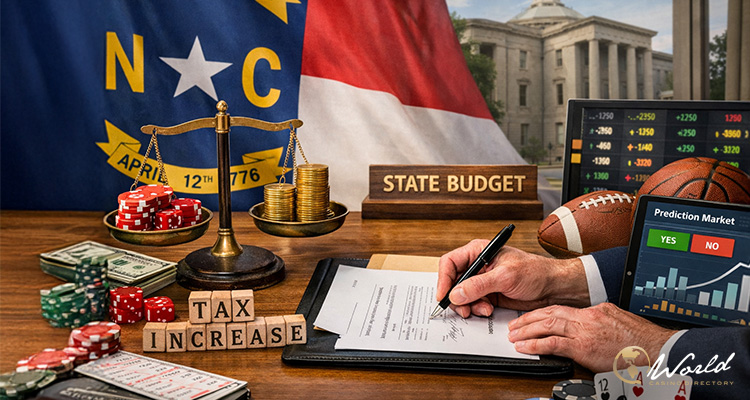
North Carolina has approved a new tax structure affecting sports betting operators and prediction market platforms after Gov. Josh Stein signed the state’s fiscal 2025-26 budget into law. The legislation increases the tax rate applied to online sports betting revenue and introduces a separate tax on prediction market activity while leaving those platforms outside the state’s licensing system.
The budget bill, Senate Bill 257, raises the tax on online sports betting operators from 18% of gross wagering revenue to 23%. The change applies to the seven licensed online sportsbooks operating in the state and represents the first increase since regulated sports wagering launched in March 2024.
State lawmakers had considered a much larger increase during earlier budget discussions. In April 2025, the Senate proposed raising the rate to 36%, which would have placed North Carolina among the states with the highest flat sports betting tax rates. That proposal did not advance, and legislators later settled on a lower increase ranging between 20% and 25% before agreeing on the final 23% rate.
Stein signed the $34 billion budget after lawmakers reached an agreement following extended negotiations. The governor had previously raised concerns about parts of the state’s tax policy, particularly future corporate tax reductions, while supporting changes that delayed some planned cuts.
“After careful deliberation, this morning I will sign the state budget into law,” Stein said Tuesday.
Prediction markets face new tax without state licensing rules
The legislation also creates a tax obligation for prediction market companies operating in North Carolina. Beginning January 1, 2027, platforms offering event contracts will pay a 6% tax on net trading fee revenue generated from activity in the state.
North Carolina joins Kentucky and Illinois in adopting a tax approach toward prediction markets. However, the state will not require these platforms to obtain gambling licenses or meet the same regulatory obligations imposed on sportsbooks.
The budget specifically states that it will not establish “any license, registration, or other regulatory requirements or obligations of any kind on prediction markets.”
Prediction market platforms such as Kalshi and Polymarket have gained attention by allowing users to trade contracts linked to outcomes of real-world events. A broader legal debate continues over whether these services should fall under federal commodities regulation or state gambling laws.
North Carolina’s approach differs from several states that have challenged prediction market operators over sports-related contracts. Illinois recently included prediction markets in its sports wagering tax framework, while Kalshi has pursued legal action against that move.
The new tax measure is expected to generate approximately $2 million in state revenue during 2027, according to fiscal projections. According to SBC Americas, the implementation details remain unclear, and similar tax decisions in other states have led to legal disputes involving prediction market operators and regulatory authorities.
Sports betting revenue distribution changes
Alongside the higher tax rate, North Carolina adjusted how sports betting proceeds are allocated. The state has already collected more than $300 million in tax revenue from sports wagering under the previous 18% rate.
The updated budget allows additional universities to receive funding generated through sports betting taxes. The University of North Carolina at Chapel Hill and North Carolina State University will join the list of eligible institutions beginning July 2027.
Schools within the University of North Carolina System already receive annual payments from sports betting revenue. Under the revised structure, universities can receive 20% of remaining tax revenue after required state allocations are completed. Payments are initially capped at $2.9 million per institution, although additional funding provisions were included for certain schools.
Sports betting tax revenue will continue supporting areas including youth sports initiatives, gambling addiction treatment programs and the state’s general fund. The budget also limits annual funding for the Major Events, Games, and Attractions Fund to $30 million.
The state expects the higher tax rate to contribute toward addressing financial pressures, including a projected $2.8 billion budget deficit over the next two years. Sports betting operators, including major companies such as FanDuel and DraftKings, had opposed the proposed tax increase during the legislative process.
New rules take effect following legislative approval
The North Carolina House of Representatives approved the budget by an 88-21 vote, followed by Senate approval with a 35-10 vote before it reached the governor’s desk.
The new sports betting tax rate takes effect immediately. The prediction market tax will begin in 2027.
The legislation also introduces other gambling-related changes, including allowing bettors to deduct gambling losses for tax purposes and granting state revenue officials additional authority to audit sports betting records.
North Carolina’s sports betting market launched in March 2024, and the latest tax adjustment places its operator tax rate above several larger U.S. betting markets, including Massachusetts, Ohio and New Jersey.
